Some links in my articles are affiliate links. I may earn a commission when you buy through them.
Waterproof socks are worth a look when wet grass and shallow puddles regularly soak your running shoes. For a light, fitted ankle sock, I would shortlist the Sealskinz Holverstone; if you prefer a closer feel around the ankle, look at the DexShell Running Lite 2.0. Both add a waterproof layer inside your shoes, so make sure there’s room for the thicker fabric.
Think about where your feet get wet and how the socks feel in your own shoes. A membrane can block water through the covered fabric; water entering over the cuff can still wet the inside.
Start with the wettest part of your usual route. Brushing through damp grass is a different job from wading across a stream. Waterproof socks are a useful option for the first situation, provided the shoe fit remains comfortable. If water will regularly rise above the cuff, expect water to get in at the top.
Your priority
Option to consider
Check before ordering
A fitted, lightweight ankle sock with a bamboo-viscose inner
A familiar thin sock for a mild run with little standing water
Your usual running socks
Comfort when damp and dry socks for afterwards
The ordinary running-sock guide covers cushioning and everyday rotation if a membrane would add little to your route.
Holverstone: a light ankle option with a bamboo lining
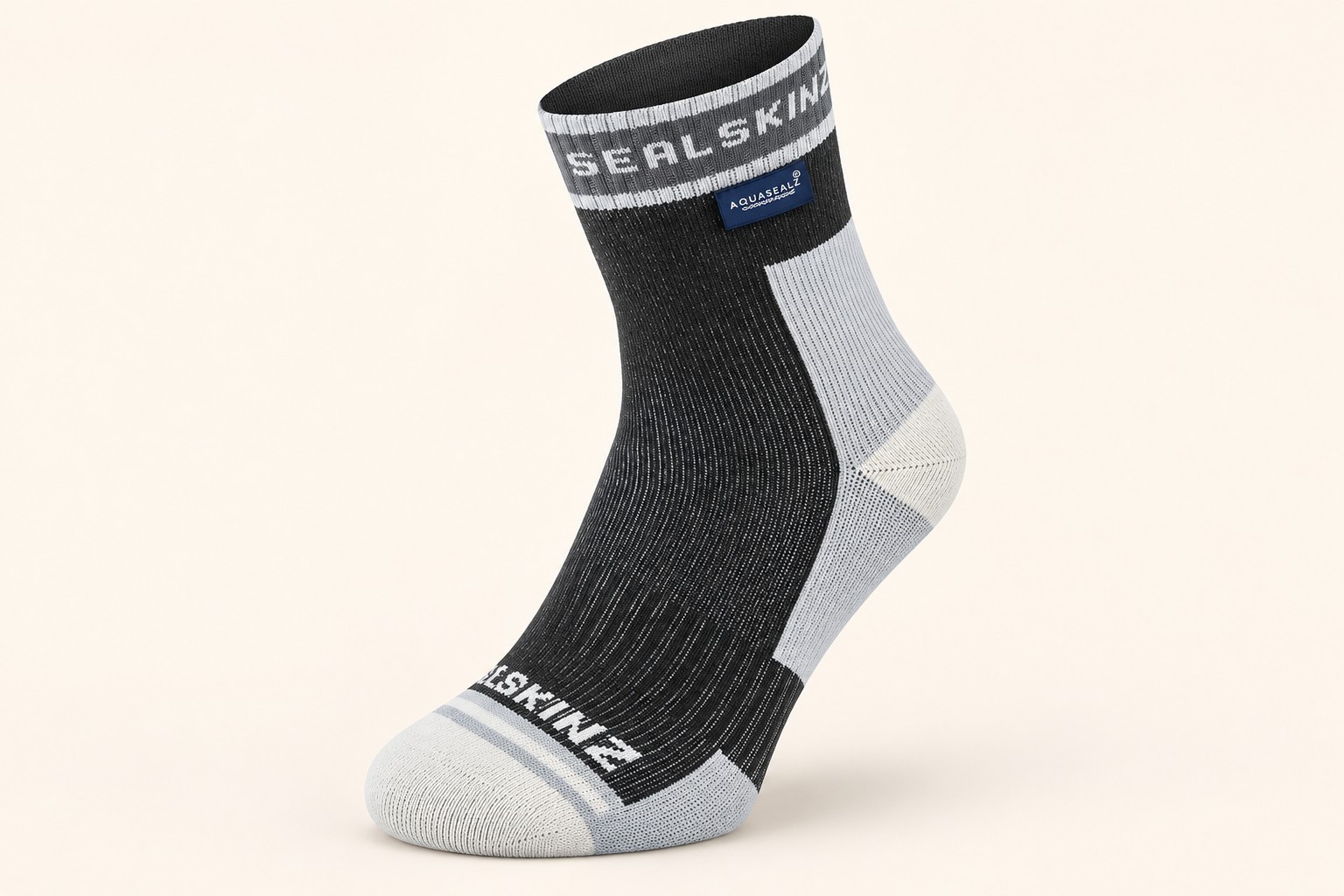
The Holverstone is a fitted ankle sock with a waterproof layer between the stretchy outer and bamboo-blend lining. I’d start here if you like a low cuff and don’t want much fabric above the shoe.
The pictured Black ankle version has pale heel and toe panels. Check the length in the listing title: a mid-length model also carries the Holverstone name. The taller version moves the opening further up your leg.
Let the heel sit in its shaped pocket before judging the toe. Pulling hard at the cuff can leave the foot of the sock stretched forwards. Once it is settled, lace the shoes normally and check for pressure across the instep as well as spare room at the toe.
Its care routine is straightforward: the current Sealskinz model page permits a 40°C wash and drip drying. Open them out to dry after washing, rather than leaving them in the kit bag.
Running Lite 2.0: for a close ankle fit
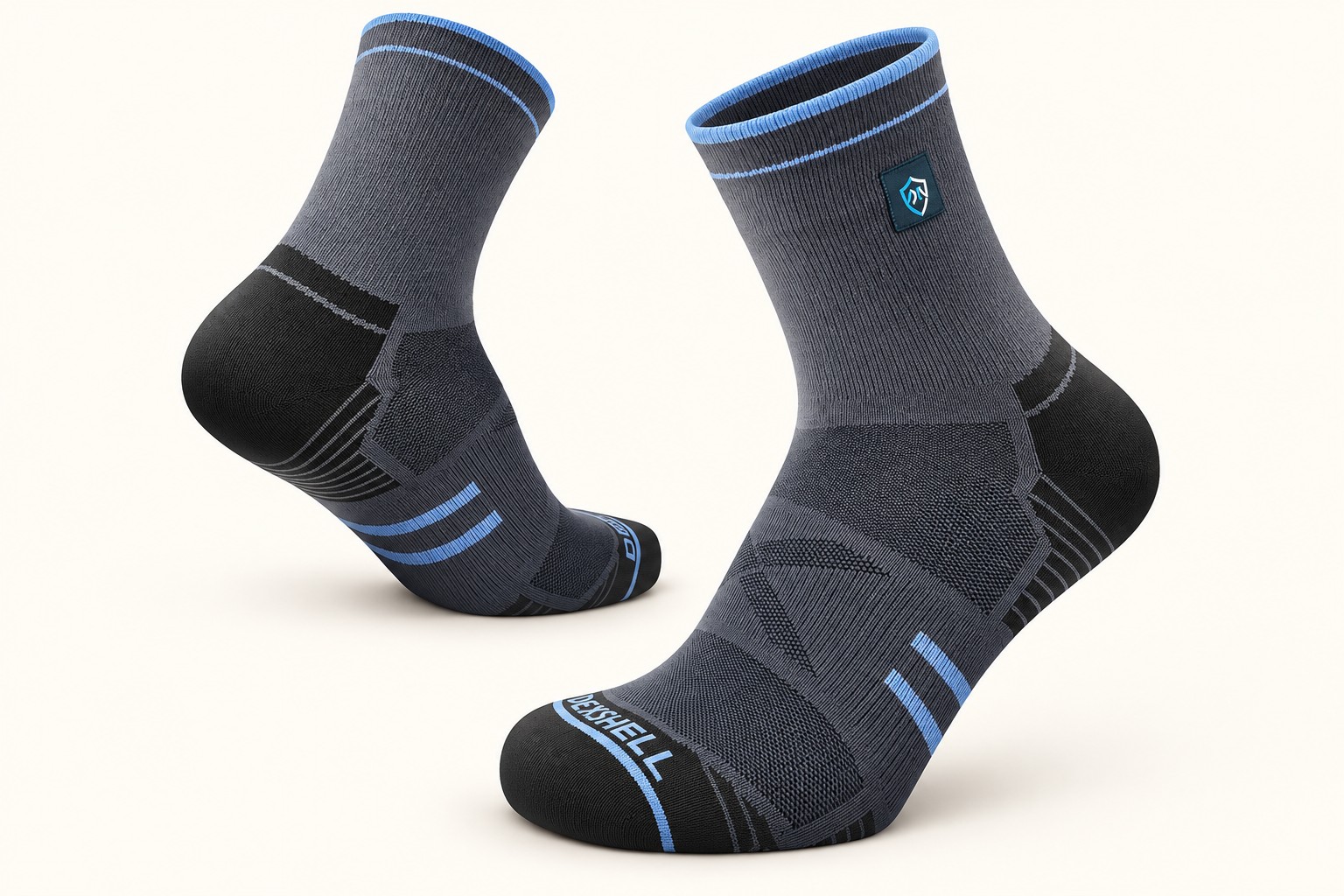
The Running Lite 2.0 is the alternative I would consider for runners who like a secure, close feel around the ankle. It has a waterproof membrane and a COOLMAX-blend lining, with a closer compression fit around the ankle.
The Turbulence Grey version pictured has blue cuff and foot details. Look for the 2.0 version, reference DS20610: older DexShell Running socks can have different linings and construction.
Try it with your normal lacing tension and make sure the cuff and instep feel comfortable when you bend the ankle.
Allow for its care requirements, too. DexShell’s current care guidance limits washing to 30°C, calls for mild detergent and natural drying, and warns against direct heat. The linked UK listing says hand wash only; follow that stricter instruction and the label supplied with your pair.
Leave room inside the shoe
A waterproof sock contains several layers. Even a lightweight model can change a shoe that fits beautifully with a thin summer sock. Check the top of the foot, the sides of the forefoot and the heel collar with both shoes on.
With cushioned running socks, I pay particular attention to how much space remains over my toes. That same check matters here. If you have to leave the laces unusually loose to remove pressure, choose a different sock-and-shoe pairing before committing to a long run.
Begin with the brand’s sock-size chart. A larger sock size can help at a size boundary; it cannot create more volume inside a tight shoe. Avoid automatically buying bigger shoes or adding a second sock underneath without trying the complete arrangement.
Treat the cuff as an opening
Choose a cuff that sits comfortably above your shoe collar. Water from deeper puddles, stream crossings or wet clothing can reach that opening. A taller sock moves it higher but still has an open top.
Sealskinz says its membrane ends at the cuff stitching. Its Hydrostop guidance also says that cuff treatment is not a watertight seal and directs runners towards other waterproof models. The ankle option selected here is the non-Hydrostop running model.
A low trail gaiter can help keep grit out of your shoes. Check its job separately: the gaiter guide explains shoe attachments and coverage, rather than promising to turn a shoe opening into a waterproof seal.
Try the fit before adding more pairs
The Holverstone ankle sock is the low, fitted option with a bamboo-blend lining; the Running Lite 2.0 has the closer ankle fit and COOLMAX lining. Check the size and cuff length match the version you want.
Try the pair in clean shoes before taking it out. Check both feet, bend the ankles and take a few steps on an indoor slope or stairs. For wet outings, put a dry pair and suitable return footwear somewhere separate from muddy kit; the dry-bag guide helps with that part of the packing.