Some links in my articles are affiliate links. I may earn a commission when you buy through them.
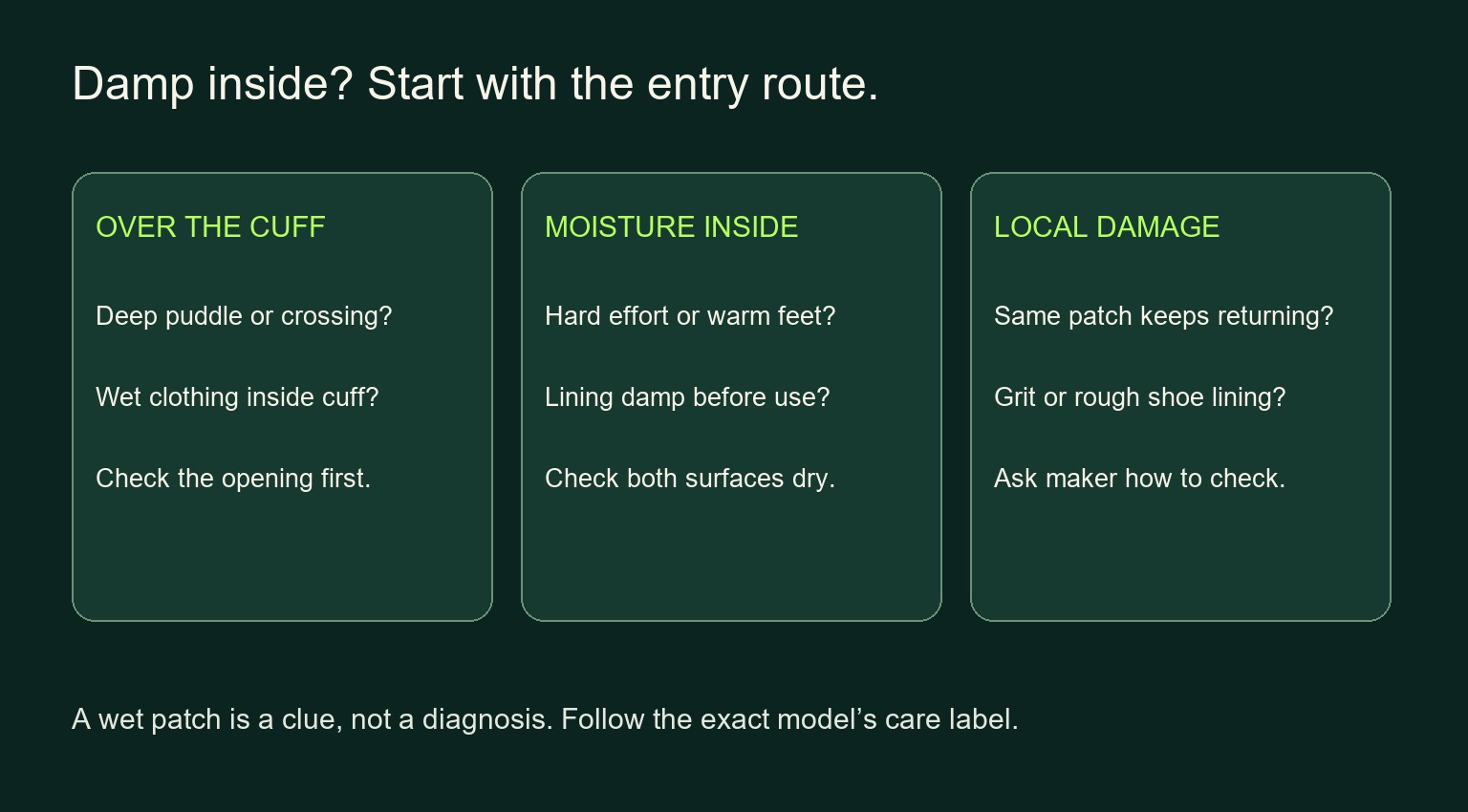
If your feet are wet inside waterproof socks, start with the cuff and whether the socks were fully dry when you put them on. Water can enter over the top, sweat can leave the lining damp, and a pair stored wet may never have dried inside.
Think back through the run while the wet sections are still fresh in your mind. You may be able to solve the problem by changing clothing overlap or drying the socks properly. If the same local wet patch returns despite those checks, inspect the pair and ask the maker about its recommended leak check.
Was the whole foot damp after a hard climb, or did one toe become wet shortly after a puddle? Were both socks affected, or just one? A wet toe after a puddle gives you a different starting point from two damp feet after a climb.
Check the sock soon after taking the shoe off, then let it dry. A wet outer knit does not by itself show that water passed through the membrane. Treat the position of the damp patch as a clue, though: moisture can move through the fabric as you run.
Keep the model name, size and care label available if you contact the seller or maker. Explain the conditions and where the dampness appeared so they can suggest the next check.
Check the cuff and clothing overlap
Think about the deepest puddle, not just the rain. Water above the cuff can run down inside a waterproof sock. Wet tights or trousers tucked inside the opening can also give moisture a route towards the lining.
Sealskinz explains that its membrane stops at the cuff stitching. Its Hydrostop help page says even that treatment does not create a watertight seal. For running, the same page recommends its other waterproof models rather than selecting Hydrostop to solve cuff entry.
Set the sock above the shoe collar and check how clothing meets it when you bend the knee. A taller cuff may help with shallow splashes, but a route that repeatedly submerges it needs a plan for wet feet and a change afterwards.
Could it be sweat or yesterday’s damp lining?
Breathable waterproof construction allows moisture vapour to pass, but a warm foot can still leave a lining damp. Notice whether it happens on hard efforts as well as easy, cool outings.
Before the next run, check the socks are dry inside. Feel the inner toe and heel before putting the socks on. The outside may feel ready while the inside is still damp from washing or the previous run. Leaving the pair rolled in shoes or inside a closed bag makes that check easy to miss.
Follow the exact care label and give air access to both surfaces during drying. Keep membrane socks away from a hot radiator. Our dry-bag guide helps separate wet kit for transport; unpack it for washing and drying when you get home.
Inspect the toe, heel and inside of the shoe
Once the socks are clean and dry, look for worn patches, punctures or obvious damage. Check the shoe for grit, a rough insole edge or an object that could keep rubbing the same place. DexShell’s care guidance warns against puncturing the membrane and says to wear its socks inside suitable footwear.
A visible hole may explain a local problem; damage in an inner layer may be harder to see. Avoid stretching, filling or pressurising a sock as an improvised test. Ask the maker for its recommended method and use any applicable return or warranty route.
If a fault is confirmed, replace the affected pair and address any rough area in the shoe before wearing the new one. Buying a thicker sock without checking the shoe could leave the same source of wear in place.
What to change before the next run
If water came over the top, first reconsider the route, coverage and clothing overlap. If the shoes became cramped with a membrane pair, choose a better-fitting combination. The waterproof versus ordinary sock decision is useful when the main problem is warmth or deep water rather than water passing through shoe fabric.
For a damaged pair that does need replacing, look for a running pair that fits your shoes and is easy to care for between outings. The current waterproof running-sock shortlist compares lining and ankle fit.
Pack a dry pair for the return journey and keep it separate from the used socks. Put suitable dry footwear with it if the running shoes will be saturated.