Some links in my articles are affiliate links. I may earn a commission when you buy through them.
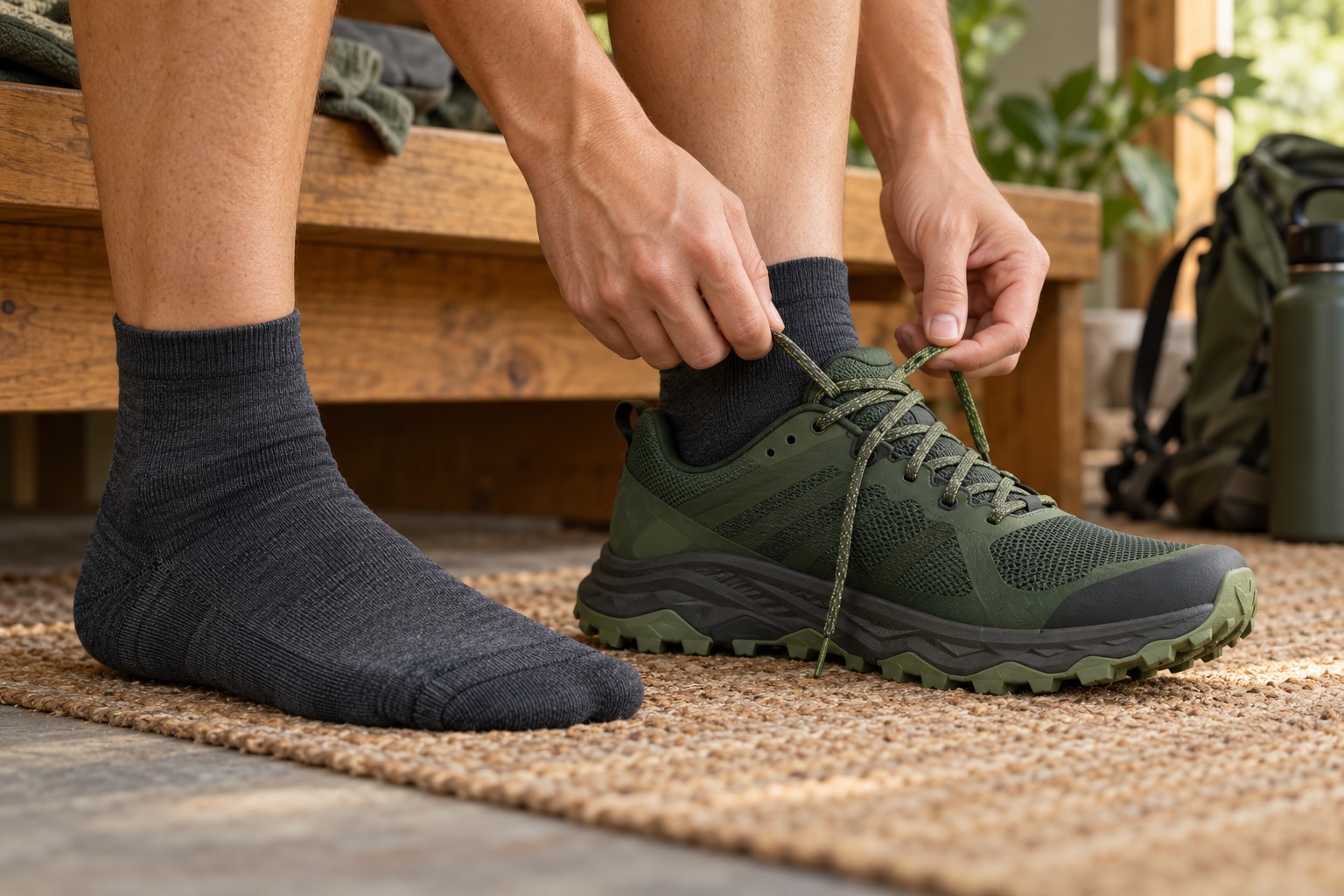
Waterproof socks can fit ordinary running shoes, but check the room above and around your foot before buying several pairs. Start with the maker’s sock-size chart, try the socks in your actual shoes, then judge toe space, instep pressure and heel security together.
A sock that is the correct length can still feel crowded beneath a low shoe upper. I would try the complete combination indoors first, keeping the laces at a familiar tension. Don’t automatically go up a size in the socks or shoes: try the combination first.
Start with the sock chart, not another brand’s size letter
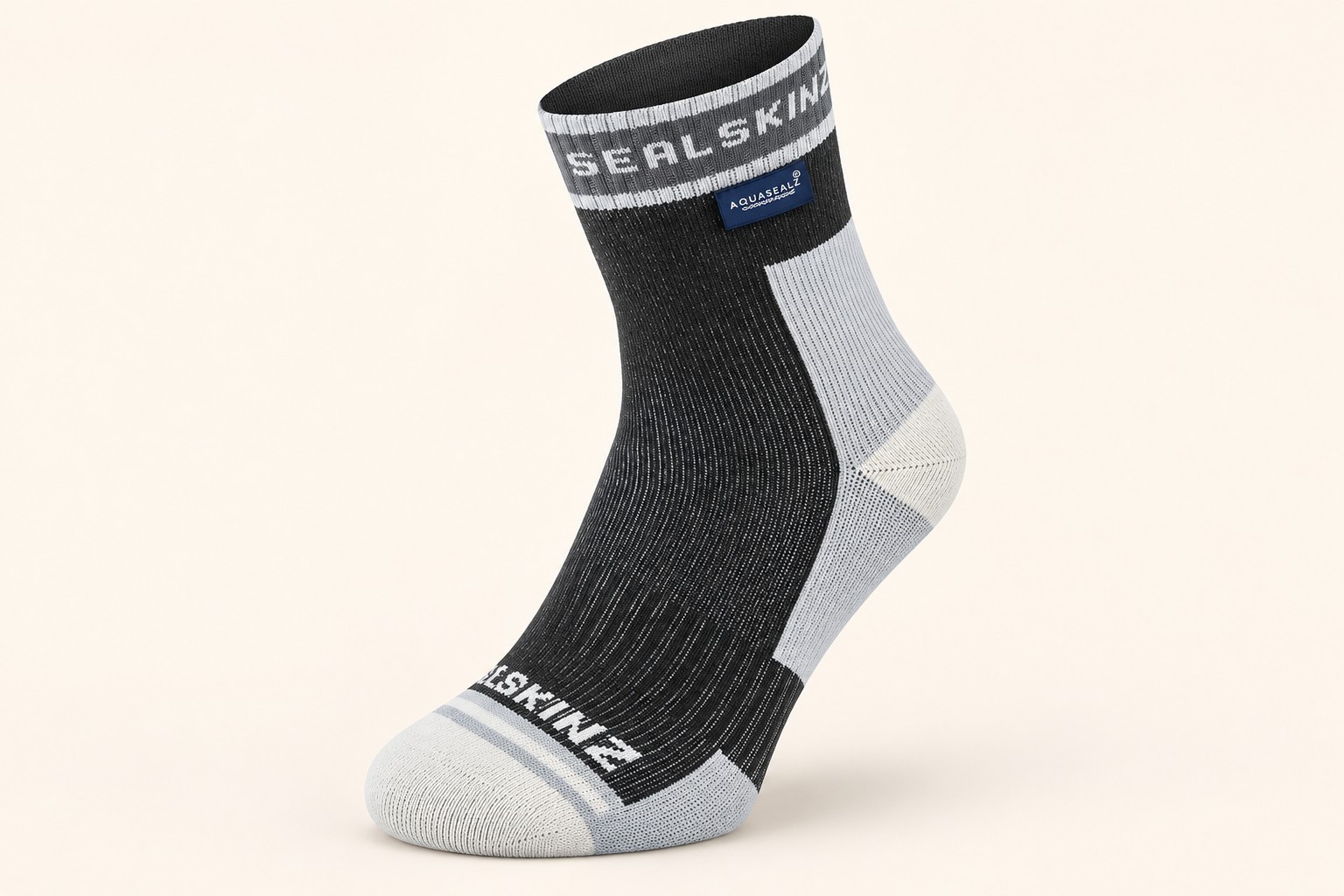
For the current Sealskinz Holverstone ankle sock, the maker’s UK chart gives Small 3–5, Medium 6–8, Large 9–11 and Extra Large 12–14. These are sock-size bands based on shoe size. Shoes marked UK8 can still have very different amounts of room inside.
Sealskinz advises moving up at the upper end of a band, giving UK8–8½ as an example, because its waterproof construction is thicker than a conventional sock. Use the current Sealskinz sock chart alongside the exact product listing, especially if your usual shoes sit between sizes.
The DexShell guide also starts with regular shoe size and advises the larger sock size between sizes. Check each brand’s chart rather than ordering your usual size letter. Check the delivered label before removing packaging or taking the pair outdoors.
Settle the heel before pulling up the cuff
Open the sock with your hands and ease it over the heel. Position the heel pocket first, then smooth the fabric towards the toes and up the ankle. Pulling only from the cuff can stretch the foot of the sock and make the toe feel short.
Look for folds beneath the forefoot and around the heel. A larger size may ease pressure at a boundary, but spare fabric should not gather under the sole. Check both feet; one can feel tighter than the other.
Flex the ankle before putting on the shoe. If the cuff already presses uncomfortably, loosening the shoe laces will not change that part of the fit. It should feel secure while you move, with no uncomfortable pressure around the ankle.
Check three places with the shoes on
At the toes: stand normally, move the toes and bend through the forefoot. Check that the sock is smooth and that the upper does not press down harder than it does with your ordinary pair. With cushioned running socks, I find this space worth checking before judging how comfortable the sole feels.
Across the instep: lace the shoe as usual and bend the ankle forwards. The combined sock and tongue should sit comfortably across the top of the foot. Try a modest lacing adjustment if needed, then check that the heel still feels held.
At the heel collar: walk and use a few stairs. Notice whether the sock heel stays in place and whether the collar now touches a different point. A thicker sock can change where your foot sits in a shoe, even when your toes still have length available.
Start with one pair of socks
A waterproof sock already has an inner layer designed to sit against the foot. Adding an ordinary sock underneath uses more shoe space and changes where the shaped heel lands. Start with the waterproof pair on its own unless the maker says otherwise.
If you want a liner for a particular reason, try that exact liner with the waterproof pair and the shoes. Smooth both layers, then repeat the toe, instep and heel checks. A combination that feels tight standing indoors is a poor candidate for a long run.
Get the socks and shoes comfortable first. Then add the gaiter and check its straps and cuff using the gaiter compatibility checks.
When to choose another combination
Choose another sock or shoe pairing if pressure remains across the forefoot, the toe is pulled tight or normal heel security disappears when you loosen the laces. Increasing the sock size may help with the sock’s length or compression; it will not enlarge the shoe upper.
For a mild run where a membrane is optional, the ordinary sock options may fit your familiar shoes more comfortably. If you regularly need a membrane for wet grass and puddles, try a suitable shoe with enough volume rather than ordering blindly a size longer.
Once the clean indoor checks pass, use the combination on a short familiar outing before relying on it for a long route. The waterproof sock buying guide explains how the shortlisted models differ in lining, ankle fit and care, so you can narrow the next pair sensibly.