Some links in my articles are affiliate links. I may earn a commission when you buy through them.
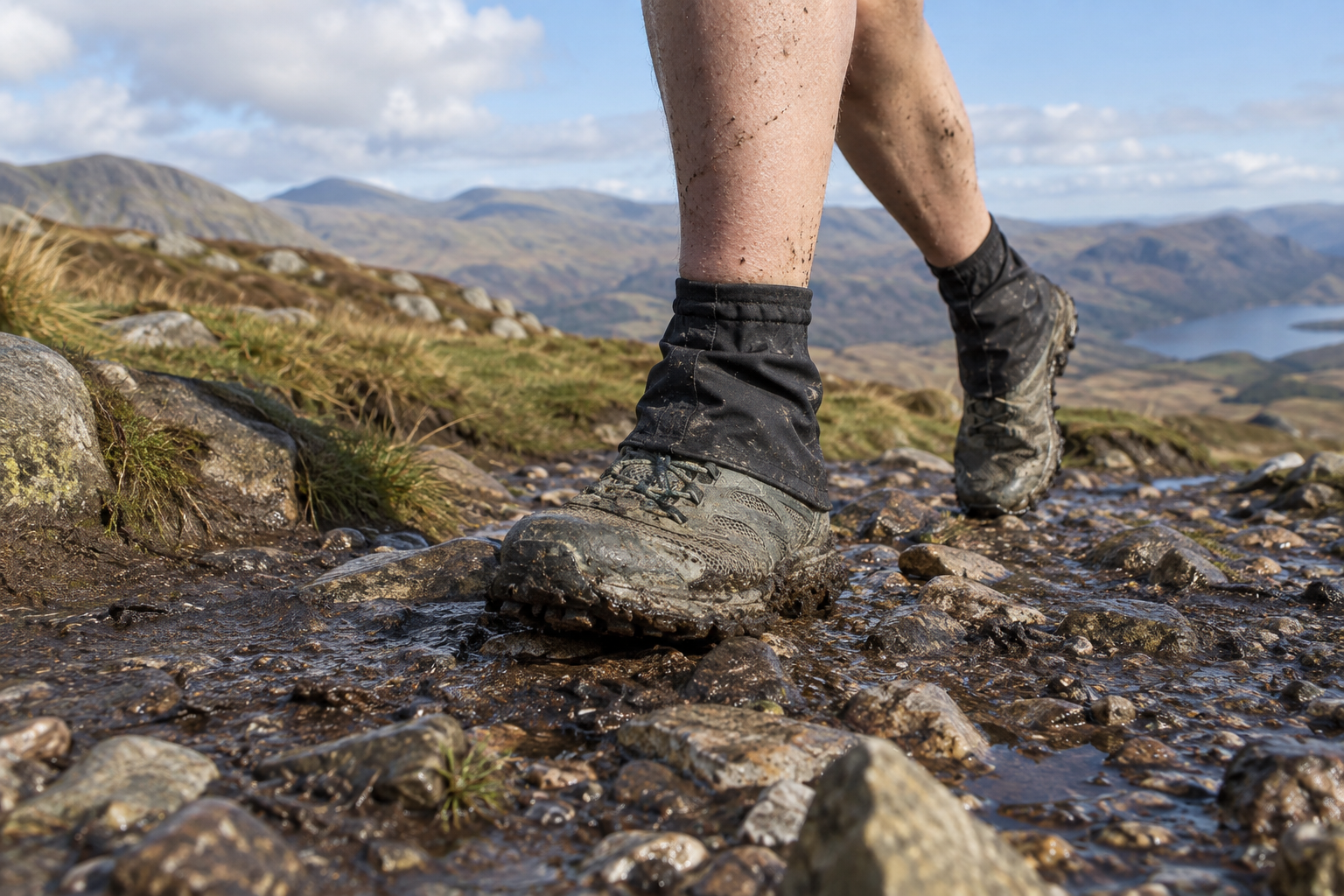
If you keep stopping to tip tiny stones out of your shoes, a low trail gaiter is a useful little upgrade. It covers the gap around the shoe collar while leaving most of your leg uncovered. Fit it well and you can spend more of the run looking at the trail.
I have used TRIWONDER ankle gaiters on dry, gritty routes. Their light fabric felt better suited to running than a tall walking gaiter, and there were fewer stops to empty my shoes on sandy paths and loose scree. They are a good place to start when debris is your main annoyance.
Match the gaiter to the shoe opening
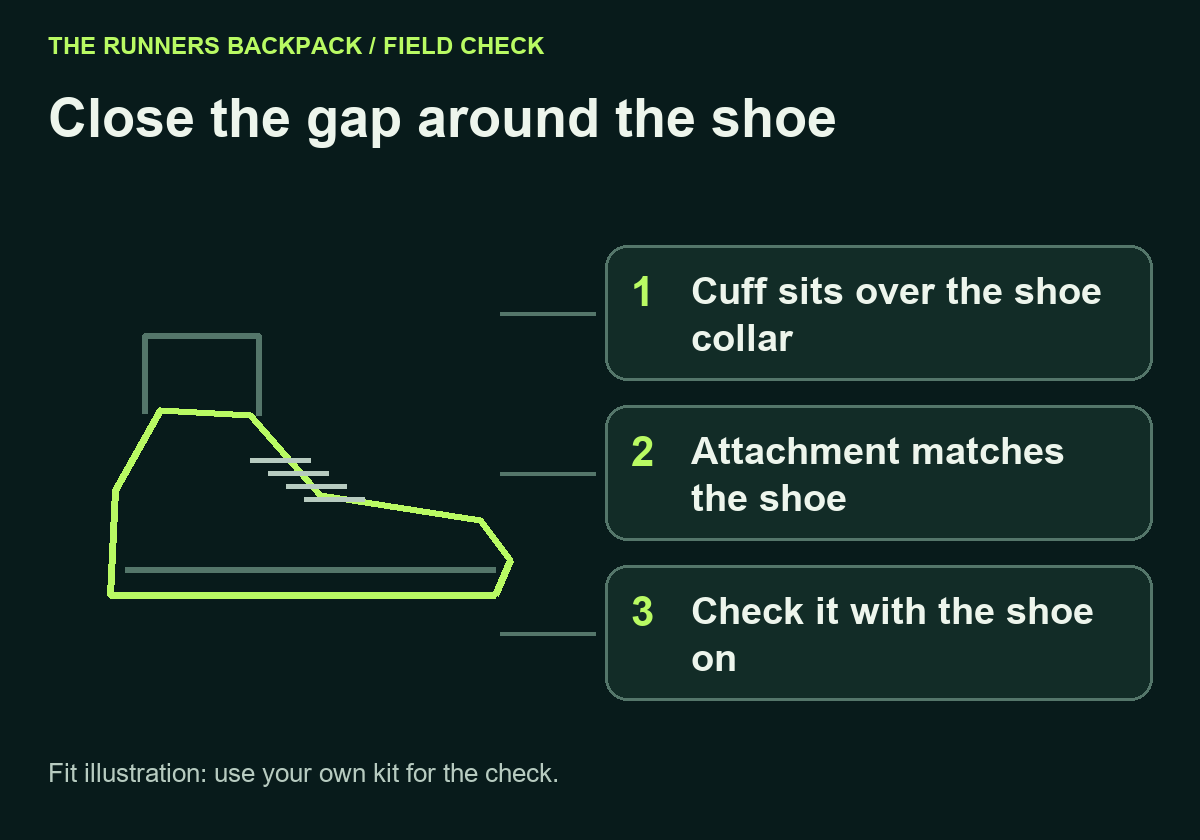
The fabric needs to overlap the collar all the way round, including the heel. A neat fit around your ankle is only half the job: if the shoe is bulky, or the gaiter pulls forwards when you flex, a gap can open at the back.
Try the pair with your actual trail shoes and usual socks. Stand on a step with one foot higher than the other, bend your ankle and crouch slightly. You should be able to move freely without the gaiter riding up or pulling the top of your shoe tight.
Spend a minute on the underfoot strap
The current TRIWONDER design has an adjustable top drawstring and a Hypalon underfoot strap. Route that strap through the recessed part of the sole where your shoe allows, clear of the main contact tread. Check the adjustment on both feet; outsole shapes and wear can make them sit differently.
After the first short section of trail, have another look. A strap that has shifted onto a lug or a cuff that has loosened is easier to fix before it starts distracting you. The gaiter should be secure without needing to be pulled uncomfortably tight.
Choose low coverage for grit and loose debris
A low gaiter is particularly appealing for sandy paths, loose stones and dusty tracks. It gives the shoe opening some protection without enclosing your whole lower leg. I would take the time to fit it properly before setting off; a loose flap around the ankle is more irritating than a little extra preparation.
For wet grass, deep mud or repeated puddles, think about your shoes and socks too. Water can still enter through the shoe upper. Choose these for keeping loose material out of the collar, rather than expecting ordinary running shoes to become waterproof.
Check how you will put them on
Some low gaiters need to go on before your shoes; others open around the ankle. Look at the fastening and rehearse the order at home. This is easy to overlook if you plan to add them only when a road section turns into a rough trail.
Once home, clear grit from the straps and closures, then clean and dry the pair according to the label. Inspect the underfoot section occasionally, especially if your route crosses a lot of tarmac. Store them with your trail shoes so the complete combination is ready for the next run.
The TRIWONDER pair makes sense for a light, low gaiter focused on the shoe opening. Check its size against both your ankle and your shoe, then give the fastening a short trial before a longer outing. For the journey home, pack dry socks separately from your muddy footwear.