Some links in my articles are affiliate links. I may earn a commission when you buy through them.
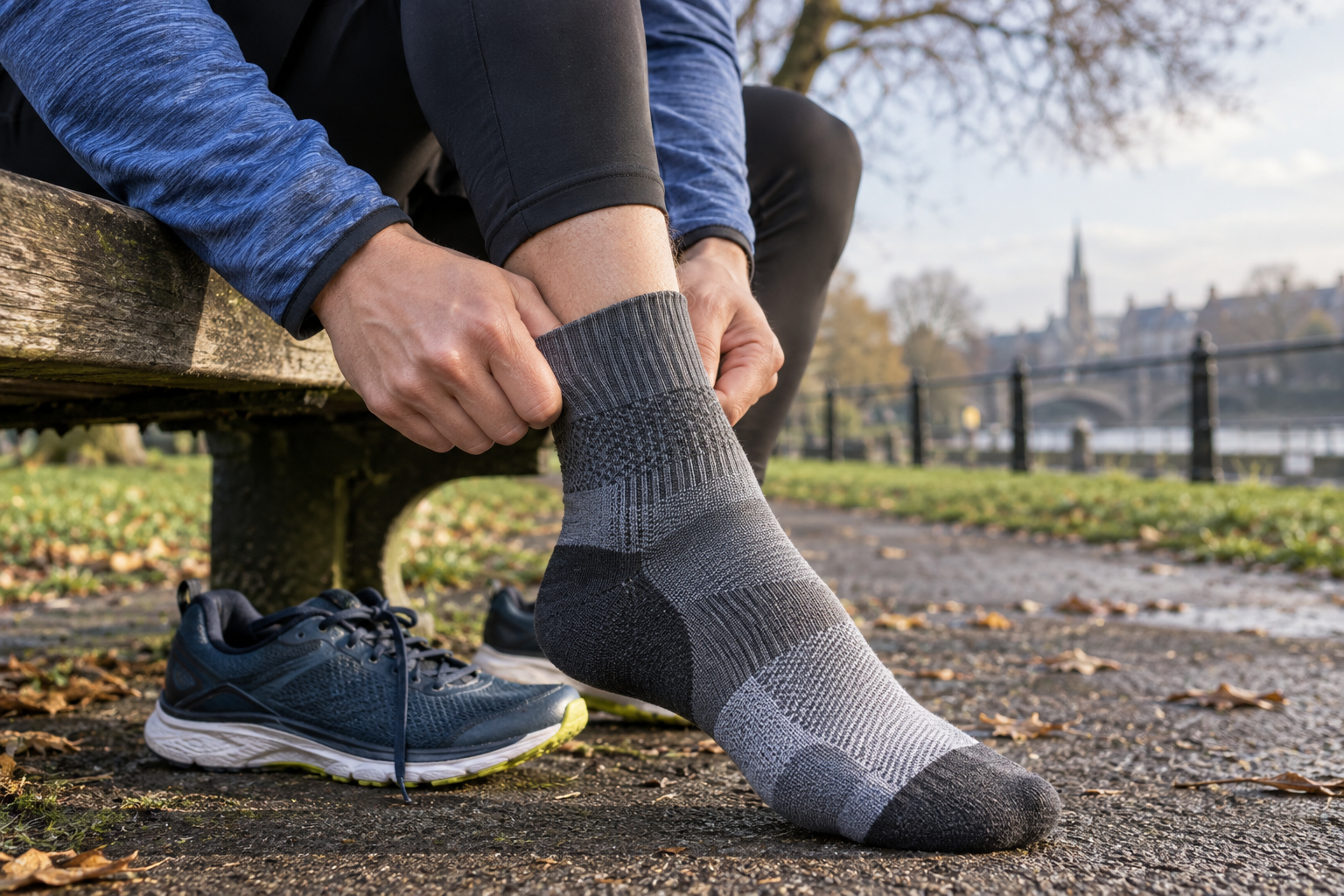
A comfortable pair of running socks should disappear from your thoughts once you leave the house. If your toes feel squeezed or you keep pulling a slipping heel back up, start with how the sock fits inside your usual shoes. Extra cushioning can feel lovely, provided there is room for it.
For everyday training, I like the cushioning in TANSTC ankle socks, particularly around the heel. They are thicker than very thin summer socks, so I would choose them for comfortable daily mileage when the shoe has enough space.
Try the sock and shoe as a pair
Pull the heel into place before lacing up. Smooth out any bunching under the arch, then stand and move your toes. The fabric should sit neatly without stretching the toe seam tight across your foot. Walk upstairs or jog a few steps: a heel that creeps down immediately is unlikely to become less annoying halfway round your route.
Compare with the socks you already enjoy wearing in those shoes. If the new pair makes the forefoot feel crowded, a thinner option may suit that shoe better. Conversely, a little cushioning can make a roomy trainer feel more comfortable without having to pull the laces excessively tight.
Where cushioning earns its place
What I like about the TANSTC socks is the padding around the heel and forefoot. It gives a little separation where rubbing can start, particularly if very thin socks leave your shoe feeling bare.
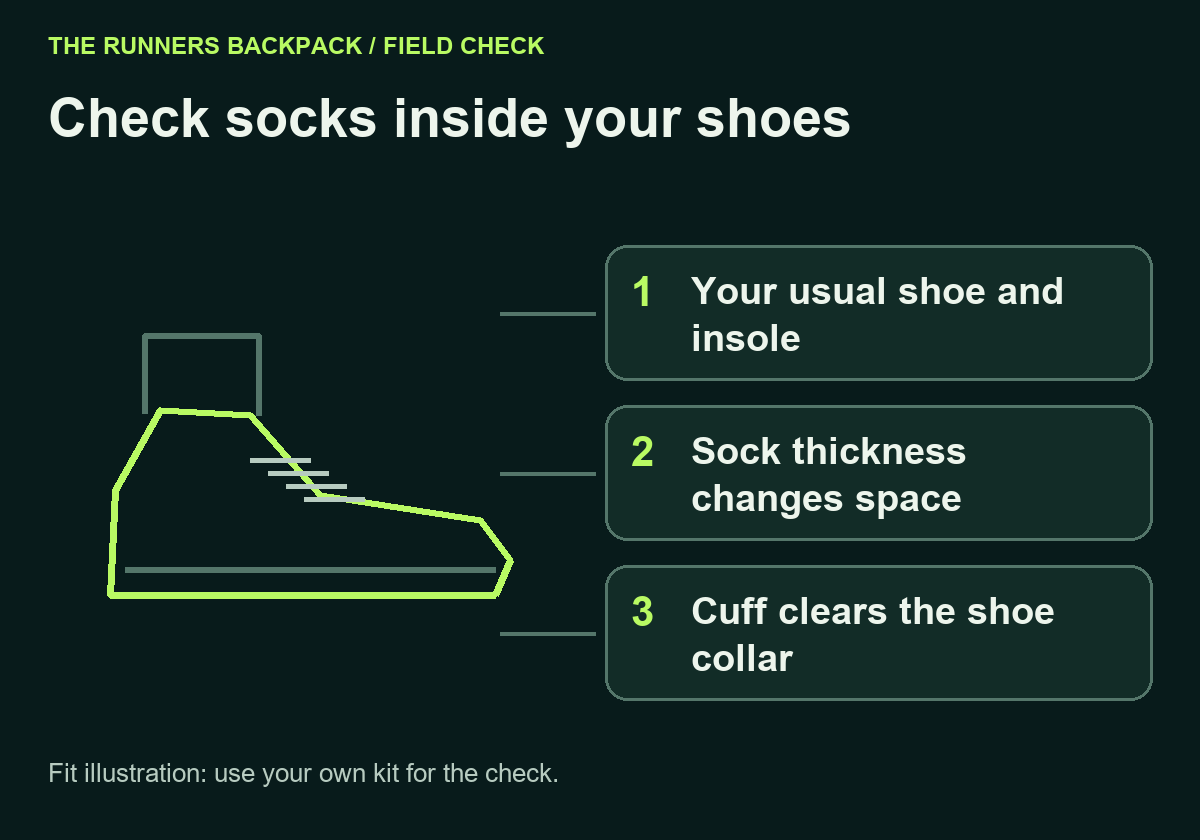
Thickness also affects how the whole shoe feels. Try a padded pair with the insole you normally use, and leave the lacing at a comfortable tension. If your toes feel crowded, try a thinner pair rather than tightening the laces around the extra fabric.
Check the cuff against the back of your shoe
A low ankle sock is tidy with road shoes, but its cuff still needs to sit above any part of the collar that would otherwise touch your skin. Flex your ankle forwards and backwards rather than judging this while standing still. A taller cuff can be a useful choice with a higher shoe collar or when you prefer more coverage.
Check the toe seam with your fingers as well. A flat seam can be easier to accommodate, but check that it isn’t sitting across a sensitive spot on your toes. Smooth the sock once, then put the shoe on carefully so you do not drag the fabric backwards.
Buy for your training week
If you run regularly, the six pairs in the TANSTC pack let you rotate socks through the week instead of trying to dry one pair overnight. Check the selected size and pack option before ordering, then follow the care label to keep the fit consistent.
Keep your familiar race-day pair separate from any new experiment. For a wet event or a journey home after running, put spare socks with your dry layer in a small dry bag. A fresh pair is particularly welcome after you have changed out of damp shoes.
If wet grass or puddles regularly soak your shoes, first decide whether waterproof socks suit your route. Then use the membrane-sock shoe-fit checks before adding a thicker pair to close-fitting trainers.
A quick fitting routine
- Use your normal running shoes and insoles.
- Seat the heel and smooth the fabric under your foot.
- Check toe room while standing, then flex your ankle to check cuff coverage.
- Take a short, easy run before committing to a longer outing.
- After washing, check that the heel, cuff and toe seam still sit where you want them.
Start with the pair that feels comfortable in the shoes you already trust. You can then choose lighter or more padded socks for different runs without changing everything at once.