Some links in my articles are affiliate links. I may earn a commission when you buy through them.
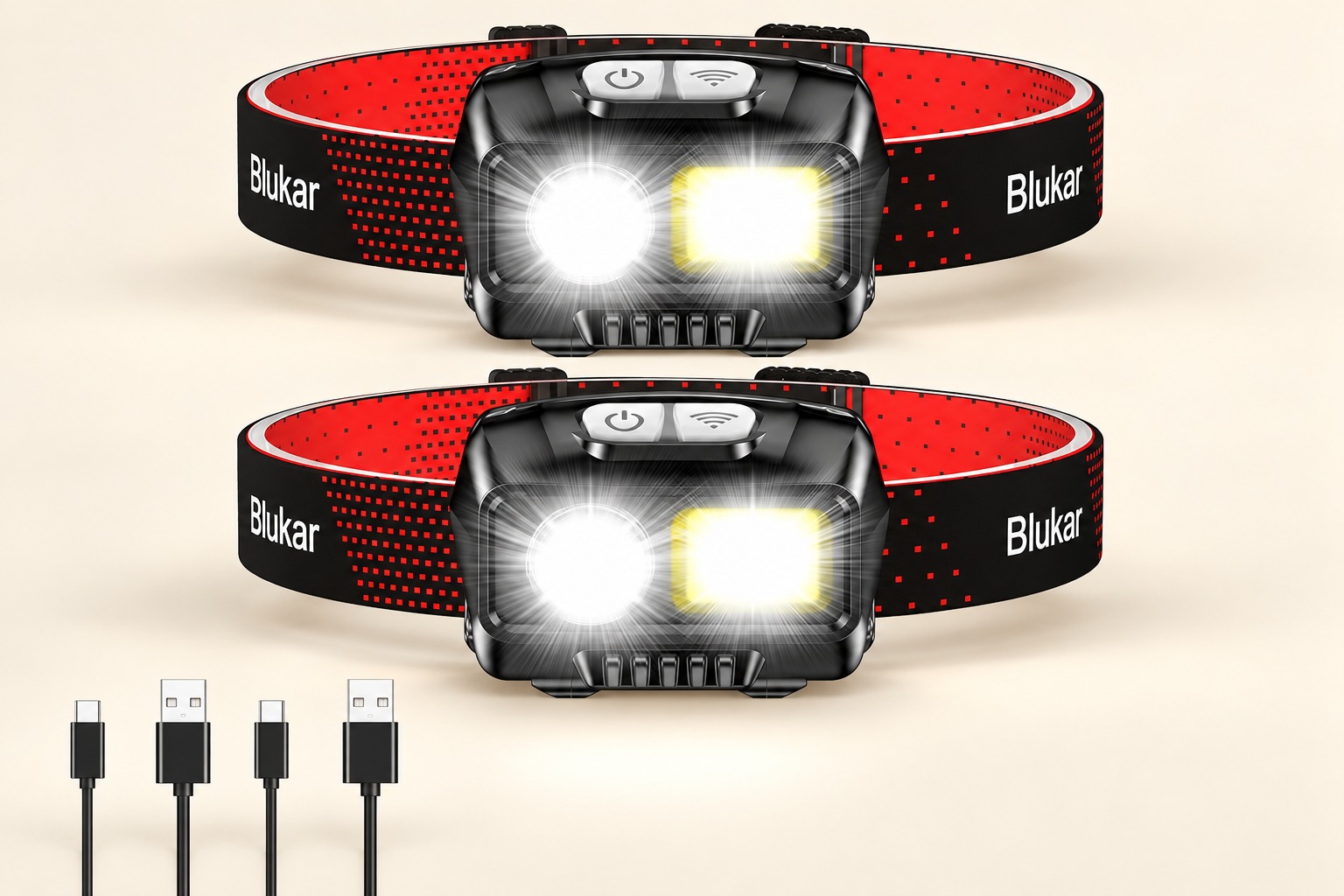
On an evening run, I want to see the path comfortably and change the light without stopping to work out the buttons. The Blukar rechargeable two-pack gives you one torch for the running kit and another to keep ready elsewhere. The Blukar Gen 2 appeals when separate controls and setting memory matter, while the Lepro battery headtorch gives you a replaceable-battery option.
These are choices for ordinary training runs. Start with the darkest part of your route and the time you expect to spend there, then choose the light you can operate comfortably while moving.
A pair is handy if one torch tends to end up in another coat or bag. Leave one with the running kit and keep the second ready for a dog walk or another outing.
The focused and wider light help with the path and pavement edges, while the long-press dimmer lets you ease the brightness back on lit streets. That adjustment is useful when a route alternates between street lighting and darker stretches.
The motion sensor can be convenient with cold or muddy hands. Check how it responds around clothing and movement, and use the ordinary controls when an accidental gesture could switch the beam. Learn the dimmer before leaving rather than cycling through settings at the roadside.
Charge it before the session and check useful runtime at the brightness you intend to use. The longest advertised duration often belongs to a lower setting. Allow for the journey home at a slower pace too.
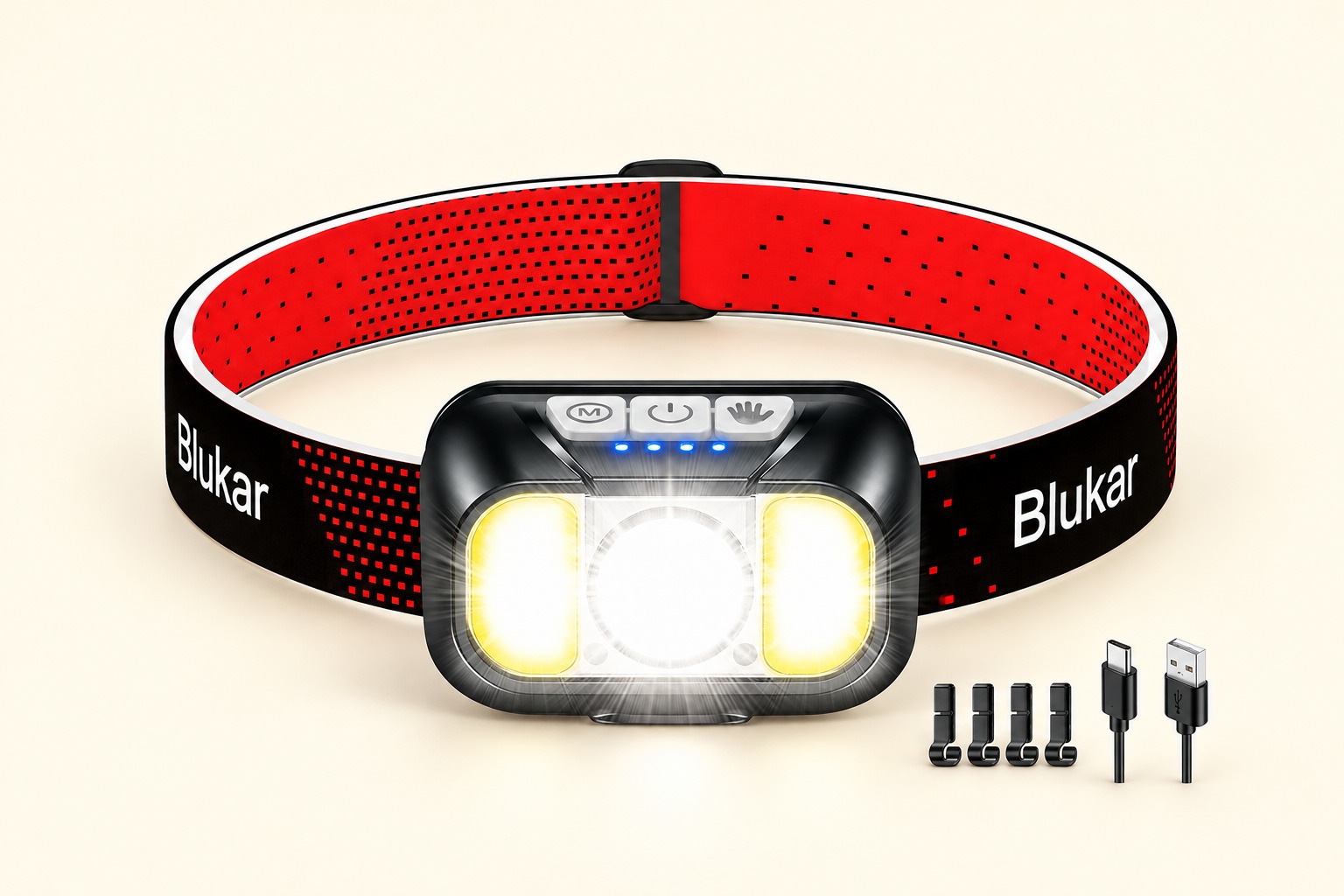
Easy-to-find buttons and a remembered setting: Blukar Gen 2
I prefer the separate power, mode and sensor buttons to one button doing several jobs. It also remembers the previous setting, so a familiar route needn’t start with turning the brightness down again.
Use the spotlight for looking ahead and the wider lights for the path around your feet, then dim them to suit the surface.
Try the buttons with your running gloves on. Check that you can identify the control by touch and reach the mode you want without accidentally activating the sensor. Our running-gloves guide helps you choose for dexterity and warmth.
Keep the band and lamp angle comfortable as well. Run a few steps and look down at your footing, then forward again. If the lamp repeatedly slips or points too low, adjust the band and hinge position before increasing the brightness.
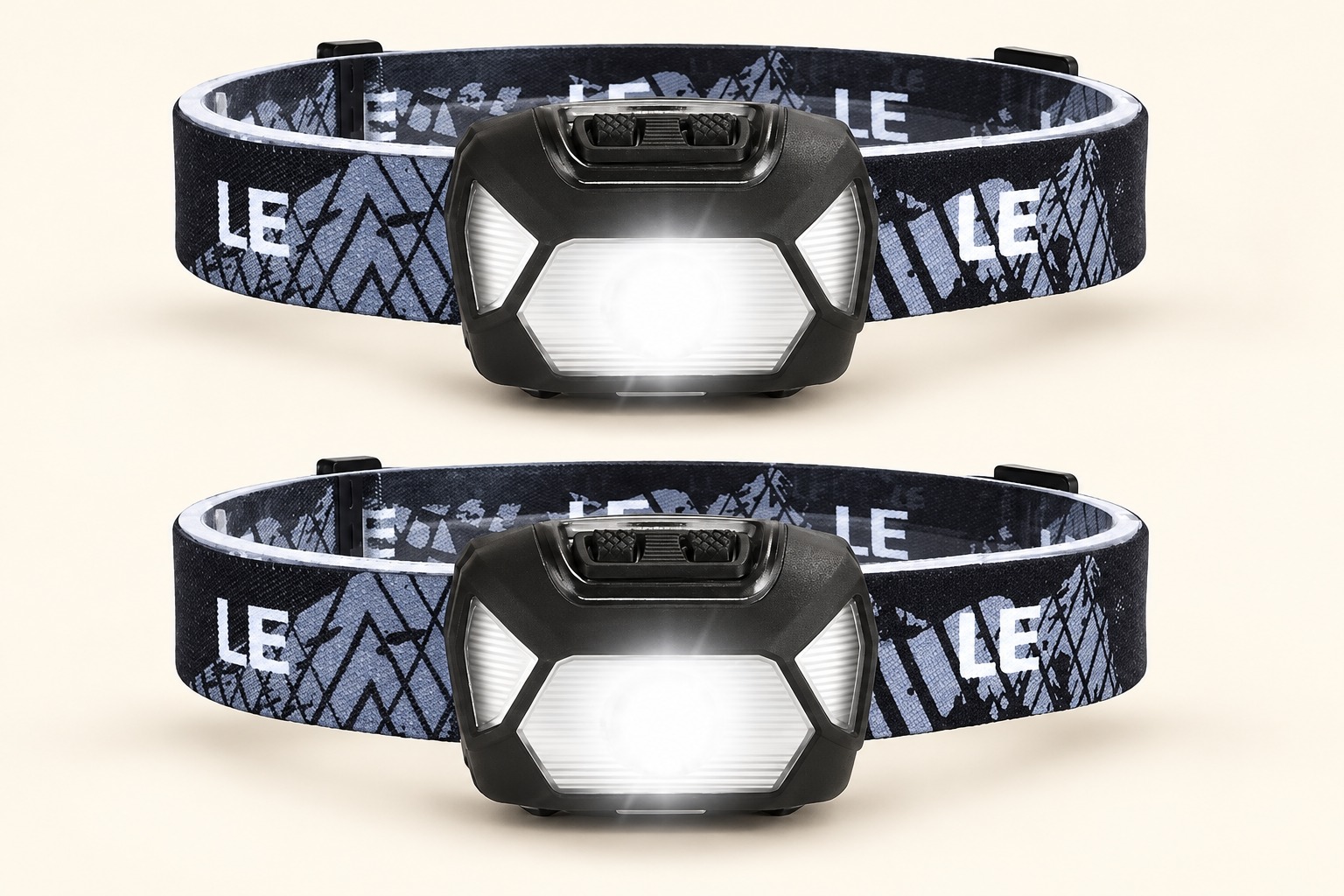
This is the choice here if carrying fresh AAA batteries suits your routine better than relying on a recharge. You can prepare a spare set for a longer outing and avoid needing a charging lead at the moment the torch runs low.
Choose between a narrow spotlight and a broad floodlight. The red setting is useful when you stop to read a map without shining a strong white beam towards a companion. Learn the controls at home so changing modes is straightforward when your hands are cold.
Practise opening and closing the battery compartment before taking it out. Keep spare cells together, protected and easy to reach. A spare set is most useful when you can fit it without spilling the contents of your race bag onto the ground.
Fit fresh batteries and check the torch at your intended setting before relying on it for a long dark section. Use the runtime for that exact model and setting when deciding how many spare batteries to carry.
Match the beam to the surface
On a smooth familiar path, a comfortable spread of light can be more useful than a bright narrow centre. On uneven ground, you need to see both the next foothold and enough route ahead to make a decision. Look at beam shape alongside advertised lumens.
Try the angle while running at your usual pace. A beam that points at your shoes can leave the next few metres poorly lit; a beam aimed too high can lose the detail underfoot. Your preferred setting should show the surface without making you constantly dip your head.
A front light helps you see, while other road users also need to see you from behind and the side. The clip-on visibility guide explains useful extra attachment positions. If you dislike a headband, read the headtorch-versus-chest-light comparison before choosing a different mounting position.
Check comfort and power before a longer outing
Wear the torch with the cap, snood or hood you normally use and adjust it after warming up. A band that feels firm over a dry hat can move differently once the fabric is damp. Check that your hood does not push the lamp down or obscure the controls. If the lamp slips only after you add a hat, try the hat and headtorch fitting checks.
Base the power plan on the whole dark portion of the outing, including a slower finish. For remote or overnight events, use the organiser’s requirements and model-specific performance information to choose the lighting and backup you need. Check output over the required duration and whether you can replace batteries or carry a suitable spare.