Some links in my articles are affiliate links. I may earn a commission when you buy through them.
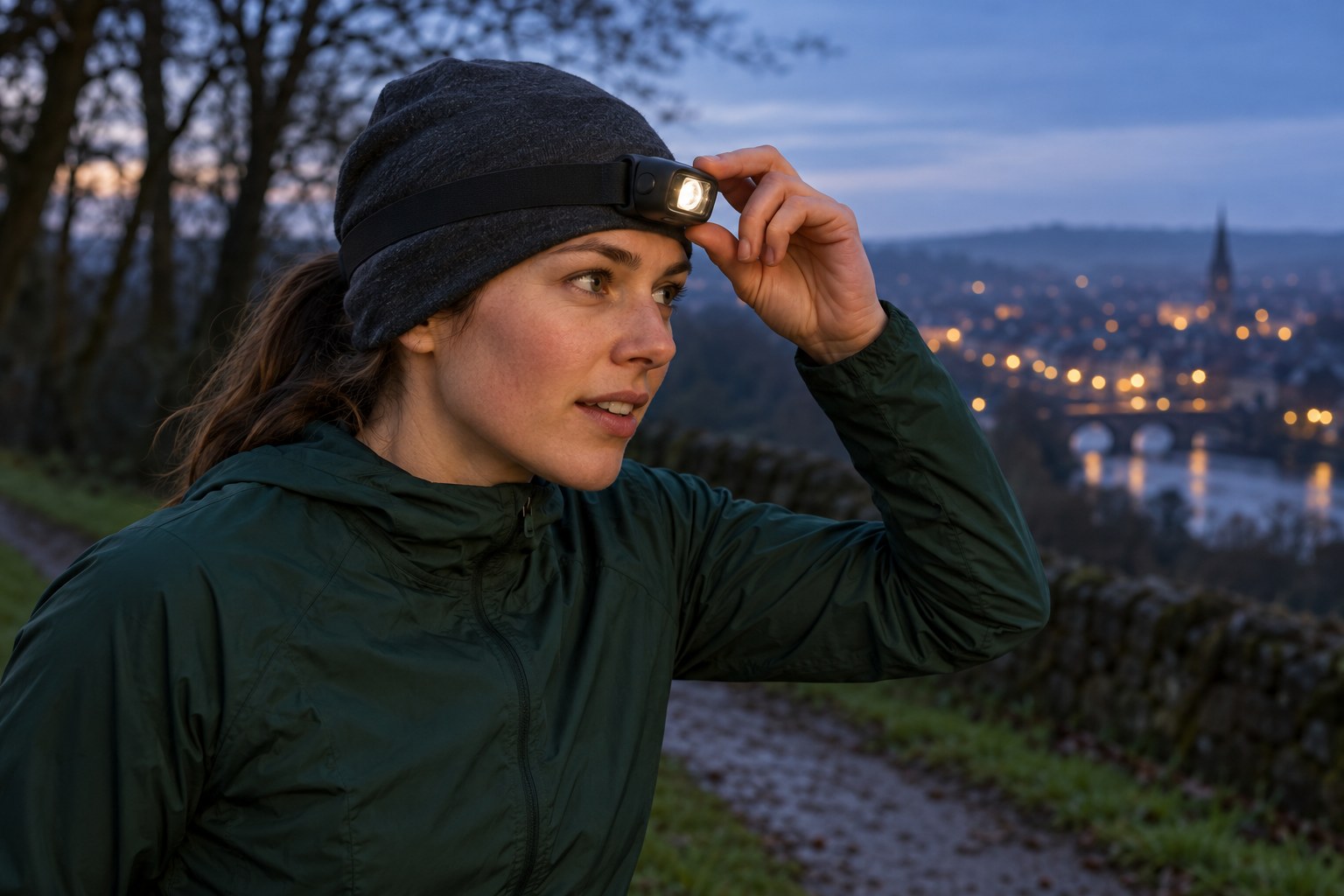
A headtorch that felt secure in summer can start wandering when you put a hat underneath it. Before tightening the strap again, flatten the fabric, move any bulky fold away from the lamp and reset the angle with your head in its normal running position.
Fit the headwear first, then the torch, then your hood. That makes it much easier to see which item is pushing another one out of place.
Put the hat or headband where it feels comfortable without the torch. Cover your ears as intended, settle your hair and check that the front edge stays clear of your eyes. Smooth any rolled fabric around the forehead.
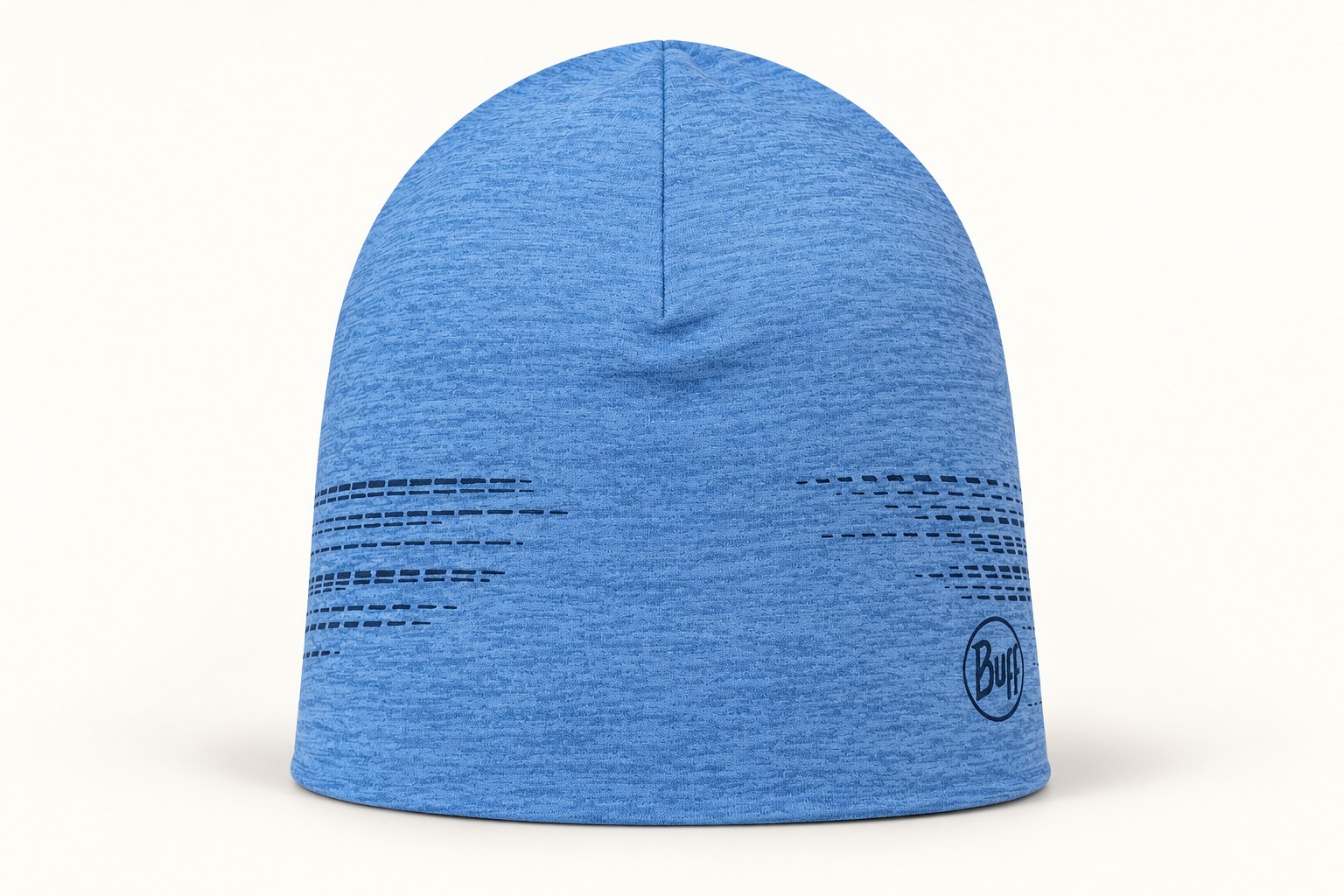
If a thick cuff sits exactly beneath the mounting plate, try a flatter part of the hat or a thinner layer. The low-profile DryFlx beanie is one option to consider when you want crown coverage without a chunky turn-up. Its slim shape makes it easier to arrange the layers, but you still need to check it with your particular lamp.
The slim crown gives you coverage without a bulky turned-up cuff. Washed Blue shown.
A headband can work when your ears need covering but your crown is comfortable. Keep its edge from sitting half under the lamp plate: either support the plate on an even layer or position the band so it doesn’t make a ridge beneath it. For the wider clothing choice, use the winter headwear guide.
Adjust the strap after adding the layer
Loosen the headtorch band enough to put it on without dragging the hat backwards. Centre the lamp, lay the strap flat around your head and take up the slack gradually. Keep adjusters and any rear battery pack in the positions specified for your model.
The strap needs to hold the lamp steadily without causing a pressure point. If you have to keep tightening it, remove the torch and check whether the hat itself is slipping. A loose hat beneath a secure strap can still move as a whole.
If the torch has a top strap, fit that as its instructions describe. Don’t remove supports or route them around a bobble simply to make the combination fit. A smoother hat is the easier change.
Set the beam with your normal running posture
Look ahead as you would on the route, then tilt the lamp to show the ground in front of you. Check both the next few steps and enough path ahead to follow the route. If you set the angle while staring down at your shoes, you may find yourself continually dipping your head once moving.
Walk, then jog a short safe section and look ahead, down and over each shoulder. Notice whether the lamp tilts in its hinge or the whole band moves. Adjust the part that is moving rather than trying to solve both with a tighter strap.
Use an appropriate setting for the surface. If the fit is comfortable but the route is still hard to read, the headtorch buying guide explains beam shape and controls. The runtime guide covers the separate question of keeping enough light for the whole outing.
Add glasses and a hood without moving the lamp
Check the glasses arms above your ears before pulling the hood up. Neither the hat edge nor the torch strap should force the frame out of its normal position. If the pressure appears only after adding the lamp, adjust that overlap first.
Pull the hood into its usual position and turn your head both ways. Keep its opening clear of the lamp face and controls. Look for fabric touching the mounting plate or pushing the light down when you glance at the ground.
If breath or a high collar sends moisture towards your lenses, the glasses and neckwear checks help you separate the airflow problem from the lamp fit. Stop somewhere safe before dealing with obscured vision on the run.
Recheck once the layers have settled
On a short familiar outing, check the fit after warming up. Fabric and hair may settle differently once you’re moving, so make a small adjustment before it becomes a recurring distraction. If the hat is now too warm, stop and remove it, then readjust the torch for the smaller circumference.
Inspect a band that continues slipping even when the fabric beneath it is settled. Check for a twist, an adjuster that won’t hold or visibly stretched elastic. Follow the lamp maker’s cleaning and replacement instructions rather than adding a slippery treatment or improvising an attachment.
For a race, practise changing the headwear with the gloves you expect to use and put the removed layer in its intended pocket. Use the Pack Planner to keep a required spare light or layer on the organiser’s kit list. The fit check doesn’t replace the event’s lighting requirements.