Some links in my articles are affiliate links. I may earn a commission when you buy through them.
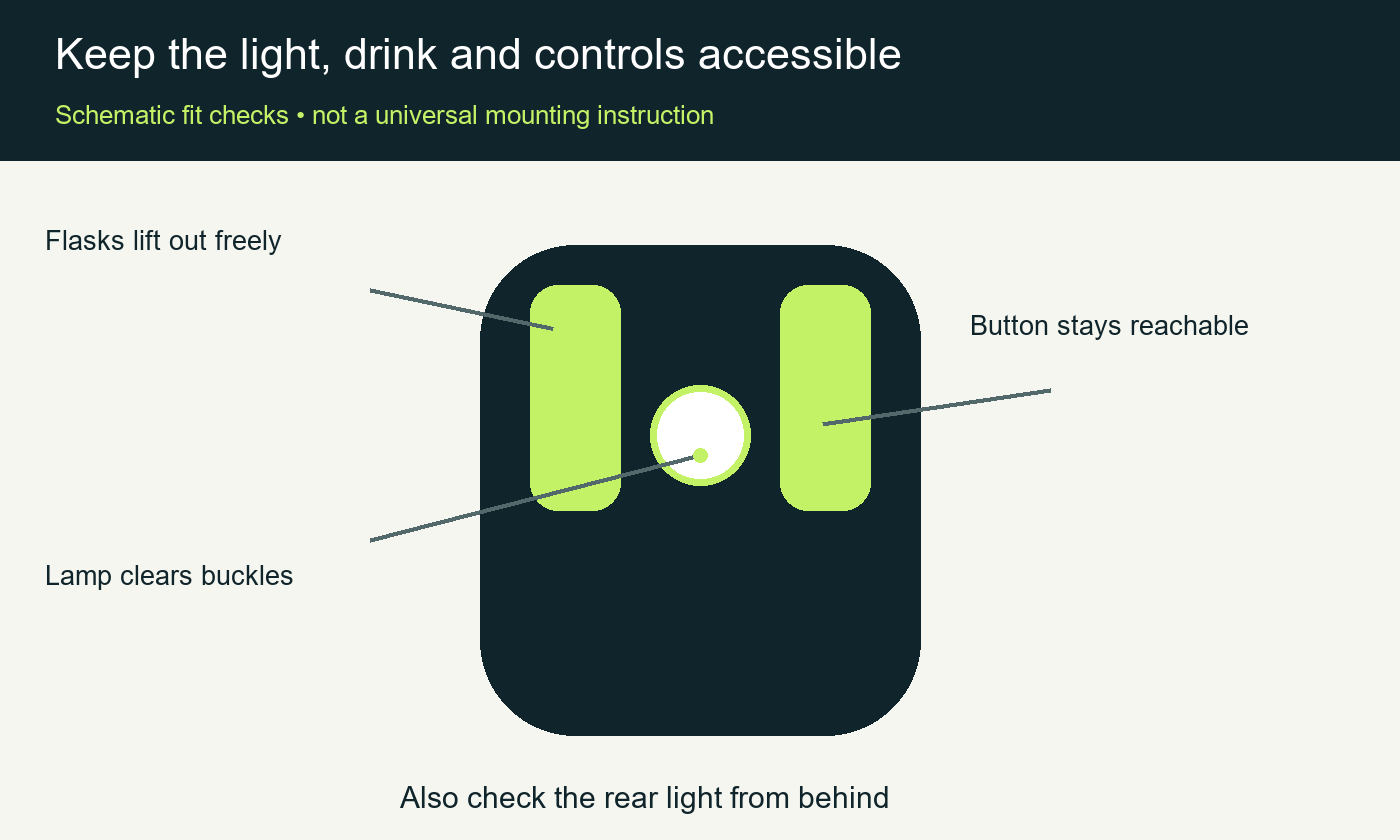
You can wear a separate chest-light harness with a hydration vest when both fit securely and the lamp, flasks and controls remain accessible. Check them together with the bottles filled and your usual layers on. A fully adjustable strap does not tell you whether its lamp housing will sit neatly between your vest’s pockets.
Fill the flasks, pack the layer and small items you expect to carry, then adjust the vest as you would for the run. Get that fit comfortable before adding another harness. Otherwise, you can end up tightening the light against a vest that was already sitting too low or moving around.
With my UTOBEST UTR104, bringing the load close to my body helped stop the rear space thumping against my back. I would preserve that settled fit while assessing where a light can sit. That experience is a reason to check the loaded arrangement, rather than judging compatibility with an empty vest.
Our hydration-vest fitting guide covers the underlying adjustment. Once that is comfortable, put the chest harness over it if the maker’s instructions allow that arrangement and adjust without compressing the flasks.
Check three clear spaces at the front
You need room for the lamp housing, room to take a drink and room to reach the controls. A light sitting between the pockets can appear tidy until you pull a flask upwards and discover that the harness blocks it.
Reach each flask with your normal hand and replace it without pulling the light sideways.
Operate the lamp while the jacket is zipped and the vest is adjusted.
Open the pocket you use for gels or a phone.
Check that the jacket zip and sternum buckle are not pressing against the lamp.
Look at the whole movement, rather than just the final position. If the flask mouthpiece catches a strap during removal, moving the harness slightly may help. Do not relocate a lamp so far that it points awkwardly or rests against your throat.
Measure over the layers you will actually wear
Measure the circumference where the light’s horizontal strap will sit, over the vest and winter clothing if that is the intended arrangement. Compare with the exact model’s stated adjustment range. Decathlon lists 75–120cm for Kiprun Run Light 250, giving you a useful check before ordering.
Leave enough adjustment to accommodate a lighter top as well. A harness near its maximum length over a jacket may fit, yet leave little scope for a bulkier layer. At the other end, make sure it can tighten adequately when the jacket comes off.
Torso length and pocket position matter as well as circumference. A short upper body can bring a shoulder strap, flask top and lamp closer together. Treat fit as an individual measurement and access check; a men’s or women’s label cannot settle that combination.
A rear light beneath your backpack needs another position
Put the bag on and check the rear unit from behind. If the vest or backpack covers the red light, tightening the harness will not make it visible. Plan a separate exposed attachment position using the clip-on lights guide.
Wear the jacket both ways you actually use it: on your body and packed or tied where it goes after warming up. A layer tied over a lower rear unit can obstruct it even when the light was clear at the start.
Do not improvise a direct vest mounting for a lamp sold as a separate harness. Decathlon explicitly says the linked Run Light 250 version has no special backpack fitting. Use the maker’s intended arrangement and check its instructions before altering the attachment.
Do a short movement check, then partly empty the flasks
Walk, jog, bend to tie a lace and take a drink. Check that the lamp returns to the same comfortable position and still illuminates the ground ahead. Watch for a housing that knocks against a sternum buckle as you move, or a strap edge that repeatedly rubs your neck.
Drink enough to partly empty the soft flasks and repeat. Their shape and the fit around the front pockets can change as the water volume falls. Check the light without undoing the secure adjustment you already found for the vest.
Try the button with your running gloves as well. If reaching it requires unfastening the vest, another mounting arrangement may be easier. The headtorch comparison explains when keeping lighting on your head makes sense.
When I would choose a simpler setup
For a short loop without much to carry, a chest light and a running belt can leave the front of your torso less crowded. For a longer run where you depend on easy access to water, keeping the vest comfortable may favour a headtorch instead.
Choose the arrangement that lets you reach the kit you use most. You do not need to carry two overlapping harnesses to solve an ordinary evening-lighting problem.
For an event, use the Race Atlas to find the race and the Pack Planner to review the recorded kit information, then check the organiser’s current instructions. Test the intended combination on a familiar training route before race day.