Skip to content

The field guide · Evening running

Best chest lights for running: choose for charging, fit and runtime

By James Thompson · Updated 14 October 2026

Some links in my articles are affiliate links. I may earn a commission when you buy through them.
If a headband is the part of night running you could happily do without, a chest light is worth considering. Start with how you will wear it and charge it: Avanto SolX1 Pro suits a USB-C kit setup; Proviz LED360 combines a tilting front lamp with reflective straps and a rear red light; Kiprun Run Light 250 gives you a published strap range to check before ordering.

For a familiar unlit path, those are useful options to compare. If your route needs you to look around tight bends or scan waymarks, read the headtorch or chest-light comparison first. The light you buy should suit where you need to look.

Choose around the job you need the light to do

A chest lamp points from your torso. A headtorch moves with your head. That affects an ordinary moment such as looking towards a gate: your chest lamp can stay aimed along the path while your gaze moves elsewhere. It is convenient when you want to keep the forward beam steady, but you may need to turn your body to light something off to the side.

For straightforward paths, I would shortlist by harness comfort, beam adjustment and charging. For a route with frequent turns, navigation checks or uneven ground, make beam position the first decision. A higher advertised lumen figure cannot tell you whether the beam reaches the place you are looking.

Avanto SolX1 Pro: a useful USB-C option
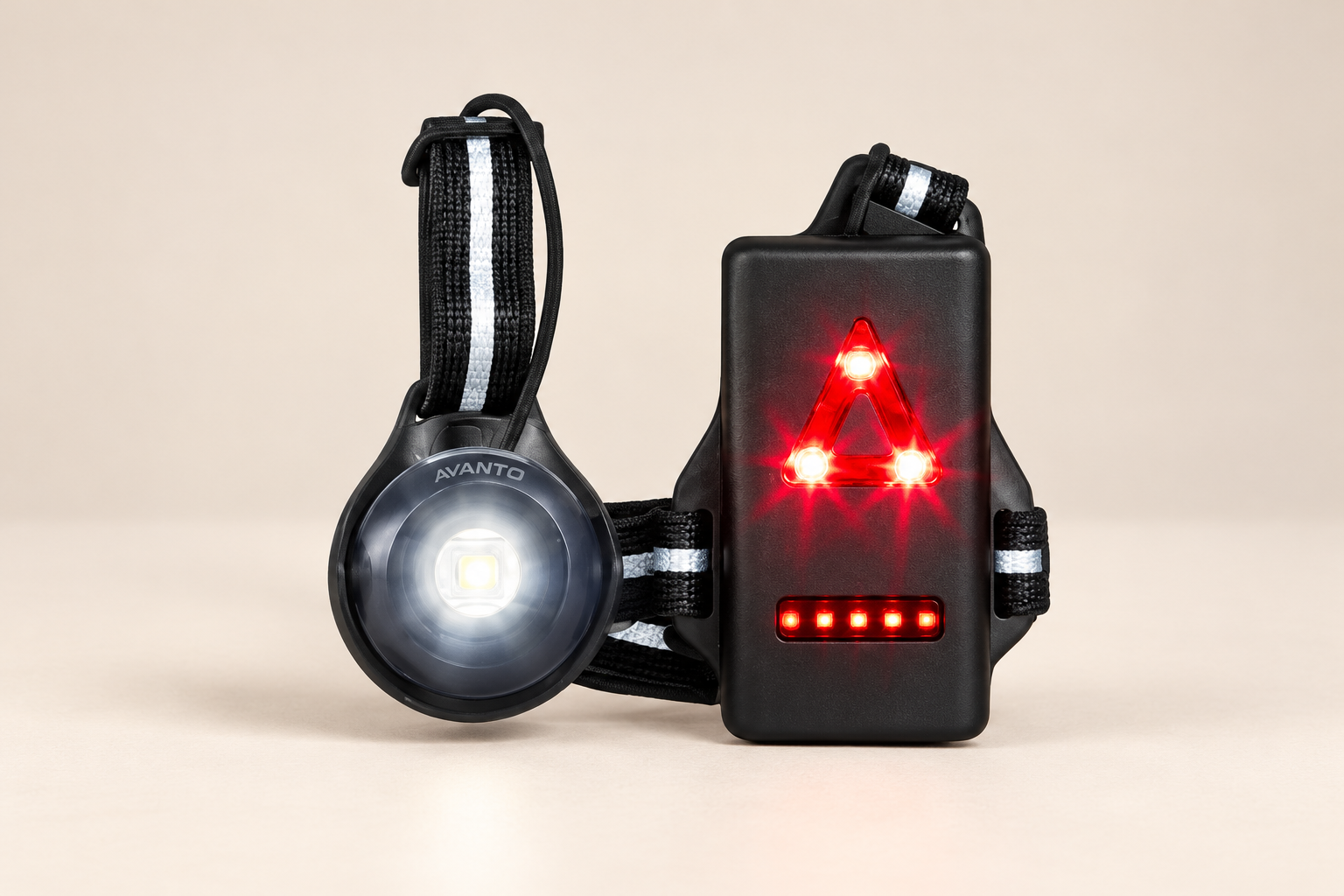
Avanto SolX1 Pro circular front lamp, rectangular rear LED unit and reflective strap sections
Avanto SolX1 Pro

Avanto SolX1 Pro is the choice I would inspect first if your phone and other kit already use USB-C. The manufacturer lists a tilting front light, adjustable elastic harness, rear red LEDs and reflective straps. The black Amazon UK listing matches this model, so there is a specific buying route rather than a search through similarly named versions.

Avanto specifies three hours at full output and five hours at half output. That mode-by-mode information helps you plan an evening session more clearly than a single maximum-runtime headline. It is the maker’s specification, so leave room for a slower return and check useful brightness on your own route before relying on the full duration.

Its published weight is 160g. Think about where that weight sits and whether the front unit has clear space between your vest’s flasks. The elastic harness accommodates layers, but the manufacturer’s broad fit wording does not provide an exact circumference range. If you are near the limits of standard clothing sizes, get the measurement before buying.

Proviz LED360: a compact front-and-rear arrangement
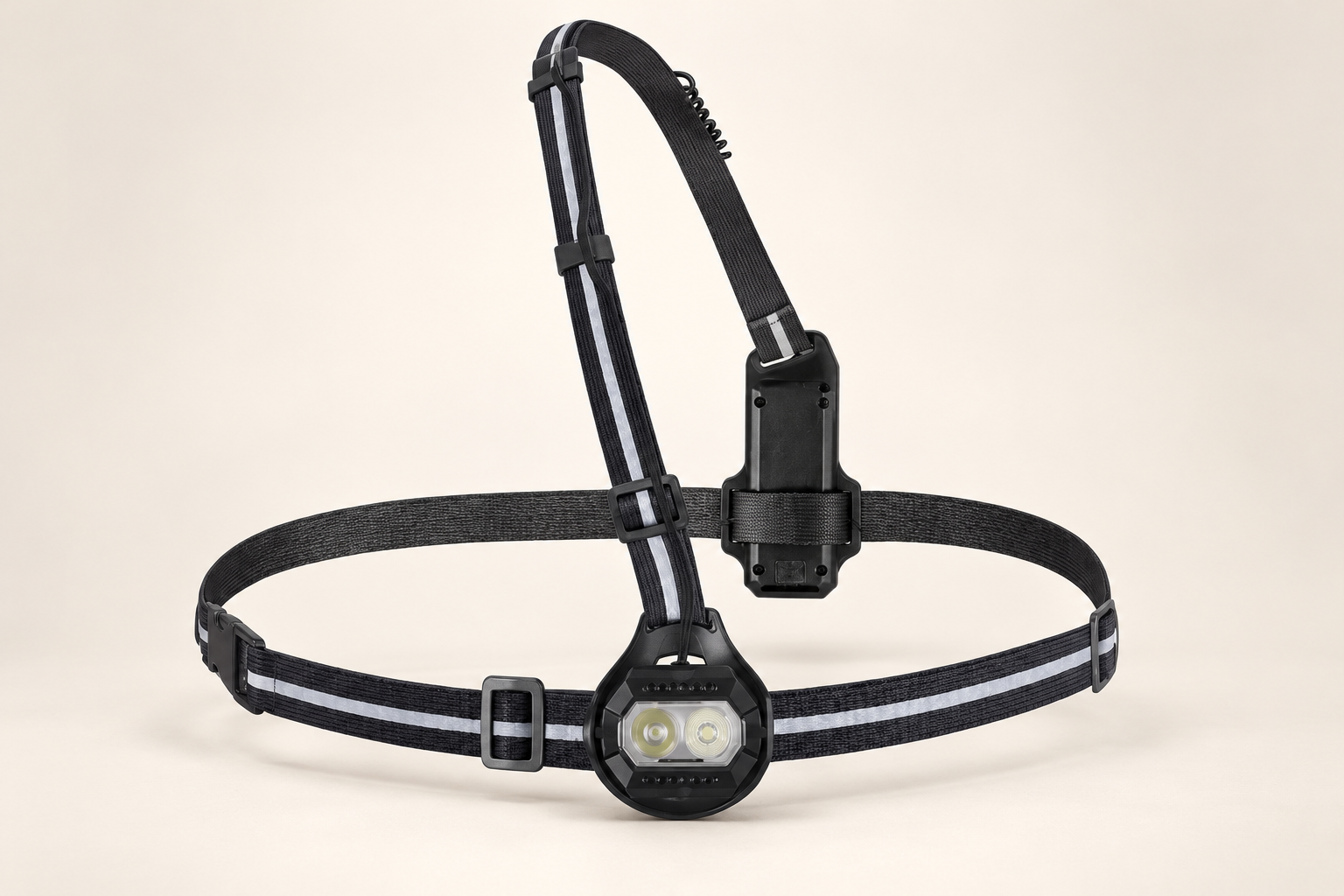
Proviz LED360 chest-light harness with twin front optics, reflective straps and rear battery unit
Proviz LED360

Proviz LED360 is a sensible alternative when you want adjustable front lighting and rear visibility in one harness. Proviz lists full, half and low front modes, a tilting beam, a slow-flashing rear red light and REFLECT360 details on the straps. The published weight is about 161g, so weight alone gives little reason to choose between these two units.

The useful buying distinction is the power information. Proviz specifies USB recharging and supplies a lead, but the current specification does not identify USB-C. Check the connector if sharing a cable matters to you. Its stated maximum runtime is up to three hours without a clear mode-by-mode breakdown on the page; do not assume that means three hours of full brightness.

The rear light needs to remain visible after you put on a backpack. If your bag covers it, plan a separate visible rear-light position rather than counting the hidden lamp as part of the setup. Our clip-on lights guide helps with attachment choices.

Kiprun Run Light 250: the clearest published sizing check
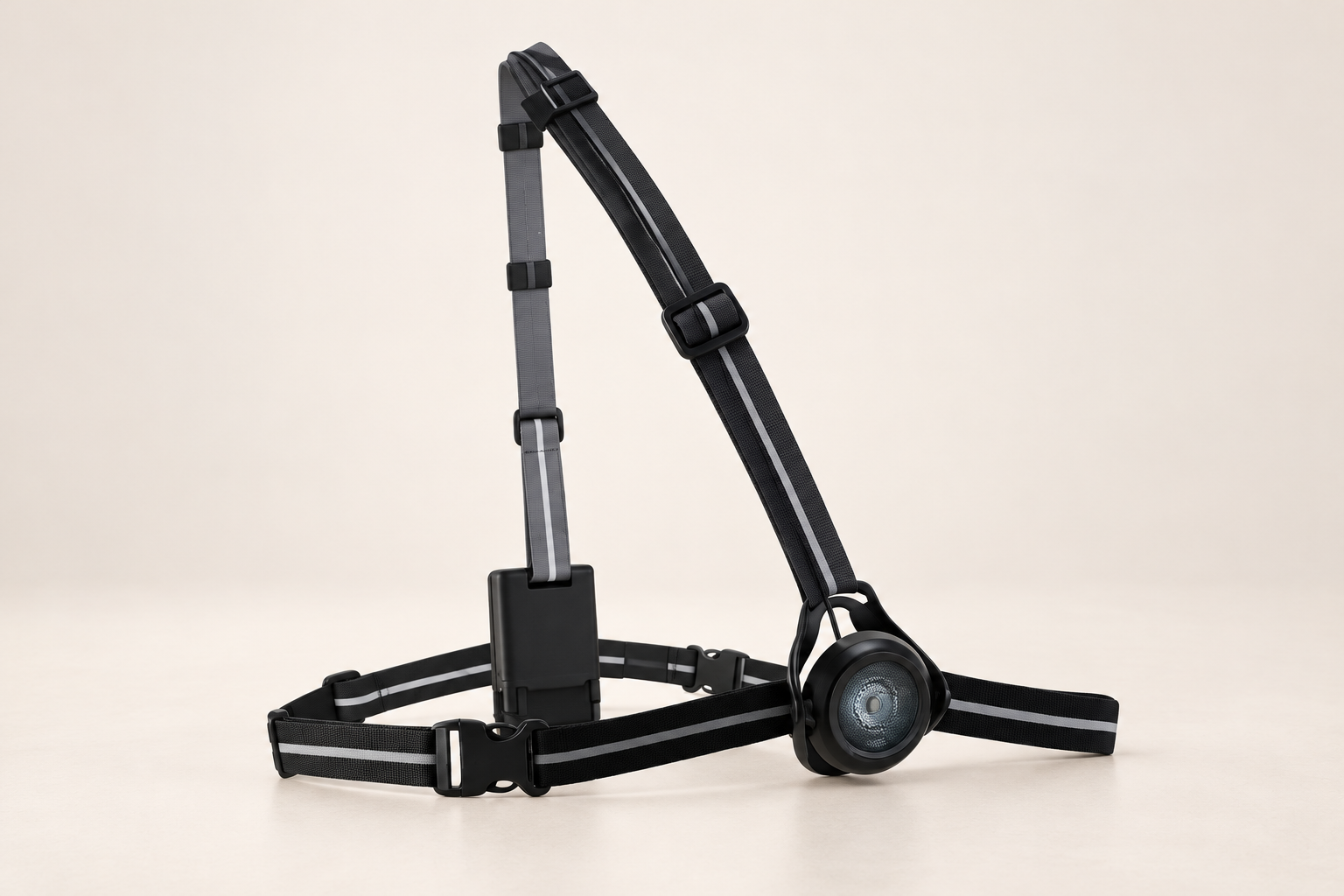
Black Kiprun Run Light 250 FW19 chest-light harness showing the round front lamp, reflective straps and rear battery pack
Kiprun Run Light 250

Kiprun Run Light 250 is worth comparing if an exact strap range is your priority. Decathlon gives a 75–120cm adjustment range, two front settings and a tilting lamp. Measure around the layers you intend to wear where its strap will sit, then compare that measurement with the published range.

Decathlon states 2.5 hours at 250 lumens or five hours at 125 lumens. That makes the brighter-mode duration particularly easy to find. Its page also says this version has no special backpack fitting. Wearing the harness with a vest and mounting the unit directly to a vest are different arrangements; buy it for the former only after checking clearance.

This is a direct Decathlon product route. Check the exact FW19/8573980 version, because other Runlight models have different outputs and construction. A useful sizing figure on one model should not be applied to another.

Plan useful runtime at the setting you will use

Suppose your usual loop takes 70 minutes, with another 20 minutes allowed for a slower finish or a wrong turn. Your planning duration is 90 minutes. Compare that with the mode that lights your darkest stretch adequately, rather than the longest figure on the packaging.

The manufacturer figures below explain the advertised modes; they are not results from a comparative endurance test. Beam shape, how brightness changes as charge falls and the conditions on your route still affect how useful the lamp feels. Charge fully, use the relevant setting on a short familiar loop and observe the output before committing to a longer outing.
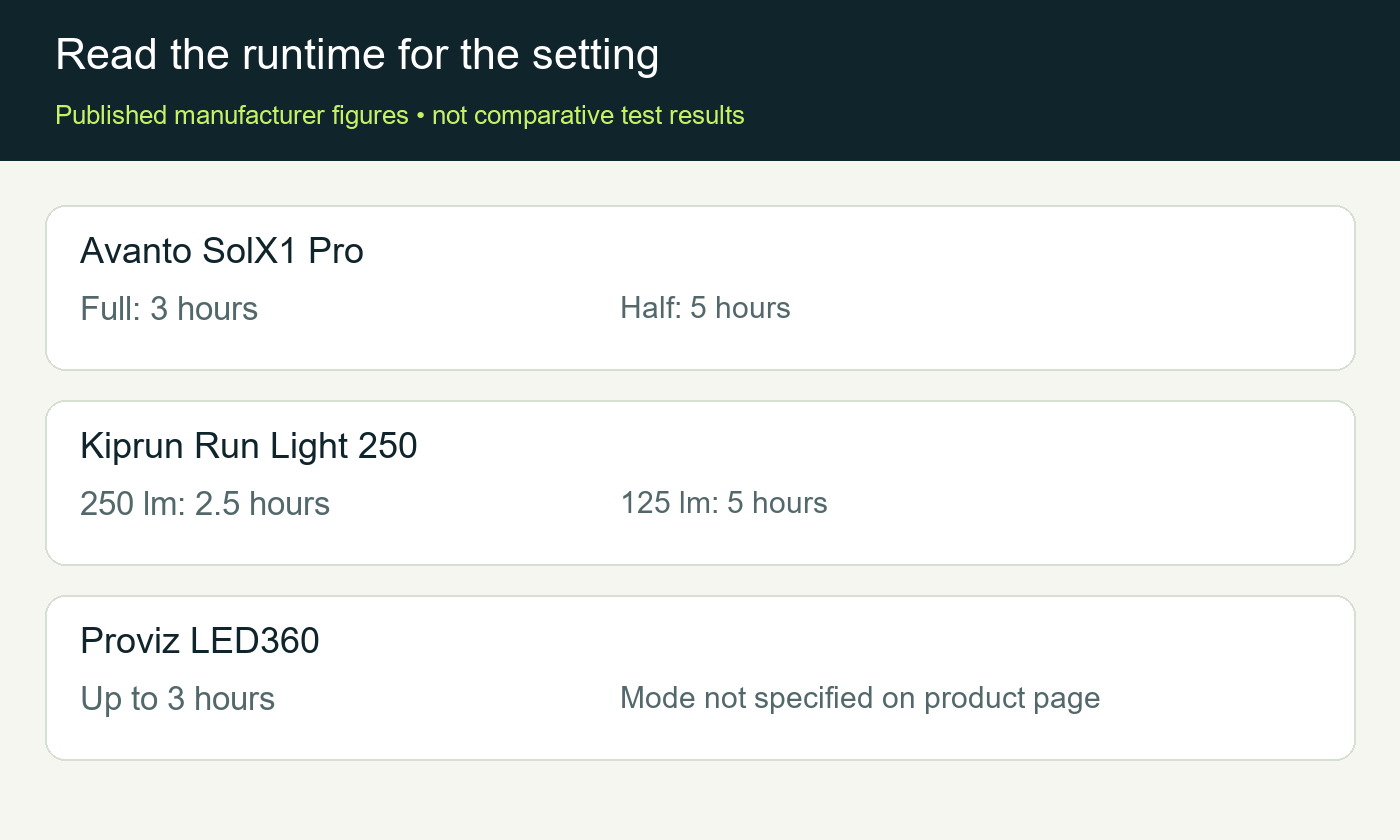
Published runtime: Avanto full 3 hours and half 5; Kiprun 250 lumens 2.5 hours and 125 lumens 5; Proviz up to 3 hours without a specified mode

Try the harness with the kit you carry

Put on your winter top, jacket and loaded vest before assessing fit. Leave the flask pockets accessible, keep the lamp clear of sternum buckles and check that you can reach both the light control and the jacket zip. Loosening one strap to make room can move the lamp away from the position where you set its angle.

Jog briefly, bend to tie a lace and take a drink. Then repeat after partly emptying the flasks. Those checks reveal clashes you will miss while standing in front of a mirror. The chest-light and hydration-vest fitting guide walks through the sequence, including what to do when a rear unit sits beneath your pack.

When I would keep a headtorch

I would keep head-mounted lighting for routes where I frequently look away from the direction my torso is facing. A chest unit can still be useful, but buying a second harness should solve a comfort or lighting problem you actually have.

With the Blukar two-pack, I have found the focused and wider settings useful for the path and its edges. That is a practical reason to keep a headtorch in the comparison: light placement and beam choice can matter more than changing to a different product category. Our headtorch buying guide covers that choice in more detail.

For an event, start with the Race Day Pack Planner and the organiser’s current kit instructions. If a headtorch is specified, ask before substituting a chest lamp. Use the Race Atlas to find the event, then follow its official information.

Which would I shortlist?

For USB-C convenience and stated runtime at full and half output, start with Avanto SolX1 Pro. For a front-and-rear harness with three front settings, compare Proviz LED360. If knowing the strap range before purchase matters most, check Kiprun Run Light 250.

Once one looks suitable, check the connector, the loaded-vest fit and the duration at your intended brightness.

Product information

Specifications checked on 14 October 2026 against Avanto’s SolX1 information, Proviz’s LED360 specification and Decathlon’s Run Light 250 page. Model-specific claims above follow those published specifications; James’s headtorch observation comes from his recorded use.