Some links in my articles are affiliate links. I may earn a commission when you buy through them.
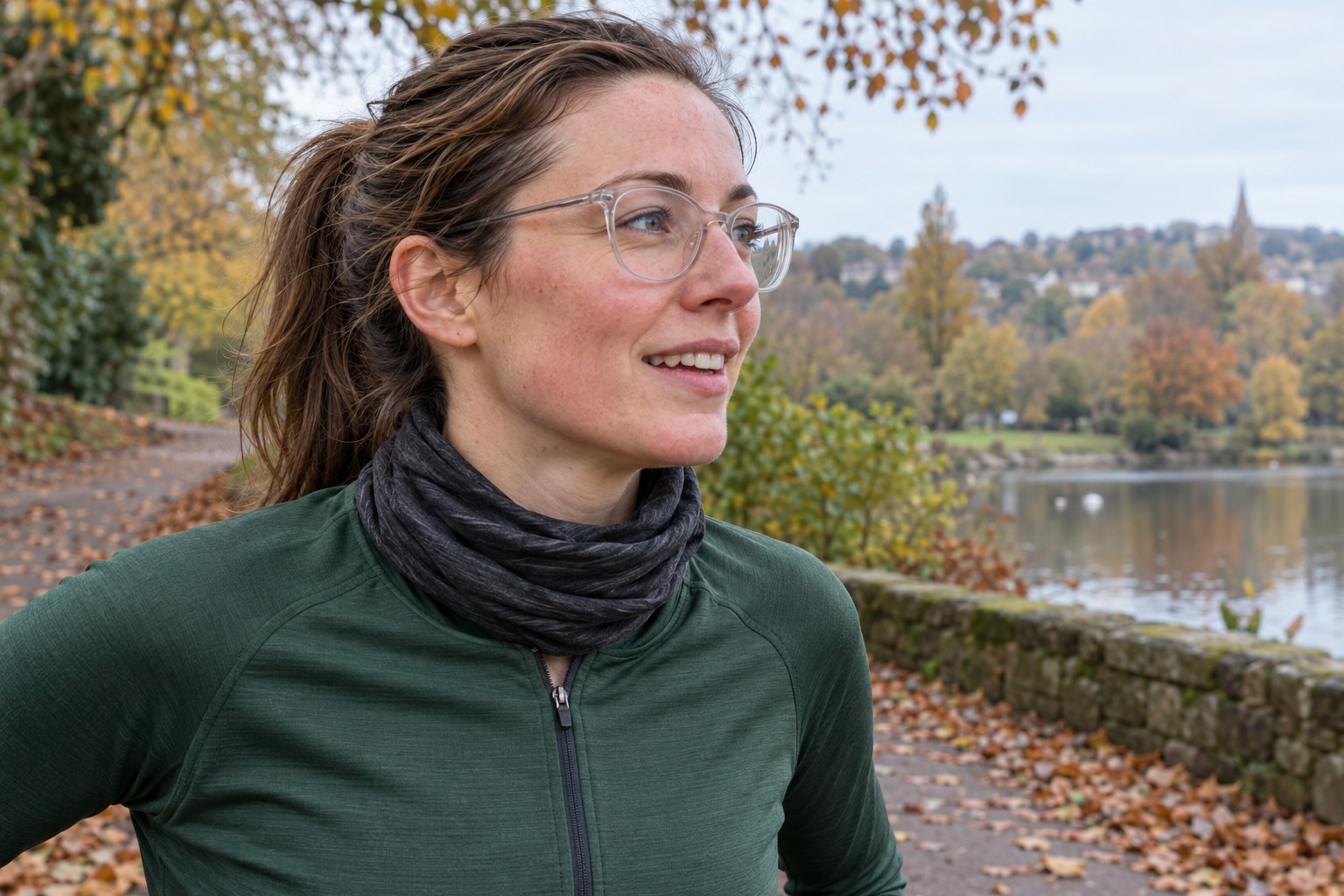
If your glasses mist as soon as you pull a snood over your face, start by lowering the fabric below your mouth and nose. Keep the warmth around your neck, then see whether the lenses clear. You may only need a different fold, rather than a new pair of glasses or a thicker tube.
There are two separate things to check: where your breath is going, and whether the fabric is pushing the frame out of its usual position. Change one at a time so you can tell what actually helps.
Make the first check somewhere safe and stationary. With the glasses in their normal position, breathe normally with the tube around your neck. Then raise the fabric to the position that causes trouble and compare. If mist appears when the top edge reaches your face, lower that edge again before changing anything else.
Warm, moist air reaching a cooler lens can form condensation. ZEISS describes that route in its guidance on face coverings and glasses. A running snood has a different fit from a shaped face mask, so I’d use the airflow explanation to guide a fitting check, rather than expect mask-fitting tricks to work on stretchy running fabric.
If the lenses are already misting with the tube down, look at the rest of the combination: a close hood, a raised jacket collar or a change from a warm room to cold air. Adding a tighter neck layer may not address that cause.
Keep the warmth where you need it
Leave your mouth and nose uncovered when neck coverage is enough. Spread the tube loosely around the collar instead of bunching it into a tall roll. Turn your head and look down to check that the top edge stays away from the frame.
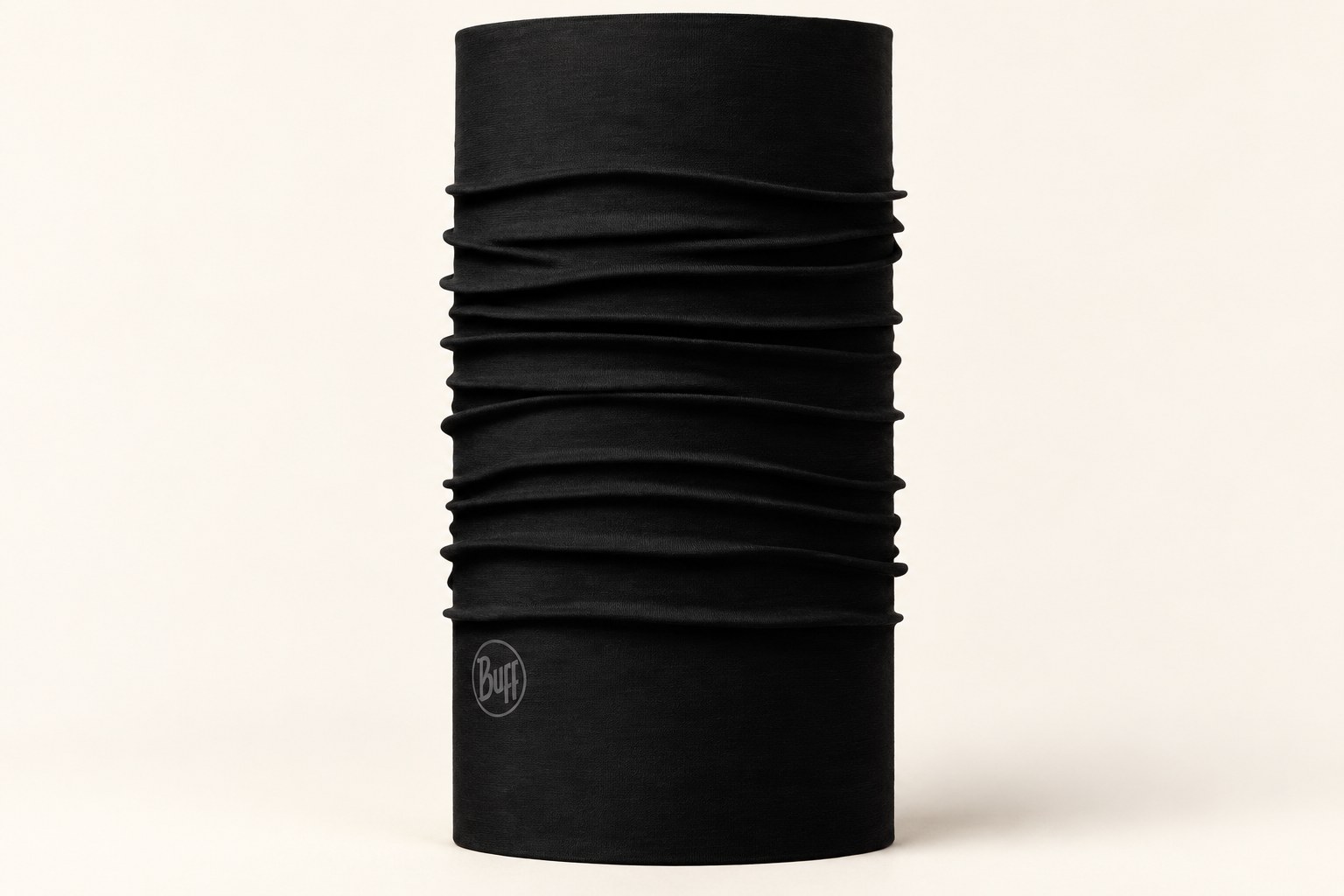
The lightweight EcoStretch snood is a useful option if you want flexible neck coverage without a thick fleece roll under your chin. Its stretchy jersey can be rearranged as you warm up. It isn’t an anti-fog product, and a different tube alone won’t guarantee clear lenses.
Keep the loose fabric around your neck when you want your mouth and nose uncovered.
If it is your ears that feel cold, cover those separately with suitable headwear and leave the neck tube lower. Our winter headwear choices explain the difference between a broad band and a covered crown. You can also try an existing tube as a headband before buying another item; BUFF’s wearing guide shows that fold.
Check the pressure above and behind your ears
Put the glasses on in their usual position, then add the hat or ear band. Feel for an edge sitting on top of a glasses arm. A fold that seems harmless at home can become annoying when every step nudges the frame.
Move the fabric edge slightly and try turning your head. If the frame tips, lifts off the bridge or presses at one temple, reduce that overlap. Don’t bend the glasses or pull a strap tighter to compensate; an optician can help with a frame that needs adjustment.
Try headphones last. It’s easier to identify the awkward contact point when you add one item at a time. Keep the arrangement that lets the frame stay where it belongs without trapping an ear between several tight bands.
Use lens care that suits your lenses
Clean the lenses using the method recommended for their coating, with a clean suitable cloth. A damp sleeve or the corner of a muddy snood is a poor substitute when grit is involved. Keep the cloth in its own clean pocket or case so it stays useful.
If you already use an anti-fog treatment, check that the lens maker permits it on your coating and follow that treatment’s instructions. Avoid improvising with household detergents or wipes. ZEISS provides its own product-specific routine; that doesn’t establish compatibility with every lens or treatment.
For the next run, begin with the fabric lower and the frame settled, then change the covering as you warm up. Don’t judge a whole new arrangement on the first few seconds outside the door.
Have a clear-view plan for the route
If mist obscures your view while you’re moving, slow down and stop somewhere safely out of other people’s way before adjusting or cleaning the glasses. A familiar path in daylight is a better place to try a new combination than an uneven trail after dark.
Keep a clean cloth where you can reach it without emptying your bag. If the neckwear becomes damp and uncomfortable, lower it or take it off and stow it separately from the dry layer you want afterwards. The general snood guide covers collar fit and packing; the hat and headtorch guide adds the lamp checks for evening outings.