Some links in my articles are affiliate links. I may earn a commission when you buy through them.
Cold ears and a hot head can happen on the same run. I’d start with a broad headband if your ears need covering but your crown feels warm, a thin beanie if you want coverage all round, and a light neck tube if the draught is coming through your collar.
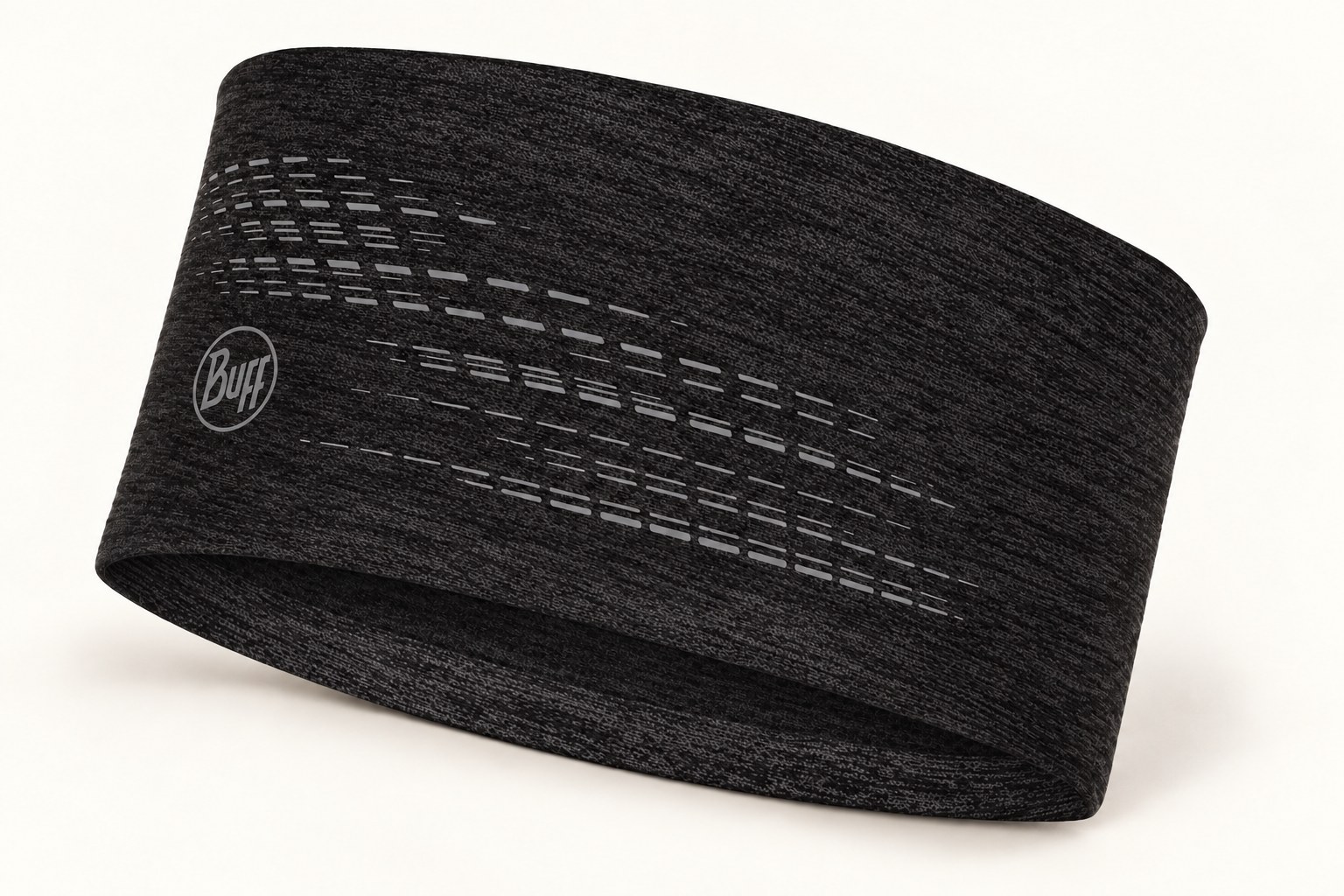
The DryFlx headband is the option I’d look at first if you keep taking a hat off halfway through a run. Its broad loop covers the forehead and ears while leaving the top of your head open. BUFF describes the construction as seamless and stretchy, so there’s no bulky sewn join to position under another band.
An open crown with coverage around the forehead and ears.
Put it on with your hair as you actually wear it running. Set the lower edge over the parts of your ears you want covered, then turn your head and look down. If it rolls up or creeps backwards, try changing its angle before deciding that it needs to be tighter.
A narrow hair band does a different job. It can hold a fringe back, but it leaves most of an ear exposed. For warmth, look at the depth of the fabric as well as the word “headband” on the listing.
For coverage over the top of your head
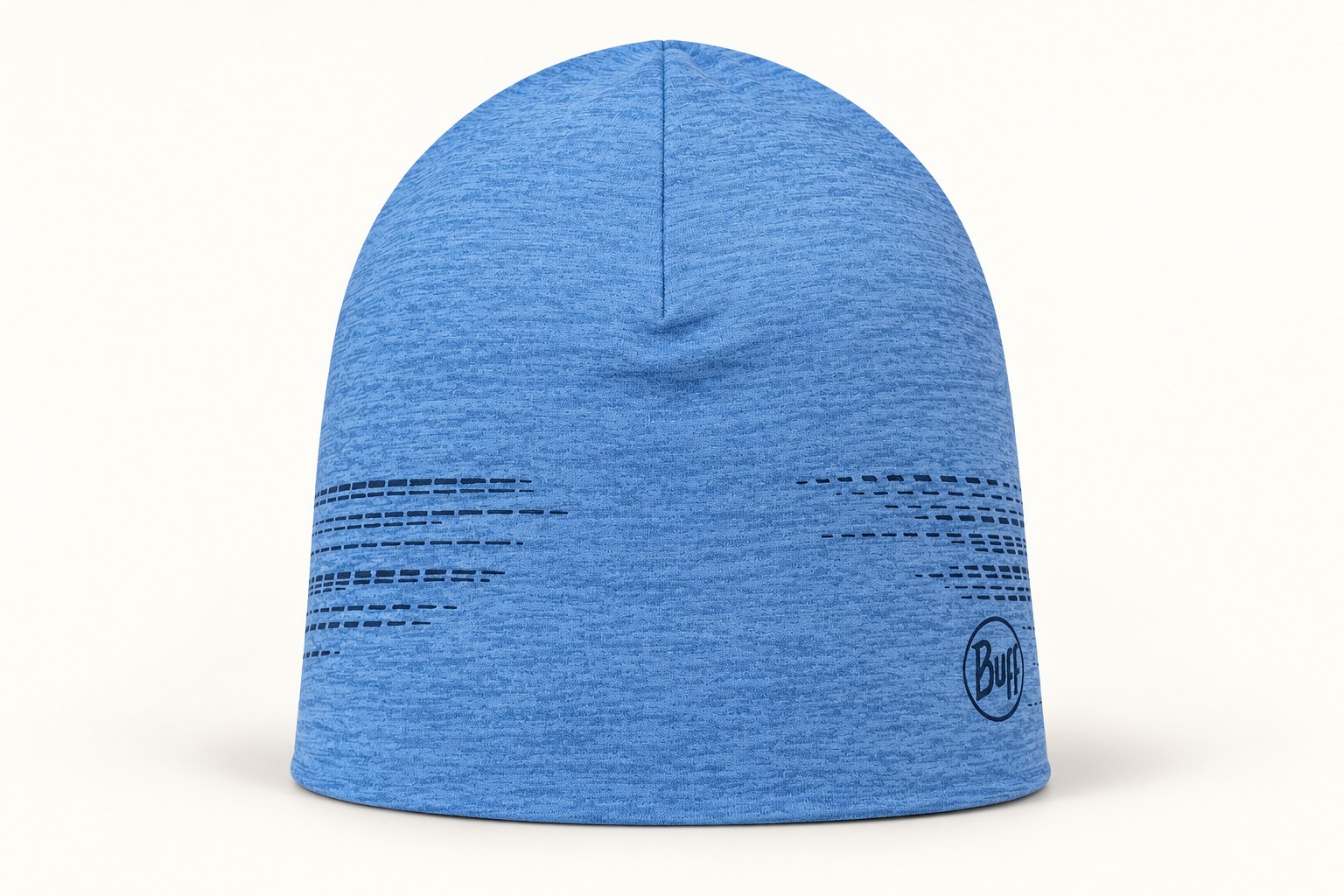
The DryFlx beanie adds a covered crown in a low-profile shape. I’d choose this over the headband when the top of your head feels chilly too, or when you want one simple item to pull on and leave in place.
The slim crown gives you coverage without a bulky turned-up cuff. Washed Blue shown.
The thin lower edge is useful around other kit. A thick folded cuff can sit right where glasses arms or a headtorch strap need to lie; a smooth, flat layer gives you fewer folds to arrange. That still needs trying with your own frame and lamp. Our headtorch and hat fitting guide takes you through it.
BUFF specifies quick-drying fabric for both DryFlx shapes. I’d use that as a reason to shortlist them for active wear, rather than choose a hat by its warmth rating alone. Neither should be treated as a waterproof hood or a substitute for the insulation your particular route needs.
For the gap above your jacket
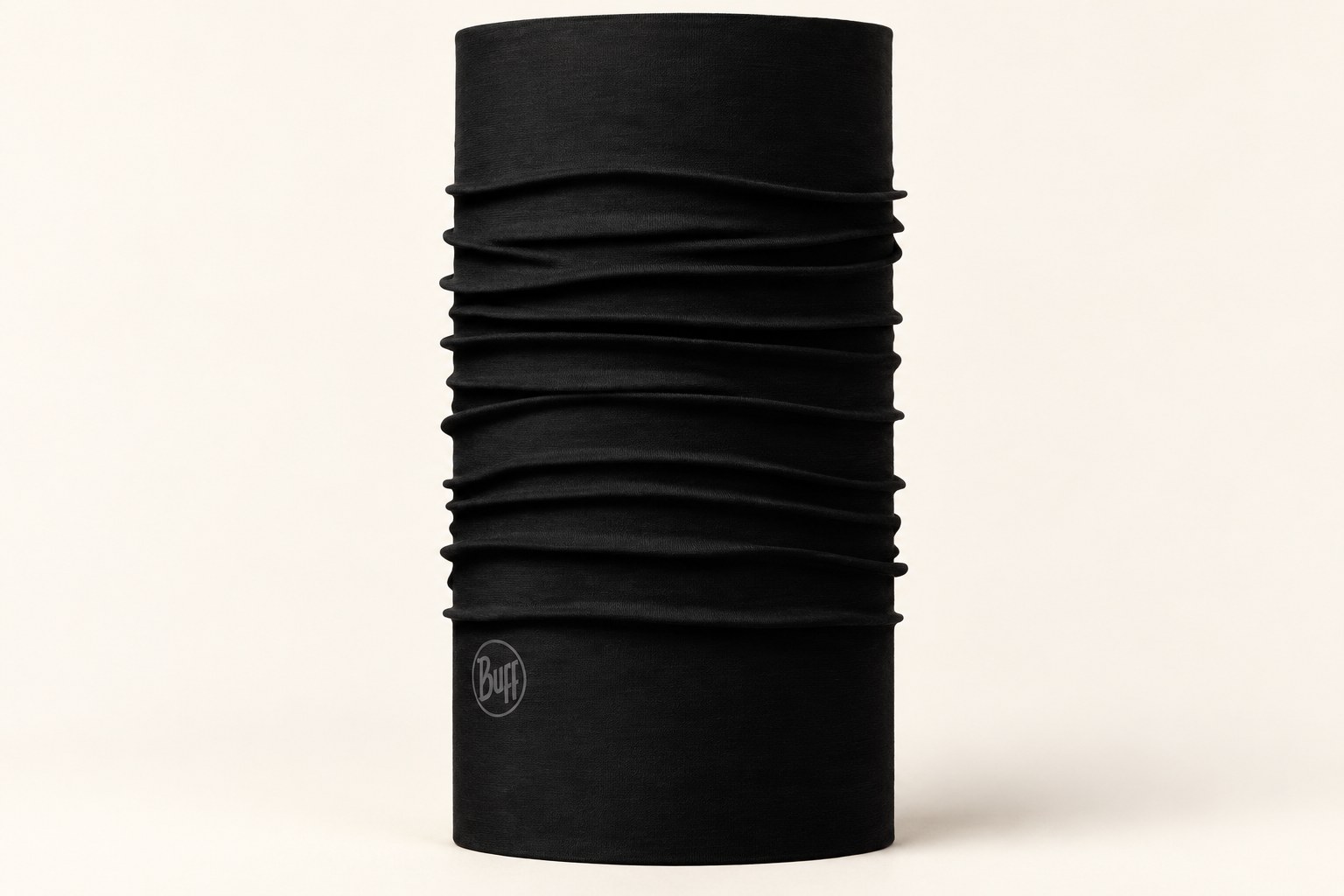
If your head feels comfortable and it’s your neckline that catches the breeze, a light EcoStretch tube is the smaller change to make. It stretches into a loose fold around the collar and can be pulled down without taking off your hat.
Keep the loose fabric around your neck when you want your mouth and nose uncovered.
Try it with the jacket zipped to the height you normally use. Turn your head and check that the fabric doesn’t build into a tight roll under your chin. Keeping some fabric below the collar helps cover the gap when you look over a shoulder.
For a fuller explanation of when a snood is useful, use the neck-gaiter guide. If you wear glasses, these neckwear and lens checks are worth doing before your first dark run in the combination.
Choose for the warm part of the run as well
Think about the sheltered stretch after the first hill, not just the walk out of the front door. If you usually end up carrying your hat, a headband may give you enough ear coverage while being easier to leave on. If you still need to take it off, give it a pocket before setting off.
Try that pocket with your phone and gloves already packed. A soft hat that fits an empty pocket can become awkward once a large phone is inside. A small zipped vest pocket is often a better home than loosely trapping it under an outside strap.
For a race with a cold wait at the start or a slower journey home, keep a separate dry layer in the bag you can actually reach. The winter kit checklist helps you plan the whole outing rather than adding more warmth to every part of the run.
Fit the headwear with your other kit
Put your glasses, headphones and headwear on together. Pay attention to where their edges meet above and behind the ears. If removing one item immediately relieves a pressure point, rearrange that overlap rather than tightening everything else.
With a headtorch, settle the hat or band first and then adjust the lamp strap. Try looking ahead, down at your feet and over a shoulder. A good fit should let you do all three without the fabric pulling down over your eyes. Keep a folded tube or a hat seam away from the lamp’s mounting plate where possible.
The DryFlx range includes reflective detail, but you still need suitable lighting for seeing the path and being seen. BUFF explicitly says its reflective elements are not high-visibility protective equipment. Our headtorch guide and clip-on light guide cover those separate jobs.
A simple fitting check before you keep it
Wear the item indoors with your usual kit while keeping it clean and following the seller’s fitting and returns conditions. Check crown depth, ear coverage and pressure around your glasses. If you intend to use a hood, put that up too: its opening should leave your view and lamp clear.
Check the care label before the first wash. The current DryFlx beanie listing specifies a gentle 30°C wash; the EcoStretch listing says machine wash. Use the instructions supplied with the exact item and let everything dry before putting it back into a closed kit bag.