Some links in my articles are affiliate links. I may earn a commission when you buy through them.
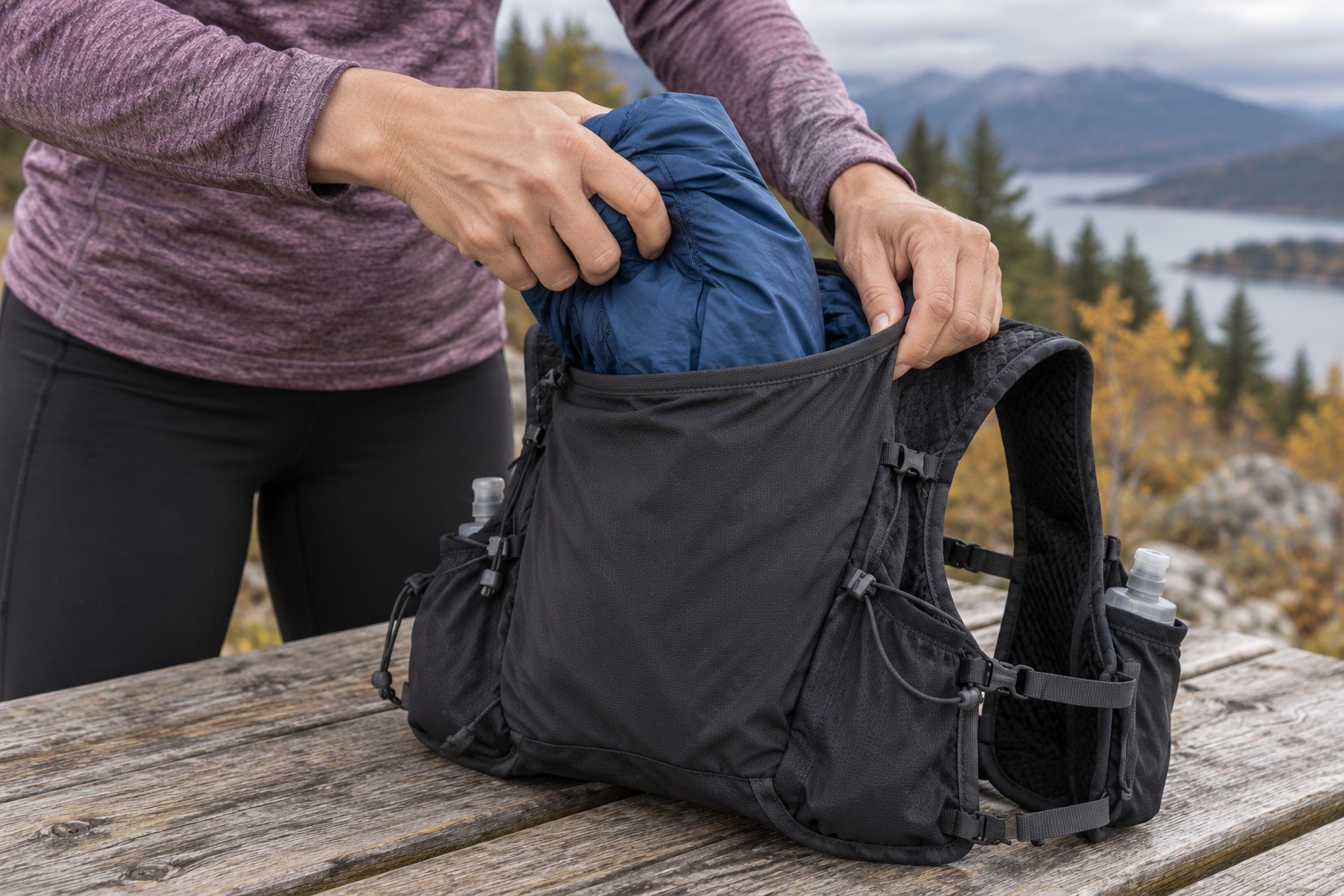
For most runs with a hydration vest, I would put the jacket in an accessible rear pocket, with the sleeves and hood tucked in and your phone and keys elsewhere. With a belt, try the packed jacket beside everything you already carry before relying on it. The bundle needs to stay secure during the run and come out without spilling the rest of your kit.
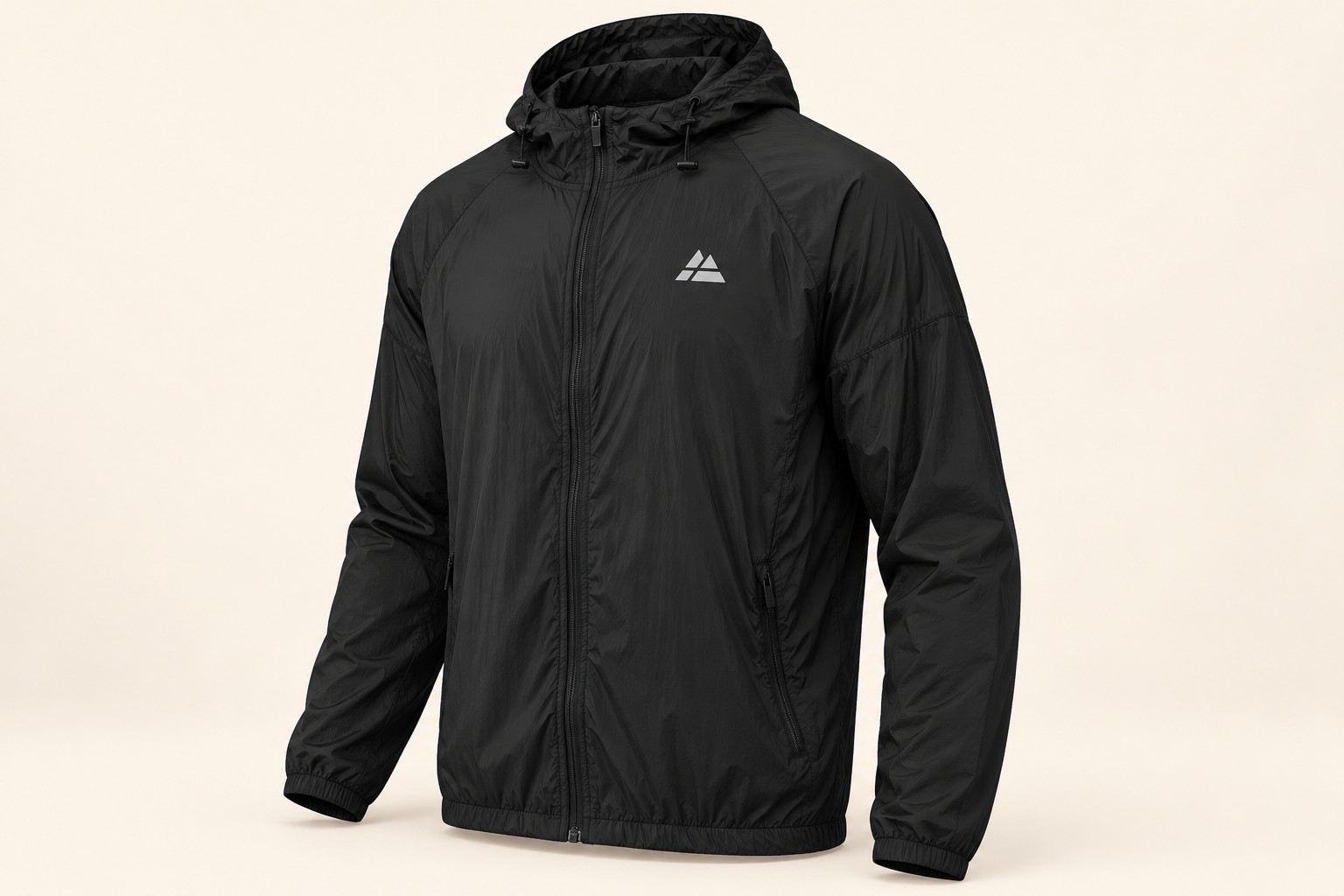
A compact windbreaker makes this much easier than a bulky layer. The Danish Endurance windbreaker is handy for changeable days: it packs away easily and gives you a hood when you need it. For a race, first choose the garment that meets the current kit requirements, then find a carrying place for it.
The Danish Endurance windbreaker is useful when you want to bring a thin layer for a breezy or changeable part of an ordinary run. The current men’s Black version has an adjustable hood, elastic cuffs and zipped side pockets.
Put the whole jacket in the pocket you’ll use. Leave the phone, keys, food and gloves where they normally go. If the jacket only fits after you remove something essential, find another pocket or bag.
A required waterproof shell may take more space than your everyday windbreaker. Use the waterproof-jacket checks before choosing race kit. If you are still deciding between a soft jacket to wear and a thin windbreaker to carry, the lightweight-jacket guide explains the different jobs.
Use a vest pocket without blocking drinks or food
A rear compartment keeps a jacket away from the bottle openings at the front. Put the bundle near an opening you can identify easily, rather than underneath the spare items you will not need during the run. Make sure the zip closes or the pocket edge holds it securely with the vest full.
With a stretch pocket, try moving as you will on the run. Bend forwards, swing your arms and jog a few steps, then inspect whether the bundle has worked towards the opening. Follow the pack’s intended closures; a flap of fabric hanging out is something to tidy away.
Some rear pockets can be reached while wearing the vest; others are awkward with your shoulder movement or load. Try yours at home. If reaching it twists the pack or pulls bottles out of position, stop and take the vest off to retrieve the jacket.
Leave room to put the jacket back. A jacket packed neatly before leaving may be damp and loosely gathered when you take it off later. Allow a little usable space rather than filling every gap with food that then blocks the opening.
Check a belt with the jacket and your usual essentials
A belt works best when the bundle fits its pocket or loops and the load stays comfortable at your waist. Try it over the top you will wear, with the phone in its case and your actual keys present. Check that the buckle or zip stays closed without pulling the belt tight enough to dig in.
Keep the key in a separate secure pocket from your phone. If removing the jacket exposes an open pocket of valuables, reorganise the load before setting off. Our running belt guide helps with storage types, while the belt-fit guide covers movement with a real load.
Use external loops or straps only as the maker intends. Gather the garment securely and contain the sleeves, hood and cords. Avoid fastening a bundle in a way that pushes it against bottle caps, blocks a zip or leaves fabric swinging behind your knees.
Pack it so it comes out cleanly
Empty the garment’s pockets into their planned homes first. Loosely gather the sleeves into the body, then fold or roll the fabric into a shape that matches the pocket. Keep hard zip pulls away from the phone and other easily marked items.
If the jacket has an actual packaway pocket, follow its instructions. Otherwise, keep the main zip available when you take it out; you do not need to force a garment into its hood just because another jacket packs that way. Practise with cold-weather gloves if those are part of the outing.
After packing, pull the jacket out once with the rest of the kit still in place. Watch what comes with it. A glove or wrapper caught in the bundle is easy to lose outdoors, so move those smaller items into their own secure space.
When putting it on, stop somewhere out of other runners’ way and secure the bag before moving again. Check that the hem, sleeves and zip are clear of straps.
Give a damp jacket a separate place
Keep a damp shell away from the dry top or gloves you are saving for later. A suitable separate bag can provide that organisation; see the dry-bag sizing and protection guide for closures and useful sizes. Pack the layer separately before it wets the other items.
Let very wet fabric drip off clear of the bag opening before putting it away, where practical. Avoid squeezing water over food or electronics. Keep any required emergency clothing accessible rather than wrapping everything into one mixed bundle.
Once home, unpack the garment and let it dry according to its care label before returning it to the bag. Check the pocket too: damp fabric can leave moisture behind even when the outside of the pack looks dry.
Remember the layer you may wear home
A jacket you remove while running may be exactly what you want on a breezy walk back or while waiting for transport. Put it in the Pack Planner alongside the things you will wear at the start and save for afterwards, so there’s room to put it away when you warm up.
For evening use, check your lights and reflective areas after every layer change. A newly worn jacket can cover a belt light, while a packed bundle can sit over trim on the bag. Keep the light attachment point visible whether the jacket is on or packed.