Some links in my articles are affiliate links. I may earn a commission when you buy through them.
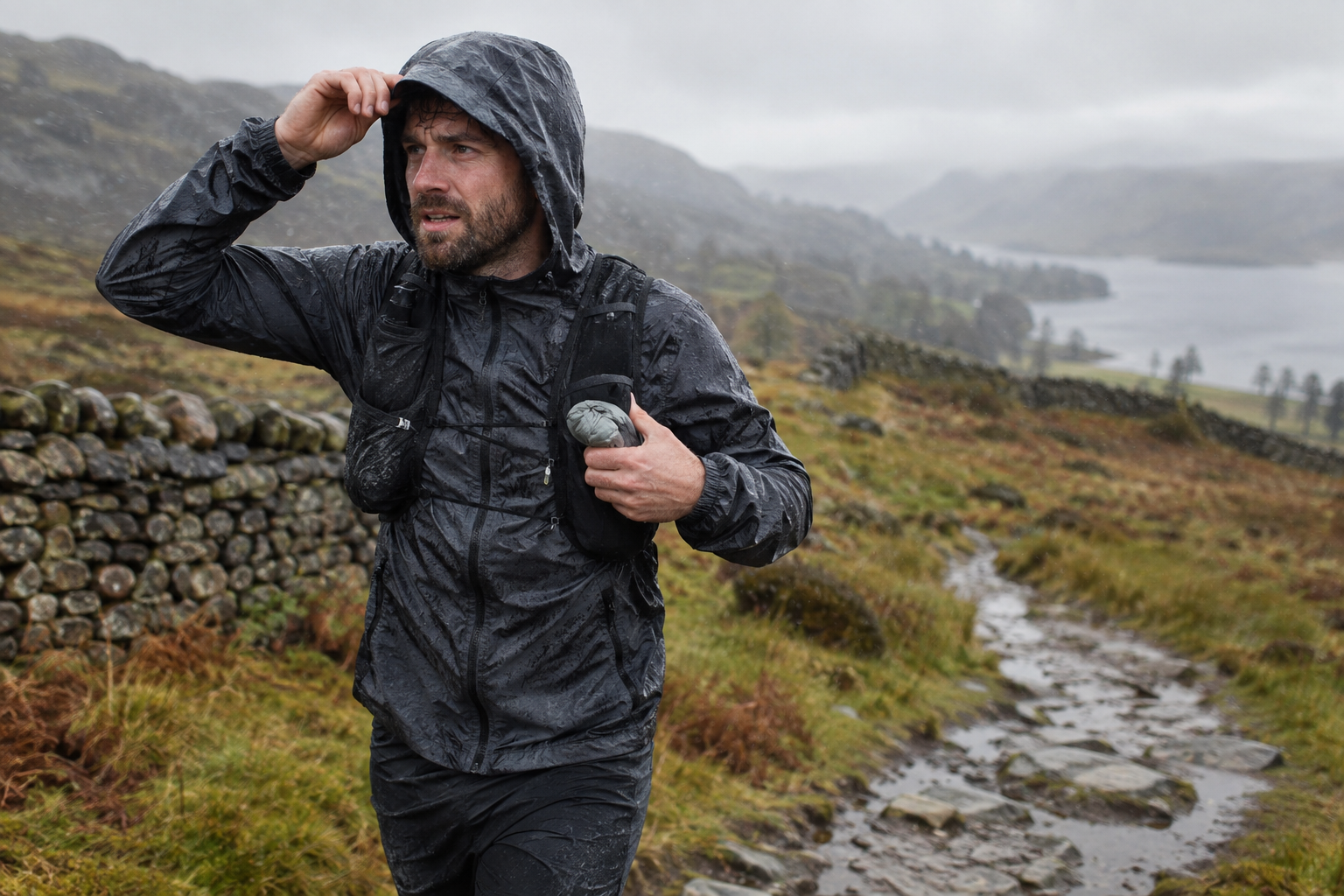
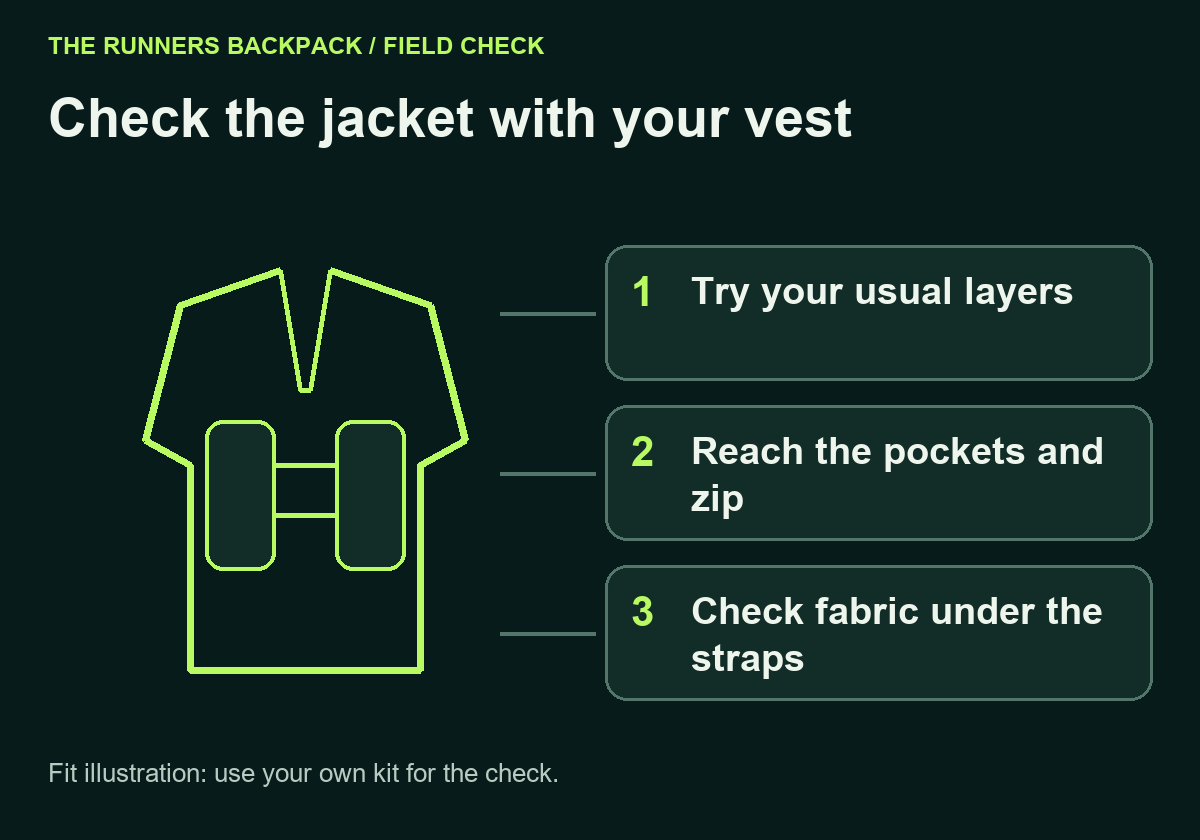
A running jacket is much easier to choose once you try it in your running position. Reach forwards, turn your head with the hood up, and put your loaded vest on. If the hem lifts or the hood blocks your view, sort that out before worrying about how small it packs.
INOV8’s Stormshell is worth a look if you want a light, packable shell with a peaked hood. It takes the edge off the wind over a light top, and the zip is easy to open as you warm up. The current V3 uses taped seams and Pertex Shield 2.5-layer fabric. Check that version’s size guide, particularly if you’ll wear it over a loaded vest.
Start with the run you will actually use it for
For regular training in changeable weather, easy access to the zip, useful hood adjustment and comfortable movement deserve as much attention as packed size. If the jacket will mostly stay in a race vest, check how readily you can unpack it and put it on over your normal layers.
If you are choosing a reflective layer for everyday evening runs, our reflective running-jacket guide covers pockets, side panels and the areas a running bag can hide.
For mandatory race kit, read the current organiser’s wording before buying. Check the exact requirements for waterproof construction, taped seams and hood, plus any stated rating. A product’s “race-ready” description does not replace the list for your event. Keep that list with your packing notes so you can check the complete kit together.
Fit the sleeves with your arms moving
Wear the top you expect to run in, then hold your arms as you would on an uphill section. Check that the cuffs still cover your wrists and the hem does not climb excessively. A close fit can feel tidy while standing and restrictive once you reach forward.
Try the cuffs with your gloves and watch. You want to see the screen and adjust the glove without pulling a sleeve inside out. With the Stormshell, check free arm movement over a light top rather than relying on your usual label size.
Give the hood a proper turn-your-head test
Zip the jacket, adjust the hood and look over each shoulder. Check whether the opening follows your face and whether the peak interferes with your view. Try it with your usual cap or head torch if you wear one.
The current Stormshell V3 has an adjustable hood with a wire-reinforced peak. Shape the front edge, then check that you can look sideways without the hood turning across your view. Make the adjustments before the run so you know which cord or tab changes what.
Decide where the vest goes
With the jacket beneath a vest, front bottles and pockets stay easy to reach, while the straps hold some of the fabric in place. Check that they do not trap the zip or pull the shoulders awkwardly. With a jacket over a vest, you need enough room for the loaded pack, and you may need to unzip to reach drinks or food.
Try the arrangement you intend to use with the actual load. Fill the flasks and pack the rear pocket; they change how much room the jacket needs. For a shell carried in a small pack, practise stowing it in the pocket you will use rather than relying only on a product’s folded dimensions.
Make warmth and ventilation adjustable
Choose the layer beneath the shell for your pace and conditions. A waterproof jacket can feel warm once you are climbing, even when its fabric is described as breathable. A zip you can operate easily gives you a simple way to release some heat where conditions allow.
After use, follow the garment’s washing and reproofing instructions, and let it dry before packing it away. For a complete wet-weather setup, check trouser access over your shoes and put any spare dry layer in its own dry bag.