Some links in my articles are affiliate links. I may earn a commission when you buy through them.
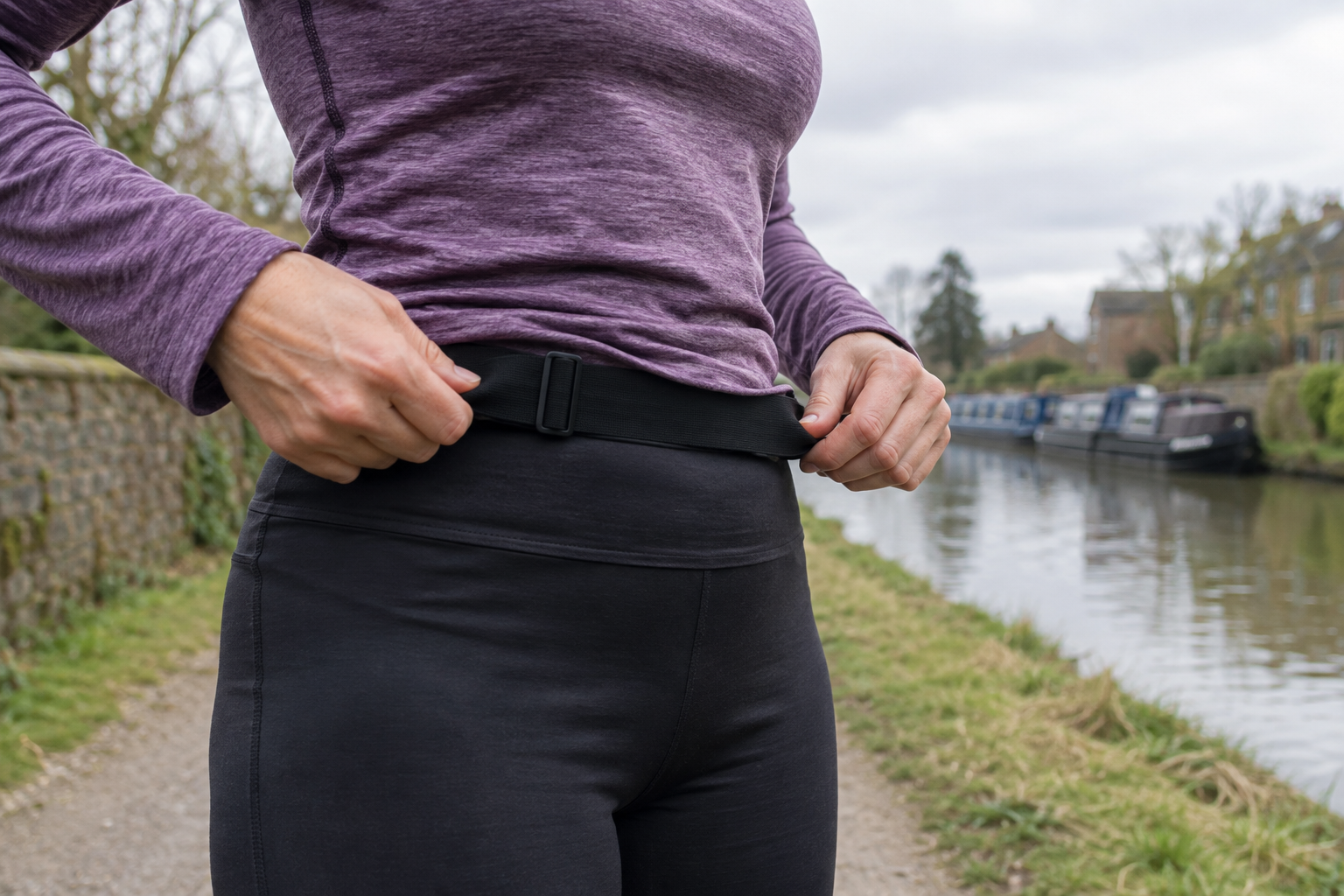
A bouncing running belt is irritating because every few strides you’re reminded of something you wanted to put away and forget. Before buying another one, work out what is moving: the whole belt, its pouch, or the things inside. You can work through all three with your usual phone and keys before replacing the belt.
For a phone and a few small extras, the spread-out pockets of the zipped FlipBelt keep the load steadier than packing one front pouch. The Salomon Pulse also works well with a snug fitted size.
If the whole belt slides, start with its position
Put the belt where its design is intended to sit, then notice whether you naturally prefer it around your waist or lower towards your hips. Measure in the position you will actually use, following the model’s size chart. Your trouser size doesn’t describe that measurement particularly well.
Load it before judging the size. Stretch fabric changes shape around a phone, and a belt that feels gentle when empty may press once the pocket is full. You want the load close without an uncomfortable band around your middle.
Try your normal running top too. A jacket hem bunched into the belt can change how it sits; a slippery layer may let it move differently from your usual shorts waistband. Make one change at a time so you can tell whether the improvement came from position or tension.
If the pouch flaps, bring the weight closer
A belt can stay in place while its loaded pocket bounces away from you. Look at the pouch from the side: is the phone lying close and flat, or sitting on top of keys and a folded packet?
Separate the harder items and distribute them around the available storage. With the zipped FlipBelt, I like having the key hook and zipped section while keeping the load spread out. That gives the phone its own space instead of making it the outer layer of a small stack.
If you prefer a simple pull-on belt, the Classic FlipBelt offers the same useful idea of spreading smaller items around the waist. If your current pouch is bulging, spreading the contents across more pockets may help more than tightening it.
If the contents shift, give each item a place
Use the key attachment if the belt has one. Keep keys away from the phone screen and place gels where you can find them without rummaging. A half-empty pocket can allow several small loose objects to gather at its lowest point as you move.
Try a short jog, then feel where everything has ended up. If one object keeps moving, change that object’s pocket before changing the whole belt. You may find the belt fits perfectly well once the contents stop collecting in one spot.
Water changes the arrangement again. If you use a compatible soft flask, try it filled and partly empty. Its shape changes as you drink, so the pocket needs to hold it sensibly in both states. The hydration-belt guide looks more closely at carrying and retrieving a bottle.
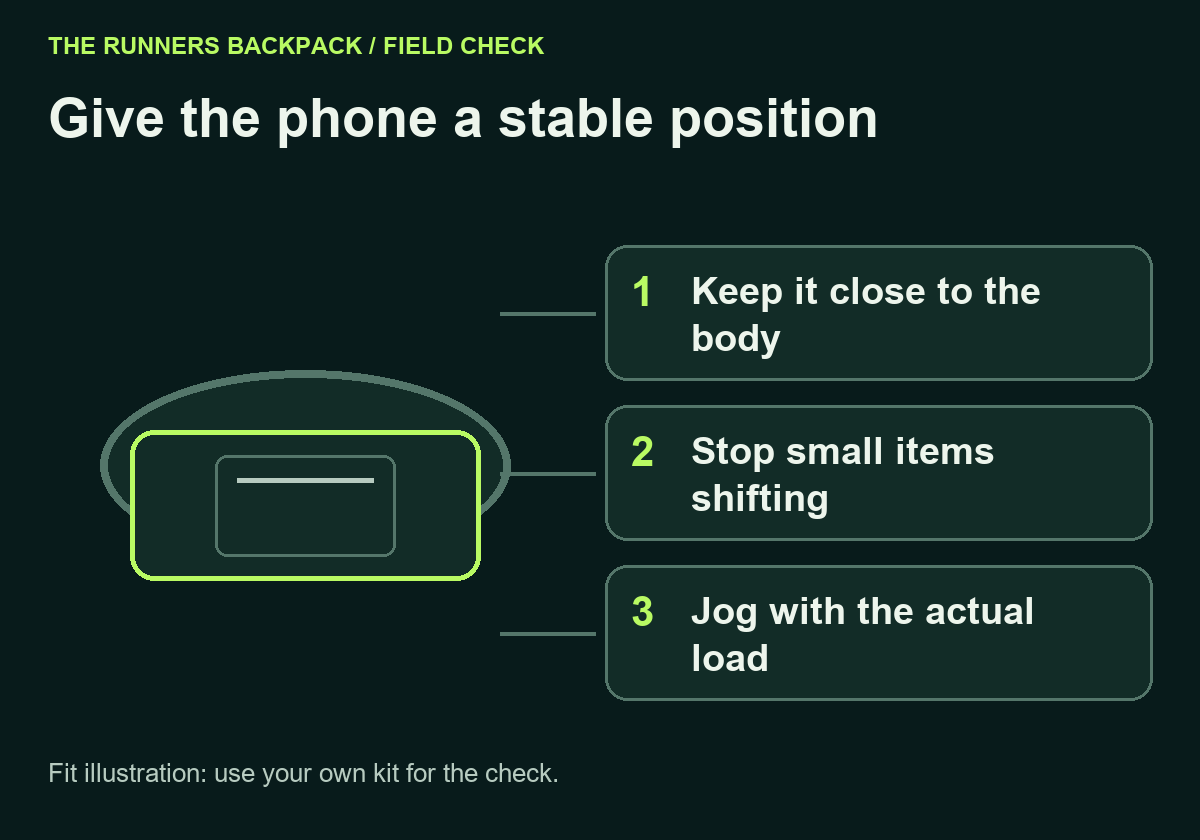
Take the phone out, then try again
Jog with everything packed, remove the phone as if checking your route, and jog again. You’ve just removed what may be the heaviest item. Notice whether the belt changes position or another pocket becomes loose.
Put the phone back while wearing the belt. Include your normal case and any wet-weather pouch. The space inside a pocket and the size of its entrance are separate things: a phone can fit once inside yet be awkward to return through a tight opening.
If easy screen access is more important to you than keeping everything around your waist, the phone-carrying guide will help you compare other arrangements.
When a different belt will help
If the load is neatly distributed but the belt still slides throughout its useful adjustment range, try a different size or shape. If it fits comfortably but every pocket is stretched full, look for a layout with room for the actual kit.
I like the Pulse for the middle ground between shorts pockets and a vest: phone, keys, gels and perhaps the gloves I take off. For a more substantial load of water, food and a jacket, the belt-versus-pack guide explains the next step.
If those checks show you need a different pocket layout, the running-belt comparison brings the options together.