Some links in my articles are affiliate links. I may earn a commission when you buy through them.
For a chilly start, I like gloves that take the sting out of the cold and tuck into a belt once I’ve warmed up. Ronhill Classic is my pick for that simple job. Unigear touchscreen gloves suit runs where checking a phone or holding a bottle matters, while Tolemi gloves offer a close fleece feel for chilly training.
Choose for what your hands need to do as well as the forecast. A comfortable cuff, usable fingertips and a secure grip can make a cold morning much easier.
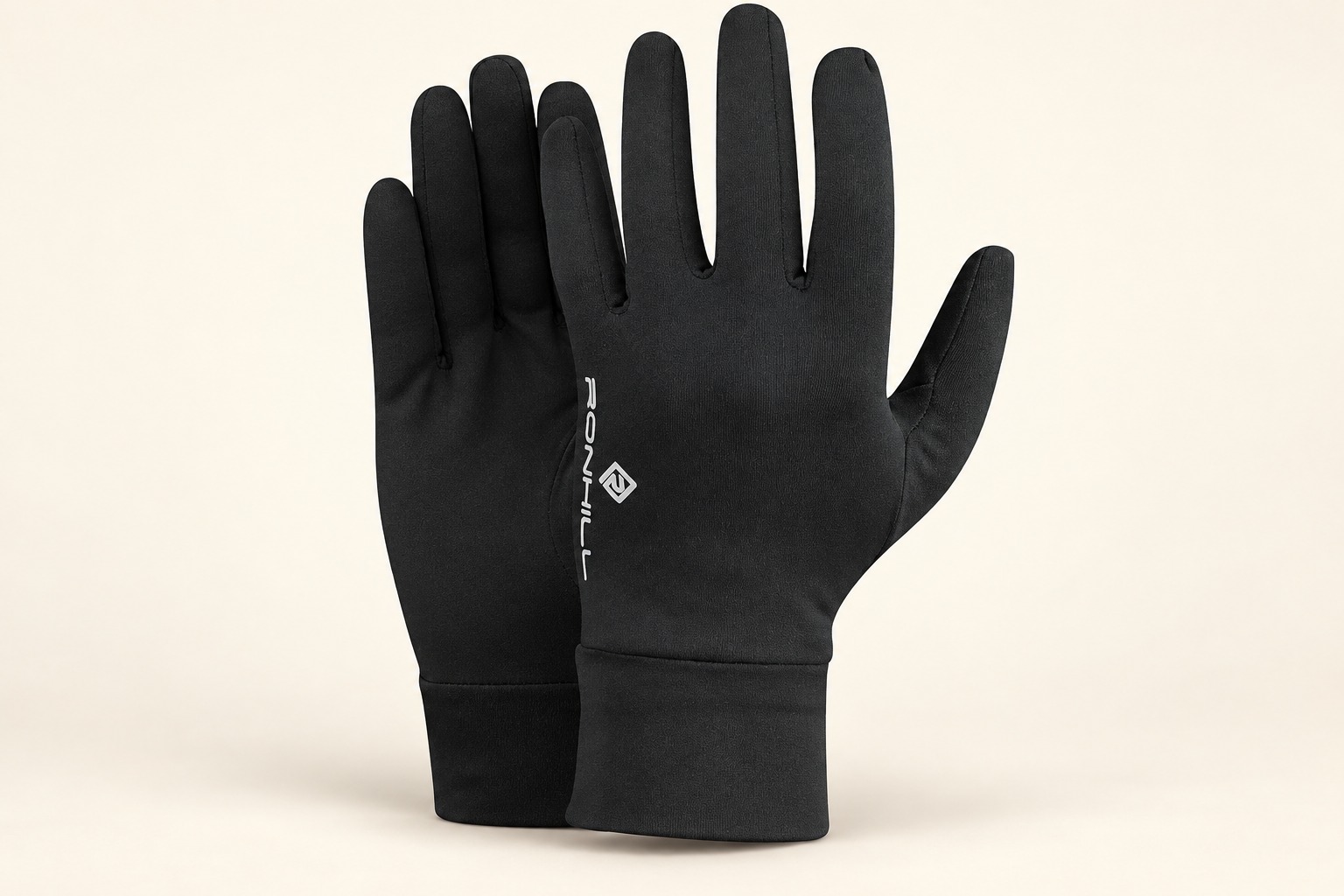
Best for light warmth that packs into a belt: Ronhill Classic
I would choose these for a cool start when I expect my hands to warm up during the run. The thin thermal fabric and extended cuff give you a light layer without the bulk of a heavily insulated glove. They are easy to put away when you no longer need them.
I like the cuff covering the gap between glove and sleeve. Once moving, the stretch lets me relax my hands, and the gloves fold small enough to tuck into a belt pocket.
Check the overlap with the actual top you run in. Reach forwards and swing your arms: the sleeve should not repeatedly pull away from the glove. A longer cuff earns its place if it keeps that narrow strip of wrist covered without bunching under your watch.
For prolonged freezing conditions you’ll need more warmth, and a thin thermal glove won’t keep soaking rain out. For an exposed or wet route, compare windproof and waterproof running gloves. The DexShell Everyday assessment covers the membrane option’s fit and bottle grip.
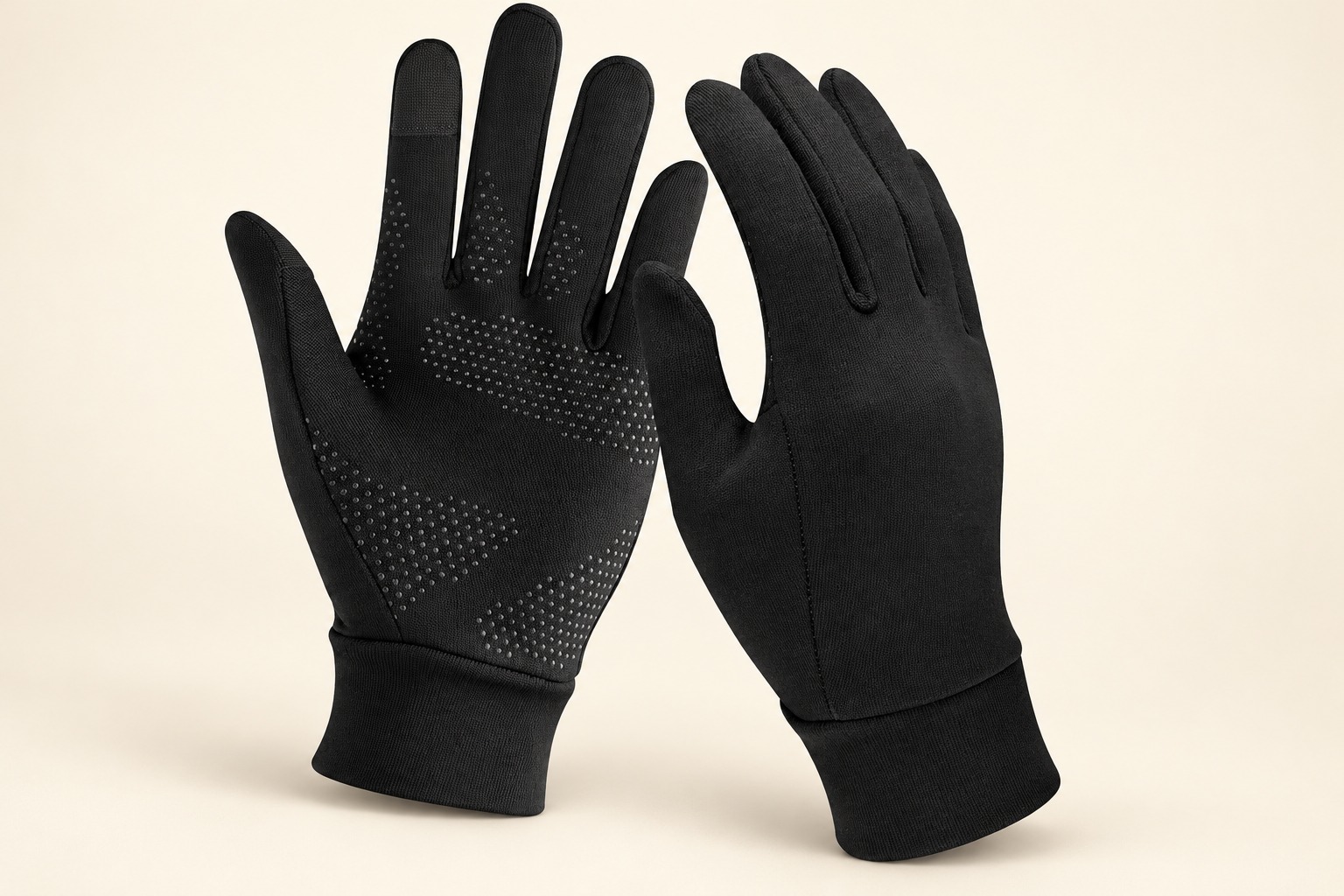
These suit runs when you want to pause a watch, check a phone or hold a bottle without taking the gloves off. The conductive thumb and forefinger work the screen, and the grippy palm helps with smooth kit surfaces.
The close stretch fit leaves your fingers free to move, including around a pole grip.
Touchscreen fit deserves a quick check. If the finger is too long, the conductive patch can sit beyond your fingertip and make a small tap awkward. Try the controls you use most, such as pausing the watch and opening your map, rather than just swiping across the screen.
Hold your filled bottle or pole grip before deciding on the size. Curling your fingers changes the tension across the knuckles and palm. You want secure contact without having to squeeze harder simply because the glove is slipping.
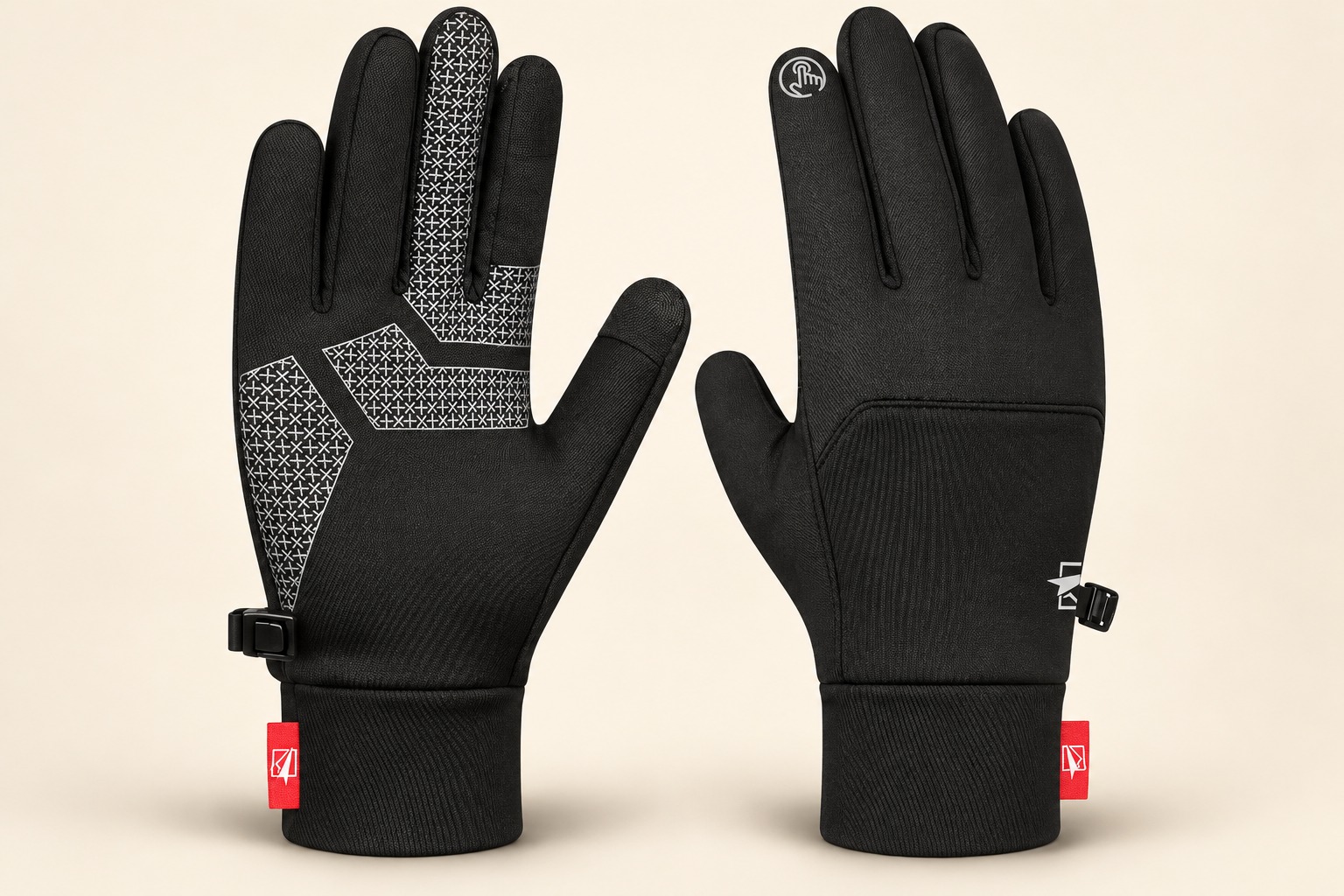
These are worth a look if you prefer a soft fleece feel for chilly running and walking. The patterned palm gives you grip without having to remove the glove to handle a bottle.
The soft fleece lining provides warmth without the bulk of a ski glove. The wrist stays in place as you move, and touchscreen fingers make map checks or music controls easier without taking a glove off.
Compare the fit and lining with what you enjoy wearing, rather than expecting a temperature label to settle comfort for everyone. Pace, wind and whether you are running or walking all change how much warmth you need. If you tend to remove gloves quickly, the lighter Ronhill Classic may suit you better.
The hand that holds a bottle is worth checking in particular. Give the grip a trial with the glove in place and make sure the cuff stays comfortable alongside your watch. A glove can feel soft when your hand is open yet pull at the seams when you make a fist.
Choose the fit around the jobs your hands do
Open your hand, make a fist and stretch your fingers. The glove should follow those movements without a seam digging between the fingers or spare fabric gathering at the tips. Check the thumb separately: it often reveals a poor fit before the rest of the glove does.
Try a zip, the phone pocket and a flask valve while wearing the pair. If your regular route includes navigation, use the map controls too. Removing gloves for every small task quickly defeats the convenience of a light pair.
Keep the glove and sleeve overlap comfortable beneath a watch. Do not rely on a reflective logo as your whole visibility setup; the visibility-light guide covers positions that remain visible with your other kit.
Plan somewhere for them to go once you warm up
Leave room for both gloves in your belt or vest before setting off. A pocket already filled by the phone and gels can make a light removable layer surprisingly awkward to carry. Place them away from anything that could catch the fabric as you pull it out.
After a sweaty run, follow the care label and let the pair dry before the next outing. Do the same for any wet cuffs; damp cuffs are an unpleasant start to another cold morning. If your pair has a waterproof membrane, use the waterproof-glove washing and drying guide for the extra care checks.