Some links in my articles are affiliate links. I may earn a commission when you buy through them.
If the wind is getting through your usual running gloves, start with a wind-resistant pair. If your hands are getting soaked, look for a waterproof pair. A water-repellent finish can shrug off a shower, but isn’t the same as a waterproof layer inside the glove.
I favour Ronhill Wind-Block for chilly, exposed runs where the wind is the main problem. For cool, wet running, the DexShell Everyday waterproof knit adds a membrane while keeping the familiar feel of a knitted glove. Try either pair with your flask, jacket zip and phone before choosing.
For light warmth on a windy run, I’d start with the Ronhill Wind-Block glove. Its warm fabric and water-repellent panels suit wind and light showers. For wetter runs, consider the DexShell Everyday gloves. The waterproof layer sits between the flexible knit and soft liner.
Your run
Starting choice
Why it fits
Exposed lanes or a chilly start, with wind the main problem
Internal membrane; the outer knit can still become wet.
Sheltered running where you soon remove your gloves
A lighter pair you already own
Try light warmth before adding another layer of weather protection.
For a long route with slow sections or waiting around in severe cold, you may need warmer handwear. Choose for those parts too, not just for how warm you feel while running. Our best running gloves guide covers lighter options for ordinary cold starts.
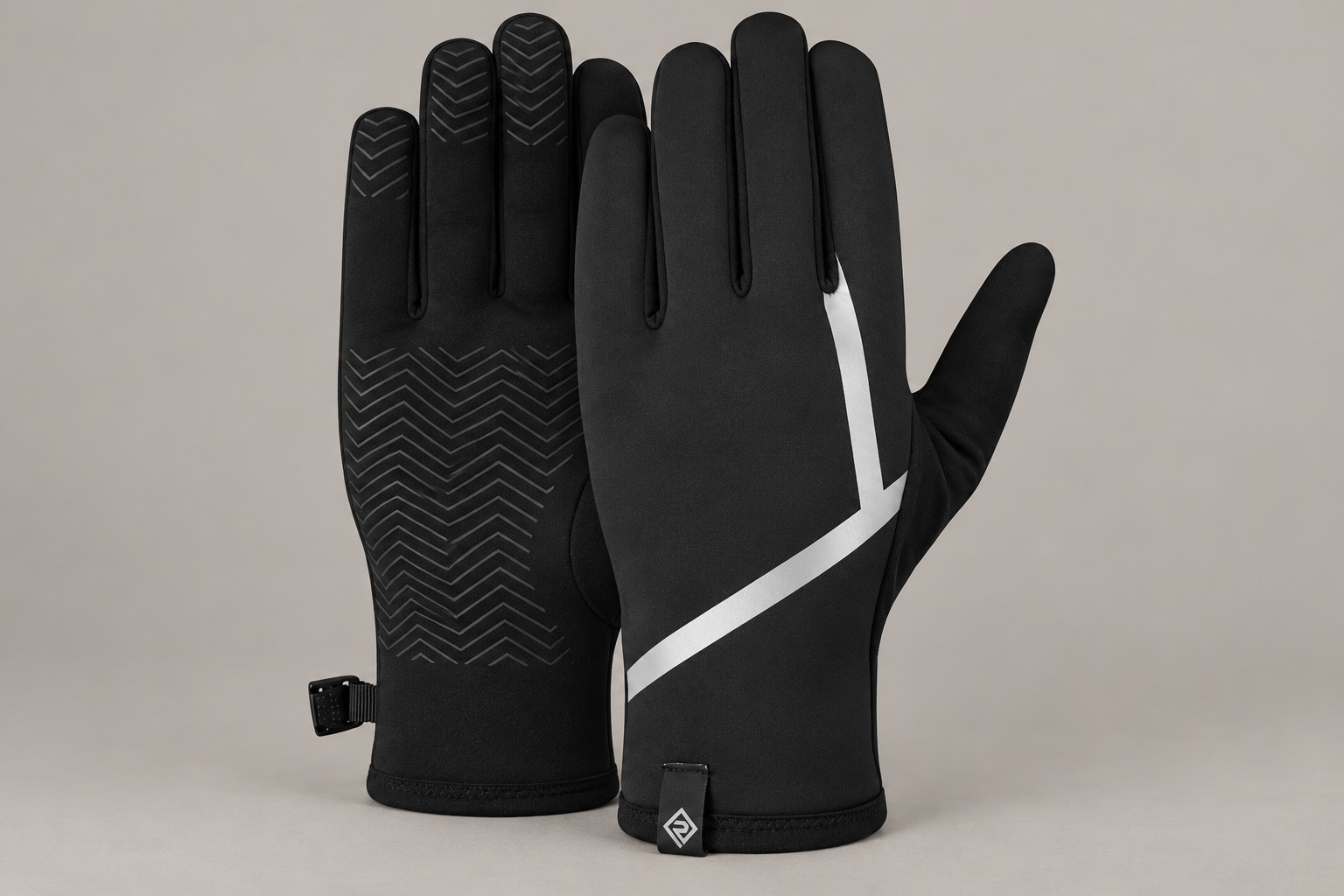
For wind and light showers: Ronhill Wind-Block
The Wind-Block is a useful step up when the first exposed stretch is the part that makes you wish you had brought different gloves. The light warmth took the sting out of a cold start for me, and the palm held a bottle securely.
Ronhill describes its current model as wind resistant, with durable water repellency on fabric panels. Treat that as useful resistance to a shower, rather than buying it as a fully waterproof glove for sustained rain. The grippy palm and touchscreen fingers are handy when you need a drink or a quick phone check.
Think about where the wet glove will go if you take it off halfway through. Leave a pocket large enough for both gloves without trapping the fingertips in a zip. Clip them together if you like, then put the whole pair securely in the pocket.
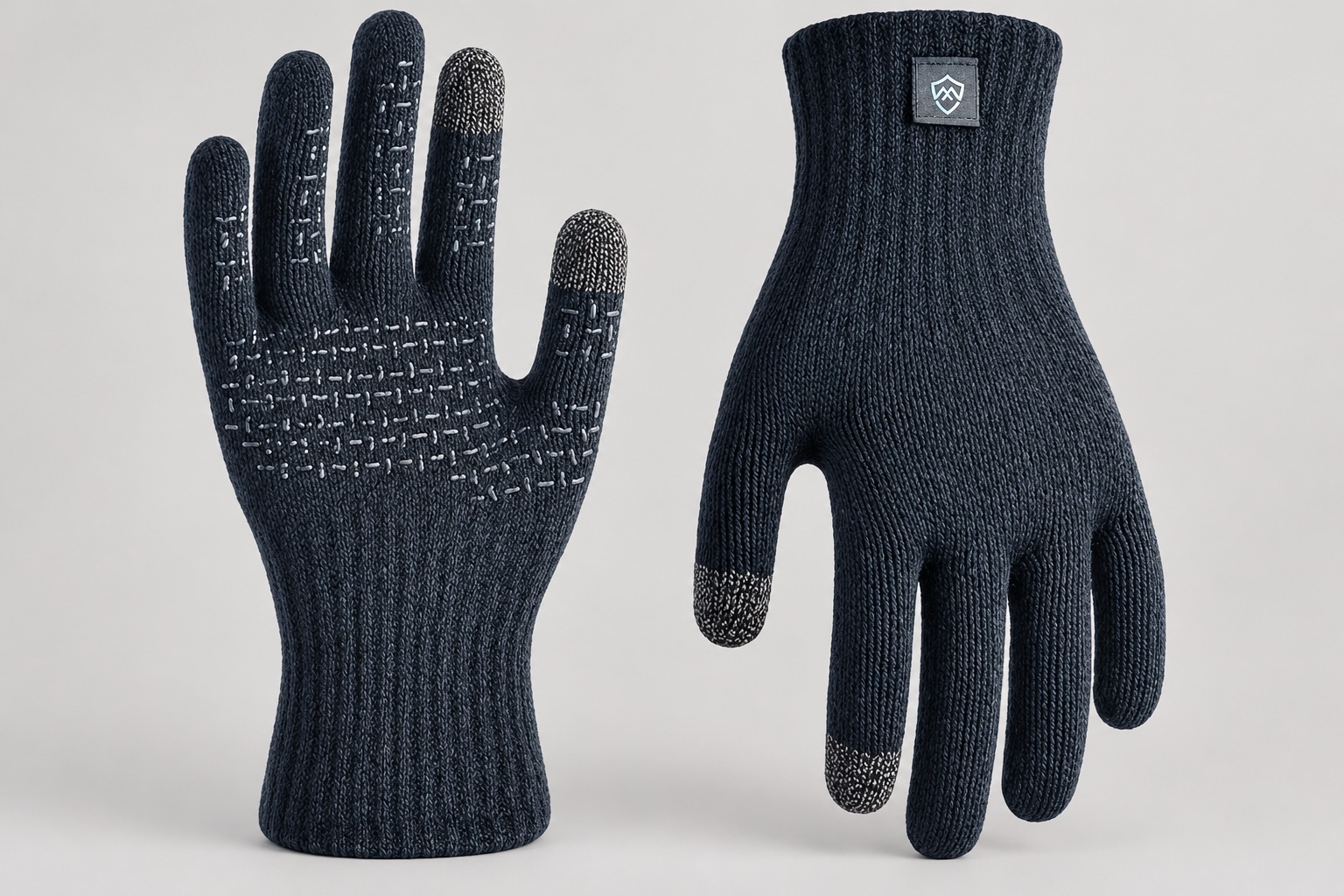
For a waterproof barrier: DexShell Everyday knit
The DexShell Everyday gloves suit runs where keeping rain off your hands is the priority. The waterproof layer is inside the knitted construction. Its outer fabric may become wet during prolonged rain, so check the inside rather than assuming a wet-looking outer means the glove has leaked.
The palm grip and touchscreen fingertips make it more useful than a plain waterproof cover when you want to hold a flask or check a phone. Check them with your own bottle, phone and glove size before choosing the pair.
This is a cool, wet, active-use option in the current UK listing, rather than a recommendation for prolonged immersion or extreme cold. The DexShell running assessment goes into sizing, grip and the jobs that can make this knit construction appealing.
Look at the wrist opening as well as the fabric
Lay out the glove, jacket cuff and watch together. Reach forward and swing your arms. A short sleeve that keeps retreating above the glove leaves exposed skin; a crowded cuff under the watch can make adjustment awkward.
A waterproof membrane does not close the opening where your hand goes in. Arrange the sleeve and cuff so rain is less likely to run down into that opening, using the actual closures on your jacket. Avoid a tight fold that feels comfortable while standing still but pulls when you reach for a pocket.
On a longer wet outing, keep any dry spare pair separate from the gloves you have removed. Try the swap somewhere dry first, so you can find the spare without rummaging through every pocket with wet hands.
Can you still reach your drink and snacks?
Make a relaxed fist, hold a filled flask and open the pocket you use for food. Then check the watch button and the phone control you actually need. Spare fabric at a fingertip or a seam pulled tight across the thumb is easier to notice during those jobs than with an open hand.
If you want a liner inside a waterproof glove, size and try the complete combination. DexShell advises a larger size if between sizes or planning liners; compare the exact model chart rather than assuming your ordinary thin-glove size leaves room.
For a dry, breezy loop, I would start with the Wind-Block. For a wet run, try the DexShell knit and make sure you can hold your flask comfortably. If a removable cover is what you want, the glove-versus-mitten comparison shows how a fold-away cover works.
After a wet run, use the waterproof-glove care routine before putting the pair away. For an organised event, the Pack Planner can help keep handwear and a dry spare with the rest of your kit; check the organiser’s current requirements.