Some links in my articles are affiliate links. I may earn a commission when you buy through them.
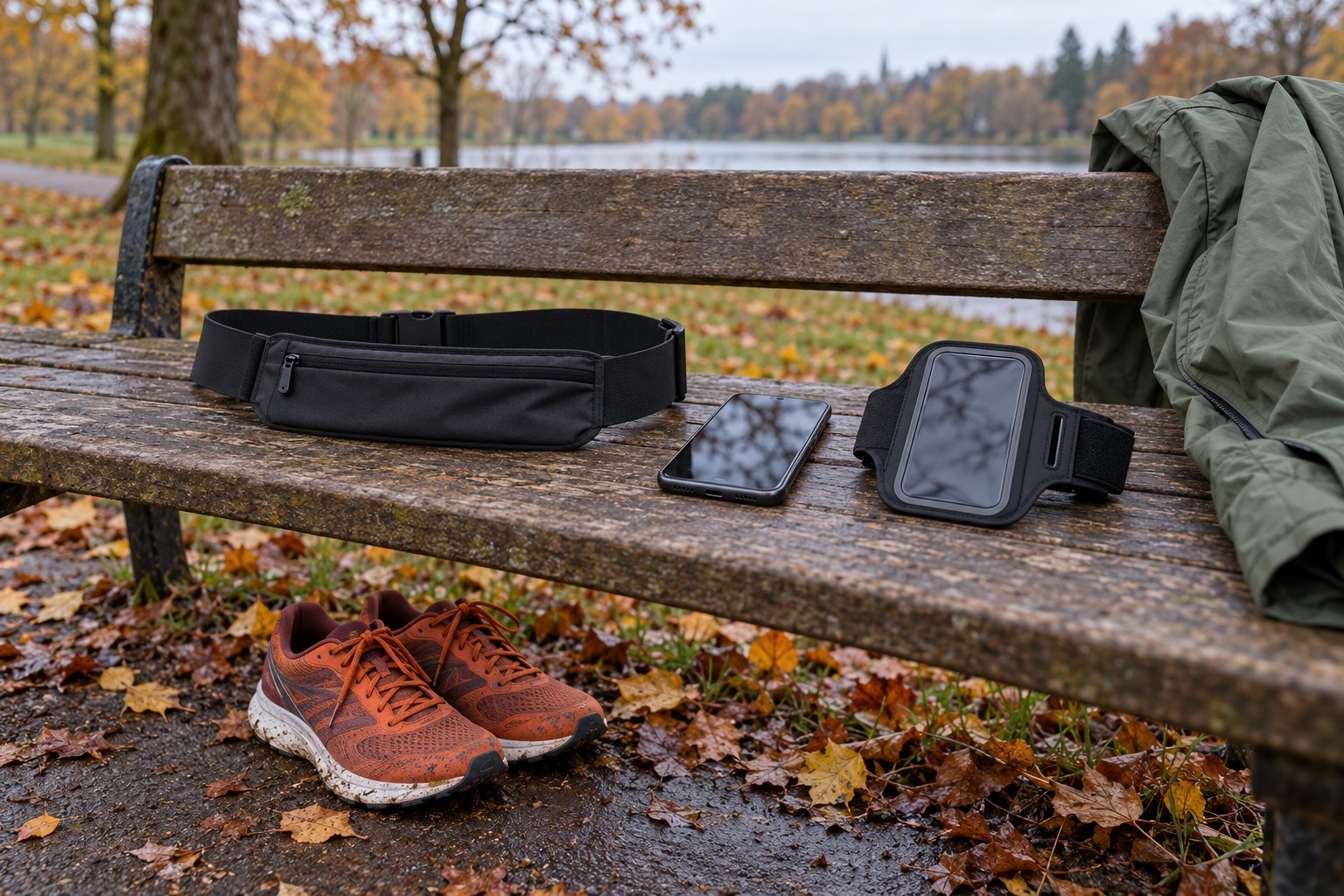
I’d choose an armband when having the screen close by is useful, and a belt when I mainly want the phone carried quietly out of the way. Try the same phone, case and key in each. An empty holder tells you very little about the one you’ll take running.
Start with your usual outing: how often do you stop to check the route, what else needs a pocket, and will you take a jacket off?
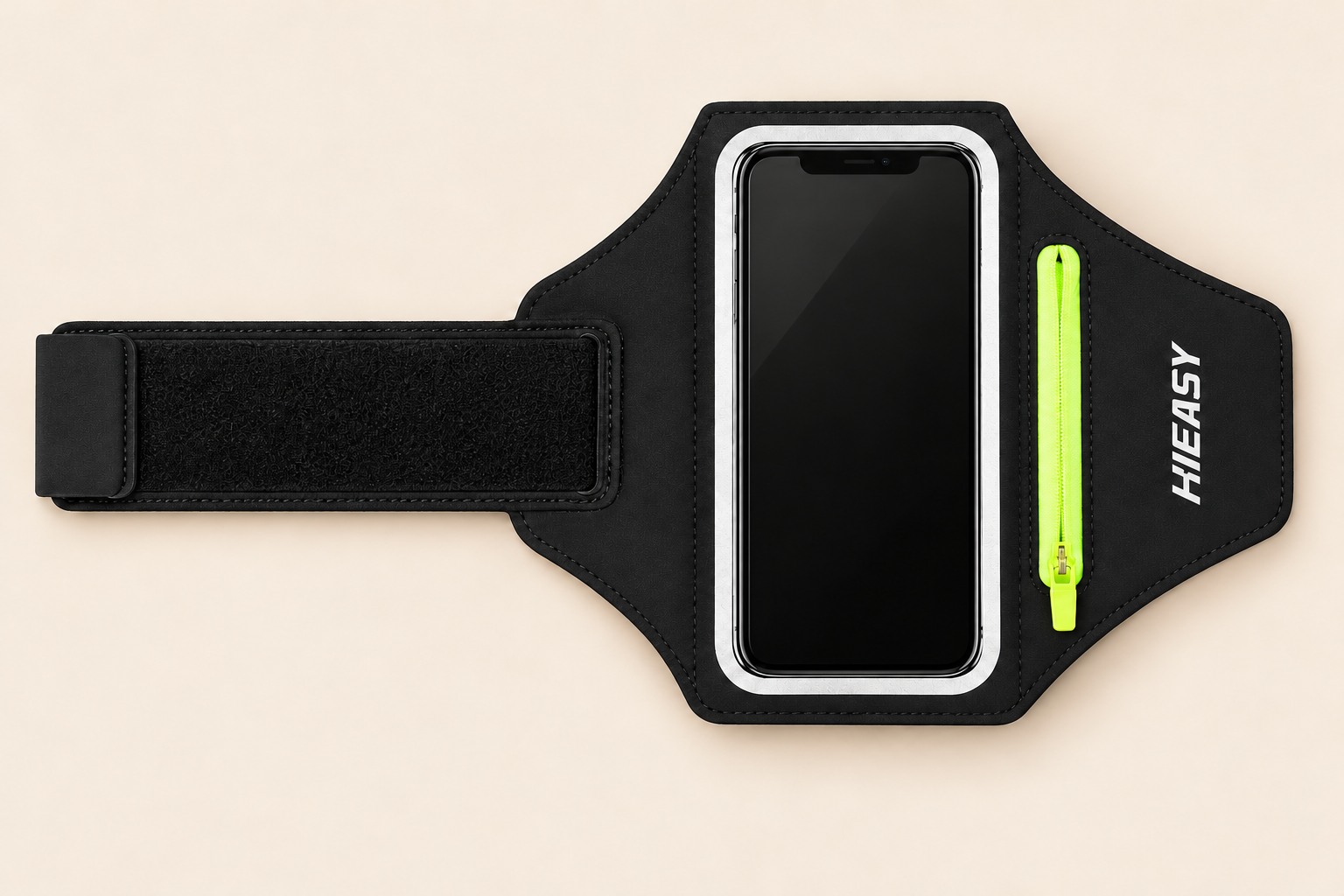
A windowed armband lets you see the display without retrieving the phone from a waistband pocket. The HAISSKY armband adds a small zipped pocket, which is useful when the only extra is a house key or earbuds.
The separate zipped pocket keeps a small key or earbuds away from the phone. Black 6.9-inch version shown.
The arm position needs to suit you. Stop and try a route check with the band on each side, keeping your shoulder relaxed. If reading it means twisting your arm awkwardly or the window is hidden beneath your jacket, you may prefer taking the phone out of a belt for occasional checks.
Also try putting the phone back after using the camera. Some runners like the window for quick controls but still remove the handset for photos. Check that you can open and close the sleeve comfortably with the band fitted.
Choose a belt when you want to spread the load
A belt gives your phone, key and a gel room around your waist. Spread them between the available pockets rather than stacking every hard item against the phone. A broad stretch belt and a buckle-fastened pouch have different sizing and access arrangements; the running-belt buying guide explains which suits each load.
Try the belt where you intend to wear it, with your normal shorts or tights. Put the phone back in its pocket and close the opening before jogging. If one heavy pouch keeps moving, change the packing position before pulling the whole belt tighter.
A belt also leaves your sleeves free. That can be welcome when you repeatedly put a jacket on and take it off. Check that the jacket hem and waist fastening do not block the pocket you use most.
Compare the loaded versions with the same small routine
At home, use each holder for the tasks you actually need:
Carry the cased phone and your essential key.
Walk and swing your arms naturally, then jog a short familiar stretch.
Stop, unlock the phone and open your route or music controls.
Put the phone away securely and reach for the key separately.
Repeat with the jacket or long sleeves you expect to wear.
Notice where the movement starts. If a phone shifts inside an armband pocket, extra strap tension may leave that movement unchanged. If a belt pocket pulls on one side, move some of its contents before judging the whole format. The armband sizing checks and belt bounce guide help with those separate problems.
Plan for rain and the trip home
Carrying position and water protection are separate choices. A fabric belt or arm sleeve can hold a phone securely while still needing extra protection on a properly wet outing. If you add an inner pouch, repeat the fitting check with that larger shape loaded.
The waterproof pouch guide covers sealed arm packs and pouches carried inside a belt or vest. Check the closure and access routine before relying on either; you may need a dry place to open it.
Keep your return ticket accessible too. A phone buried behind wet gloves or a tightly packed jacket might be secure but inconvenient when you reach the station. Decide where those wet items will go before filling every pocket at the start.
Use the pockets you already have before adding another holder
A secure thigh pocket may carry the phone comfortably for a short loop. On a longer run, an accessible pocket in the hydration vest you already need may save adding anything around your arm or waist. Try it with the flasks filled so the phone is competing with the real load.
If screen access is your reason for choosing an armband, the armband shortlist compares an everyday sleeve with a sealed wet-weather pack. If you mainly need a home for more small items, start with the belt guide and check its pocket entrances against your cased phone.