Some links in my articles are affiliate links. I may earn a commission when you buy through them.
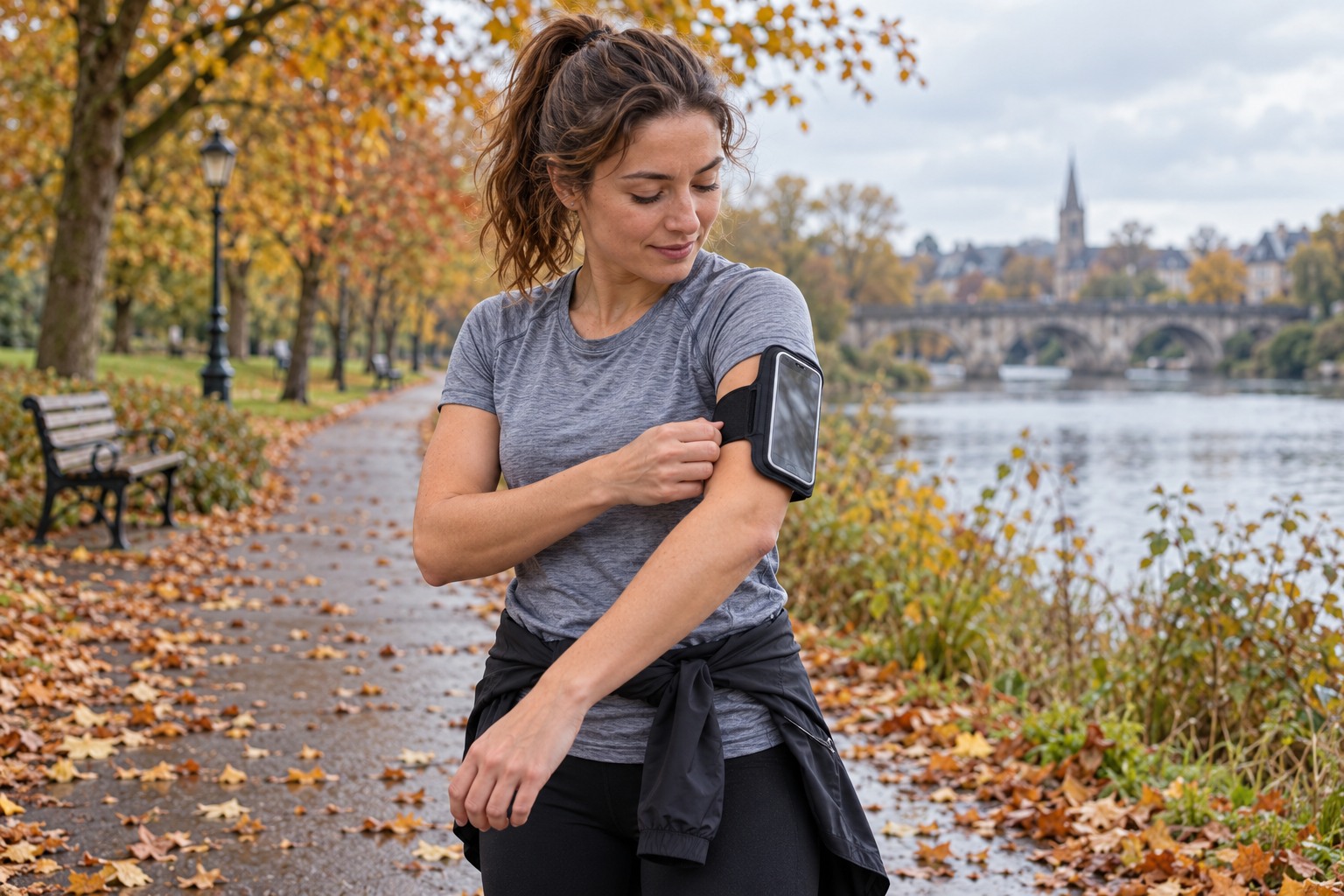
If you like having your phone within reach but dislike a pouch around your waist, an armband is worth trying. For everyday runs, I’d start with HAISSKY’s windowed armband. For a wet outing where a fabric sleeve leaves you worrying about the phone, look at OverBoard’s sealed arm pack.
These are two different choices: a light sleeve with useful small-item storage, and a waterproof enclosure with an arm strap. Before choosing either, put your phone case back on. That is the shape the holder needs to carry.
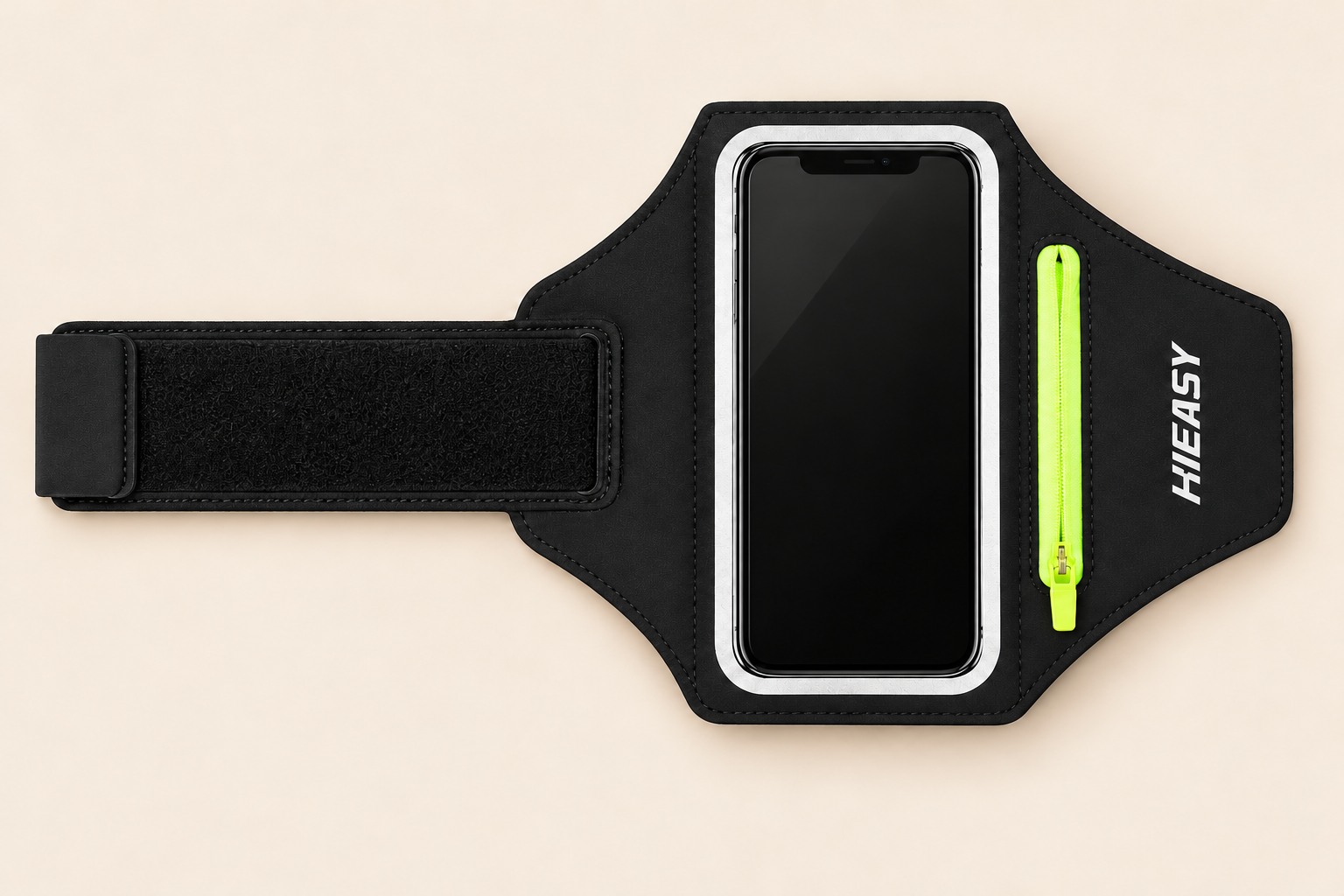
The HAISSKY armband gives you a clear window for screen checks and a separate zipped pocket for a small key or earbuds. I like that separation: you can reach the key without sliding it past the display or opening the phone compartment.
The separate zipped pocket keeps a small key or earbuds away from the phone. Black 6.9-inch version shown.
Keep that little pocket lightly loaded. A car fob, earbud case and loose change all competing for the same space can turn a useful extra into a lump beside your arm. Try your actual key before deciding you can leave the rest of your carrying kit at home.
The current black version is listed for phones up to 6.9 inches, but the display diagonal does not describe a thick case or raised camera surround. Check that the phone slides in, sits flat behind the window and comes out without dragging the case off a corner.
This is the everyday fabric option in the shortlist. The seller describes it as water-resistant; I would use a properly sealed enclosure when water protection is the reason for buying.
For a wet outing that calls for a sealed enclosure
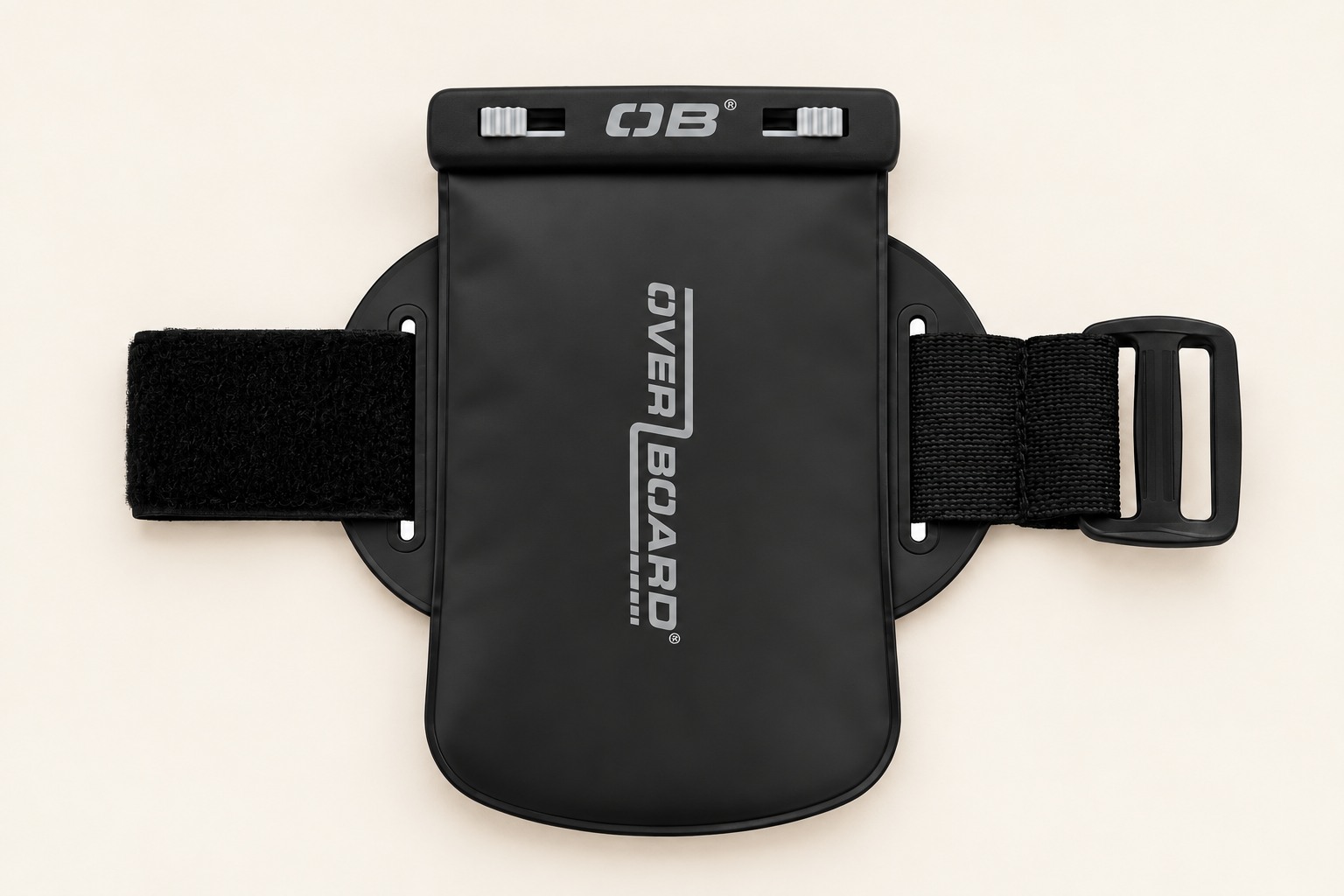
The large OverBoard Pro-Sports arm pack has a welded TPU body and a sliding seal, with a neoprene strap for wearing it on your arm. It is the one I’d look at when keeping small valuables protected from water matters more than having the lightest fabric sleeve.
The large Pro-Sports pack has a sliding seal and welded body; this is its opaque logo side.
Allow room for the closure as well as the phone. Load it without forcing the corners, close it exactly as the supplied instructions show and try the controls you need. Keep anything sharp away from the enclosure and screen.
A waterproof pack still needs a comfortable carrying position. Try it through your normal arm swing with your jacket on, particularly if the pouch reaches close to your elbow. For seal checks, protection ratings and choosing an inner pouch instead, use the waterproof phone-pouch guide.
Make the screen useful in the position you will wear it
Put the armband on, lock the phone, then try reopening the route or pausing your music while standing still. A holder can show the screen beautifully yet make your normal unlocking method awkward. Keep your phone’s security settings enabled while checking this.
Try the other arm too. The side that feels natural for reading may be awkward for fastening the strap with your opposite hand. Check the opening and any headphone cable route before you settle on a position.
If you mostly leave the phone alone until the finish, the armband-versus-belt comparison may help you choose a less exposed carrying position.
Check arm size separately from phone size
Measure around the part of your arm where the band will sit, then repeat over the sleeve you intend to wear. Compare that with the exact variant’s strap range and fastening instructions. A phone that fits the pocket says nothing about how much hook-and-loop overlap is left on your arm.
Move your arm gently before going out. The pocket should stay close without making you hold your elbow differently. Our armband fitting guide separates a slipping strap from a phone moving inside an oversized sleeve.
Think through a layer change as well. If the band sits over a jacket you expect to remove, you will need to stop, take the band off and refit it. A smooth running sleeve is usually simpler to arrange than loose shell fabric.
Give the loaded holder a short trial
Begin with the phone and one essential key, then add anything else only if it has a useful place. Walk, swing your arms and jog a short familiar stretch. Check that the phone remains seated and the fastening has stayed fully engaged.
If your shoulders feel freer with nothing on your arm, try a secure clothing pocket or one of the running belts. The wider phone-carrying guide also covers vest pockets when you already need water and a spare layer.
For a race, put the phone holder and any separate key storage on your Pack Planner list, then practise getting to the ticket or route before leaving home.