Some links in my articles are affiliate links. I may earn a commission when you buy through them.
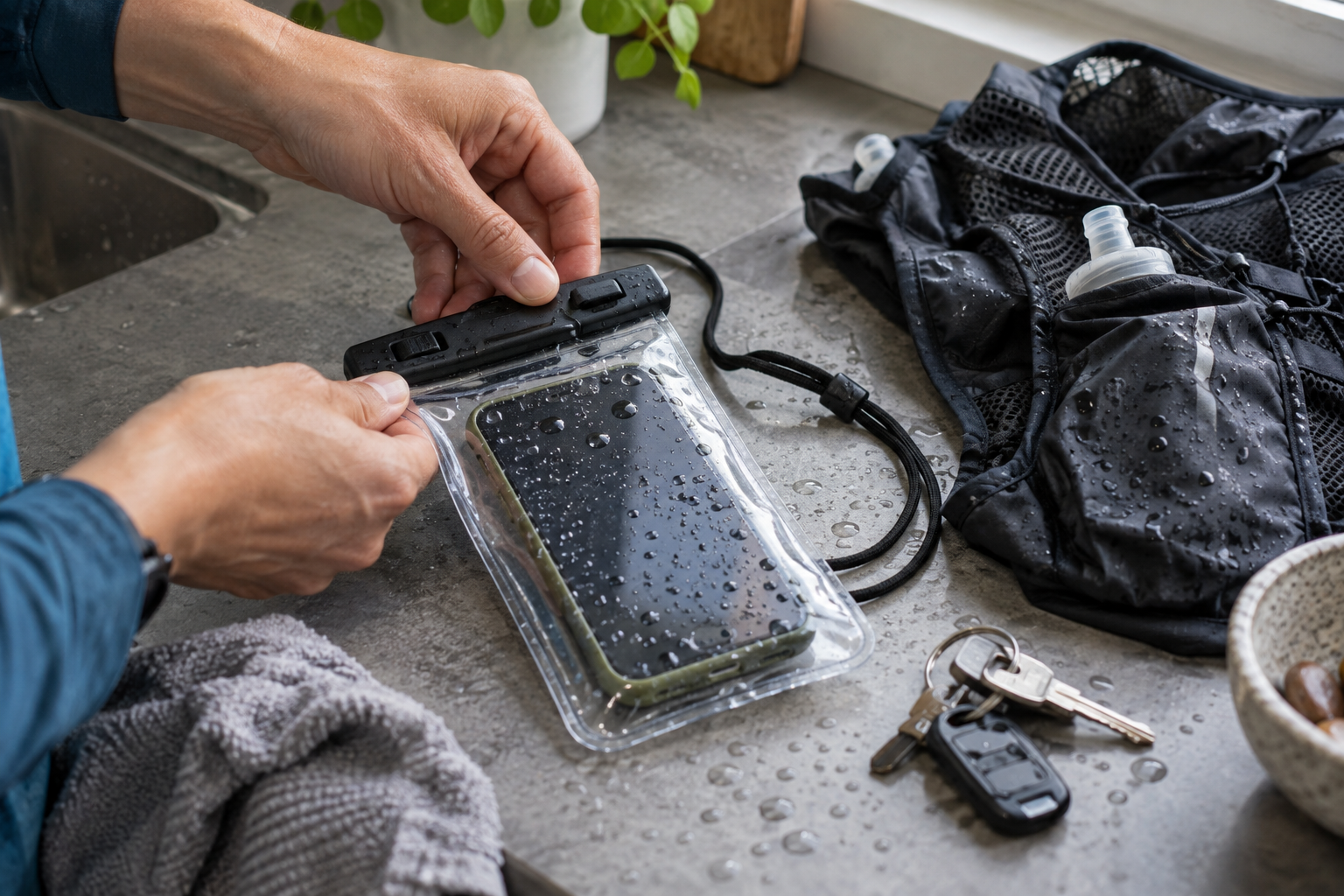
If you take your phone out in the rain, choose where you’ll carry the pouch as well as how much water protection it offers. An arm pack needs to stay comfortable as you run; an inner pouch needs to fit the belt or vest pocket you already use.
For wearing on the arm, the OverBoard waterproof arm pack provides practical hands-free storage for a phone and small essentials, with a neoprene strap. If you would rather tuck a slim pouch inside a belt, start with the loaded pouch’s measurements instead.
Choose where the phone will live first
An arm pack saves finding another pocket for the phone. An inner pouch is handy if you already have a comfortable belt or vest and only need to add water protection.
The OverBoard arm pack makes sense when you want small valuables together on your arm. The current large model has welded TPU construction, an adjustable neoprene strap and a sliding seal.
For a phone that you mostly leave alone during a run, an inner pouch can be a neat solution. Check that the belt or vest still closes comfortably around it. A case that fits your phone perfectly on the kitchen table can become an awkward shape once its closure is added to a snug running pocket.
Check the phone, the case and the closure
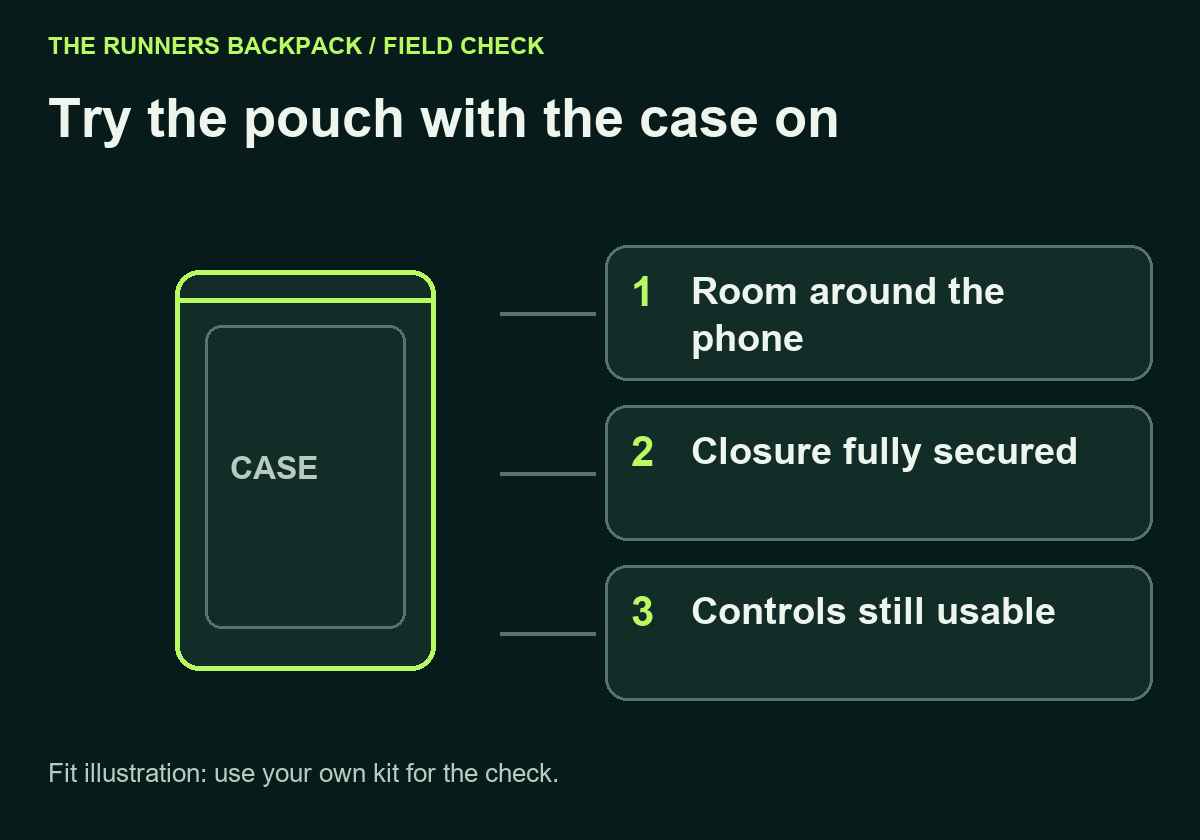
Measure your phone with its everyday case on, including any raised camera surround. Compare that with the usable space stated for the exact pouch. Then look at the outside dimensions and closure: these are what your belt or vest has to accommodate.
Leave enough room to close it as intended. Stretching a pocket around the corners of a phone or cramming a key against the window makes daily use more fiddly than it needs to be. The OverBoard pack suits a small set of valuables; pack a spare top separately in a dry bag inside the running pack.
Check the protection for your route
For an ordinary wet run, you are thinking about rain, sweat and where water might collect inside your kit. A route or event involving immersion asks more of the enclosure. Look for the stated depth and duration for the exact model rather than treating every “waterproof” description as the same promise.
The current large OverBoard Pro-Sports pack is rated IP68 by the manufacturer, which states submersion protection to 6 metres for 60 minutes when used correctly. Check the manufacturer’s current sizing and sealing information before choosing it.
Before putting valuables inside, seal the empty pack and check it in water using the supplied procedure. A calm check at home is far easier than discovering how a closure works just before leaving. Keep the sealing surfaces clear of grit when closing it again.
Think about what you need to do with the phone
Keeping a phone packed away for the journey home is a different task from checking directions every few minutes. Before your first outing, try reading the screen, unlocking the phone and using the controls you expect to need. A transparent window does not automatically make every unlocking method or camera position convenient.
One easily missed detail is the journey after the run. If your ticket is on the phone, put it somewhere you can reach without unpacking wet clothes. Set up the ticket or route before leaving so the first access check happens indoors. When you do need to open the pouch, choose a dry place and dry your hands first.
Make the strap part of your fitting check
Try an arm pack with the sleeves you expect to wear, and move your arm through its normal running swing. The aim is a comfortable position that stays put without repeated adjustment. If your arm pack shifts, use our armband fitting checks before tightening it again. For a pouch inside a vest, fill the neighbouring flask before judging how everything sits together.
A neck lanyard can be useful in some settings, but for running I would choose a secure position that does not swing about. For an obstacle event, check the organiser’s requirements and plan around crawling and climbing as well as water. Our OCR kit guide helps put those choices into the wider packing list.
My starting point
If you want a dedicated arm pack for wet outings, start with the OverBoard arm pack and check the size against your cased phone. If you already have a comfortable belt or vest, a correctly sized inner pouch may fit your routine better.
For the wider choice between waist, arm and clothing pockets, head to five ways to carry your phone while running.