Some links in my articles are affiliate links. I may earn a commission when you buy through them.
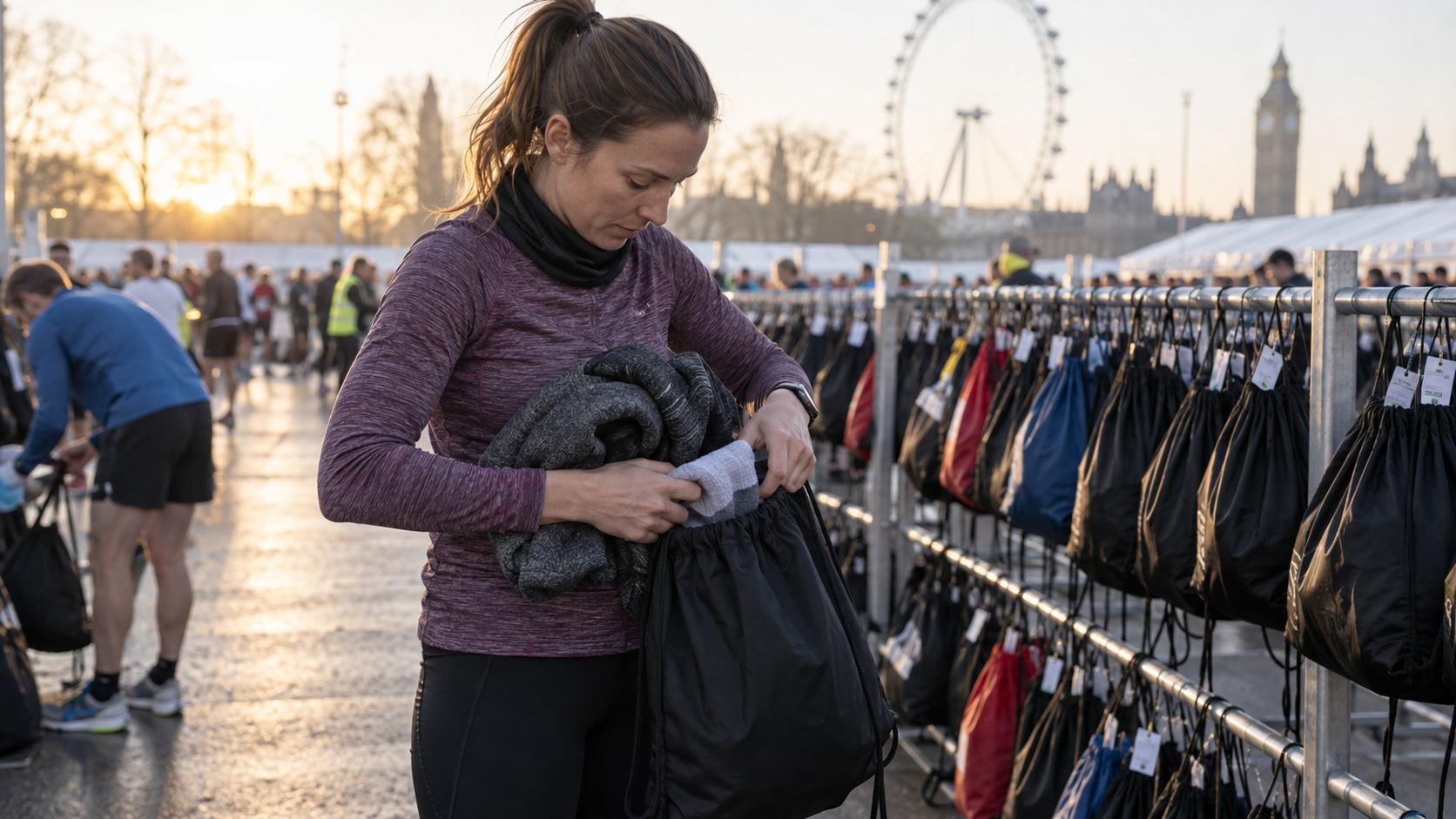
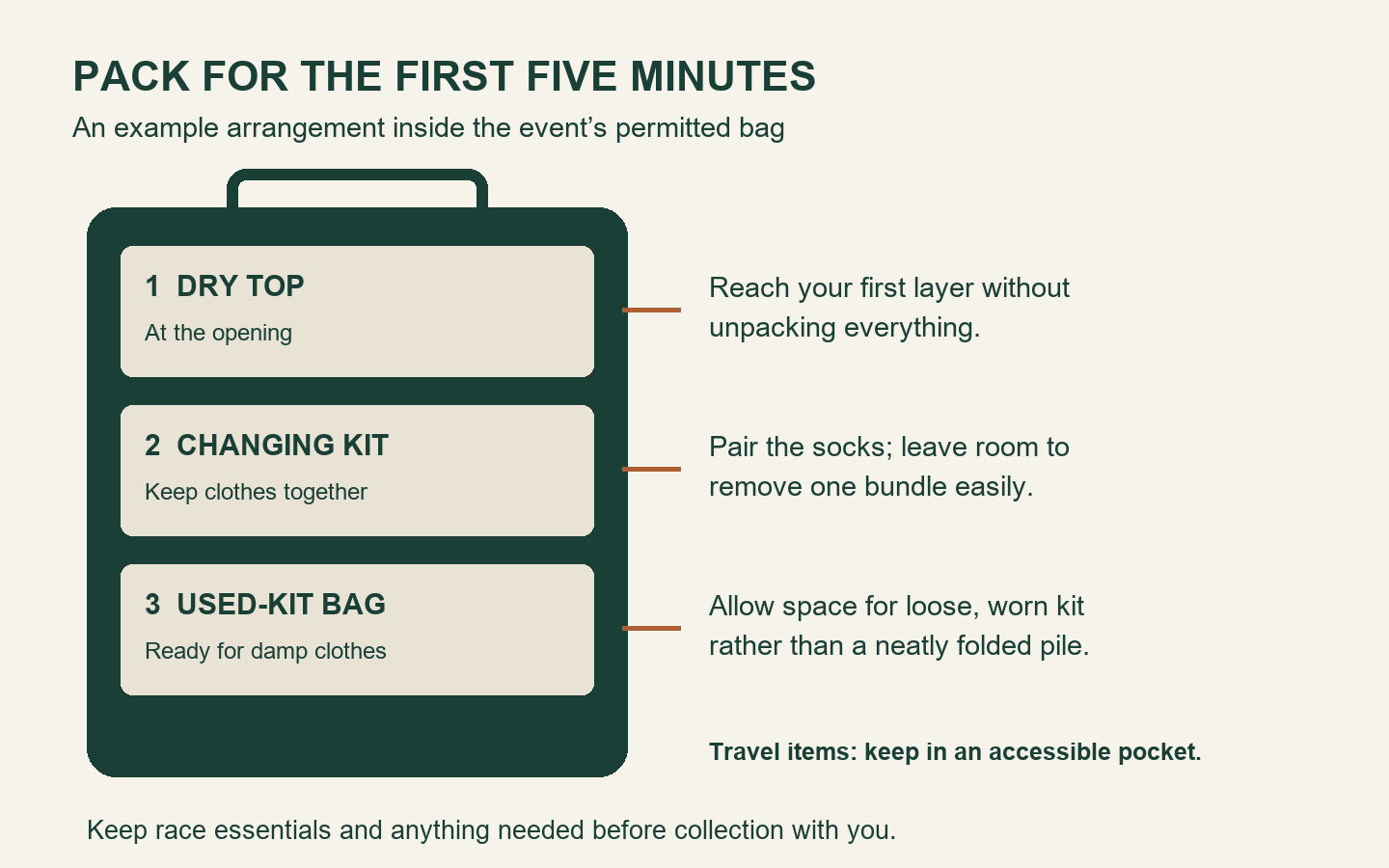
Pack your bag-drop kit in the order you want it back. Put your dry top near the opening, keep the socks with it and give your travel essentials their own pocket. You can get changed without tipping the whole bag out.
Start with the organiser’s current bag rules, then arrange the contents inside those limits. The different sizes in the kuou dry-bag set are useful for separating smaller items from a dry layer. You can pull out the group you need without disturbing the rest.
Check the container before filling it
Some events require their own numbered bag; others specify dimensions or collection arrangements. Check your event instructions before choosing an outer bag or packing bulky items. Make sure the identifier remains visible when the bag is closed.
If an inner dry bag helps organise your clothes, leave enough room for its closure and for the event bag to close normally. A larger organiser filled to the top may be less convenient than two smaller groups that you can retrieve separately.
Put the first five minutes at the top
Think through what you’ll reach for immediately after collection. Put a dry layer near the opening, then keep the rest of your changing clothes together. Pair the socks and arrange them where they won’t drop out while you lift a top.
Keep an empty bag or separate compartment ready for damp kit. It needs enough space for clothes as you remove them, not only for the tiny bundle they formed when neatly folded. Decide where wet shoes will go if you’re changing footwear.
Try the sequence at home: open the event bag, remove the dry layer, find the socks, stow the used kit. If an organiser makes you open three closures for every item, simplify the groups.
Keep the journey home together
Put the items you’ll need for onward travel in one accessible place. Check whether travel payment depends on your phone and whether you need a separate ticket or reference. If somebody is meeting you, agree on the meeting arrangements before the start.
Keep essential travel information accessible before bag collection as well. An offline copy of a ticket or meeting point can help if reception is poor, but it still needs a charged phone. Decide whether a paper reference would be useful for your journey.
For an overnight trip, the race-weekend packing guide covers the extra clothes, charging and return-journey kit.
Use small bags for a reason
Use the smaller bags in the kuou set for small items and a larger one for a dry layer. For example, keep your ticket and small essentials apart from the clothes you will change into.
Leave room to roll the closures carefully. A bag that is overfilled at its opening is awkward to close and reopen. Keep anything you will not need until home at the bottom.
The dry-bag guide covers closure room and organisation if you’re choosing those inner bags.
Pause before handing the bag over
Before handing the bag over, check that your race number or timing equipment, planned food, phone, essential medication and collection details are still with you. Your spare top can wait at bag drop; the gel you planned to use on the course cannot.
Then confirm the bag is labelled as instructed and closes without strain. The race-day guide covers the rest of the morning, while carrying gels and wrappers helps organise what stays with you.