The field guide
Running race-day kit checklist: pack without the panic
By The Runners Backpack editorial · Updated 18 September 2026 · Race-day kit
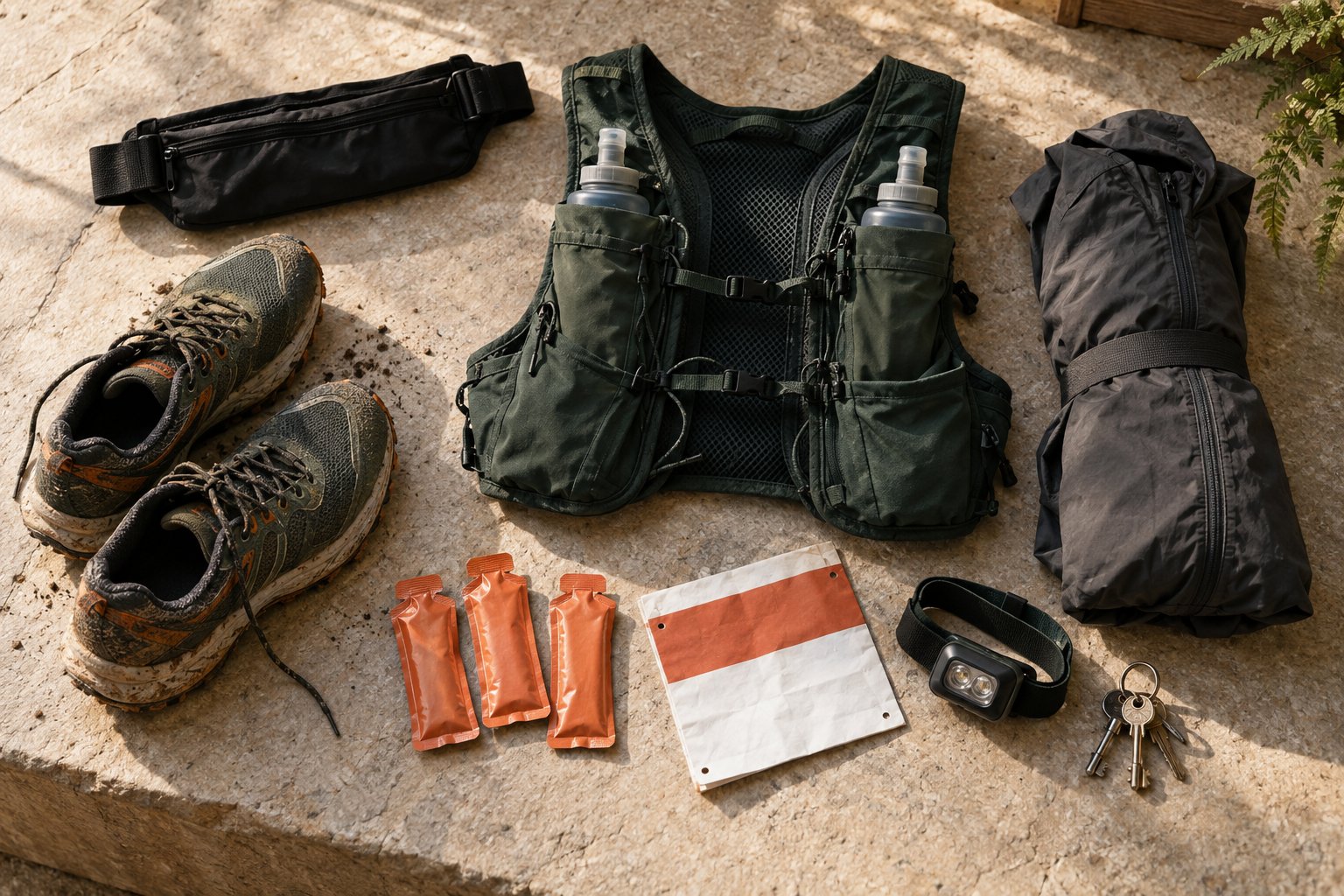
Race-day packing is easier when you divide the bag into three jobs: getting to the start, carrying what you need during the run and getting comfortable afterwards. The final list must come from your specific event instructions, not a generic internet checklist.
Read the organiser’s information first
Check mandatory kit, collection arrangements, start times, transport, bag-drop restrictions and identification requirements. Keep a copy of important details where you can access it if mobile signal is poor. For trails and obstacle races, organisers may have rules about packs, bottles or loose accessories; their current instructions take priority.
The night-before checklist
- Race entry or collection information, and ID if required.
- Familiar running shoes and socks suitable for the event.
- Your planned race clothing and a weather-appropriate layer.
- Race number and the permitted fastening method, if already supplied.
- Phone, charged battery and secure carrying arrangement if needed.
- Water and food arrangements based on confirmed event provision.
- Mandatory equipment specified by the organiser.
- Transport details, payment method and keys.
Separate the start-line and post-race bags
A warm layer for waiting at the start has a different job from a dry layer for afterwards. Check whether a bag drop is available and whether you can leave belongings safely. Do not rely on an event-provided bag being waterproof. Pack post-race items together so that tired, muddy hands are not searching through every pocket.
| Bag section | Useful items to consider |
|---|---|
| Before the start | Familiar warm layer, collection details, permitted bag-drop packaging |
| During the run | Required kit, secure phone/key storage, planned water and food |
| After the finish | Dry top, socks, weather layer, towel or change bag when relevant |
Choose your carrying system after the checklist
A phone and keys may fit in a belt. Water plus small essentials may suit a hydration belt. A mandatory jacket and larger load may require a vest or pack. Do not remove required equipment simply to make a favourite belt work.
Avoid last-minute experiments
Rehearse with the shoes, clothing, carrying system and food you expect to use. Race morning is not a good time to discover that your phone does not fit a pocket or a jacket blocks the water bottles. If weather forces a change, check that the adjusted load remains accessible and secure.
Plan the journey home
Think about the finish location, walking distance to transport and how you will carry wet or muddy belongings. Keep keys and the essentials for getting home protected and findable. If you need to contact someone after finishing, do not assume phone battery or signal will be available indefinitely.
A final door check
Before leaving, confirm the event location, start or collection time and that you have the items which cannot easily be replaced on arrival: entry details, essential kit, shoes and keys. Then leave enough time for the actual journey rather than an optimistic map estimate.
This is a practical packing guide, not personalised nutrition or medical advice. Follow the organiser’s safety instructions and use qualified advice where your circumstances require it.