Some links in my articles are affiliate links. I may earn a commission when you buy through them.
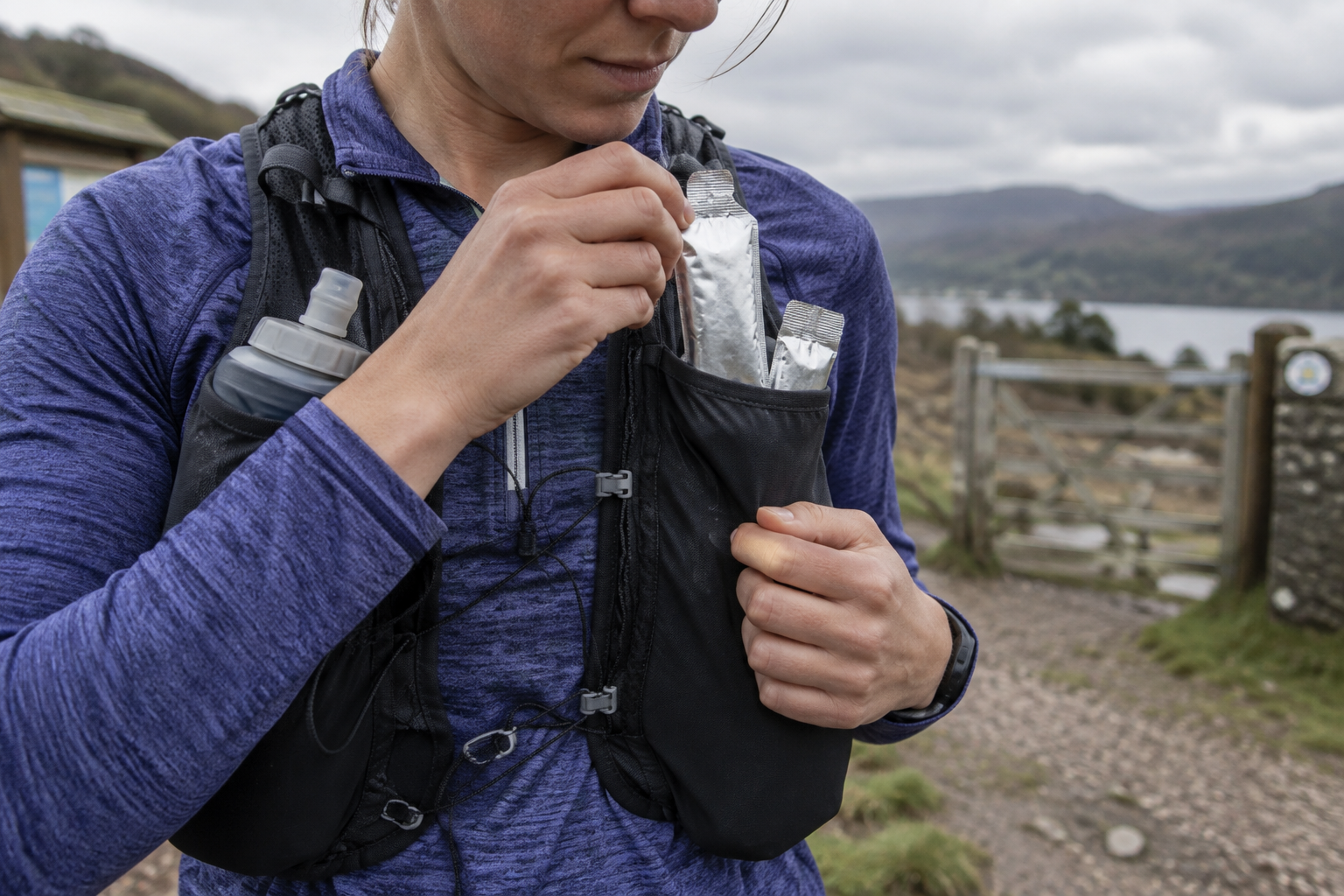
Give the first gel an easy-to-reach pocket and decide where its empty wrapper will go before you set off. That small bit of organisation keeps the next packet easy to find and sticky residue away from your phone. You do not need a complicated system: clean fuel in one place, used packets in another, and enough room to remove one without dragging the rest out.
The Salomon Pulse has worked well for my compact essentials, including gels. When I am carrying more water and kit, I prefer the accessible front storage on my Salomon ADV Hydra Vest 4. Choose the carrying arrangement around the load you already use in training.
Put the next packet where your hand expects it
Pack the first gel near the pocket opening, with later packets behind it or in a second pocket. Keep any flavours or types you want at a particular point easy to distinguish. You should not have to empty a pocket to identify the right one.
Try taking out a single packet with the belt or vest fully loaded. A stretchy opening can grip several wrappers together, especially when they are packed tightly. Leave enough space for your fingers and check the remaining packets stay retained when you withdraw your hand.
Reserve a pocket for the empties
A small reusable pouch or bag inside a secure pocket can keep sticky wrappers together. Choose an opening you can use with one hand when moving comfortably, or stop briefly to put the wrapper away. Keep torn tabs with the packet so they do not become litter.
Do not use the same tight compartment for a bare phone and used gel packets. Even a mostly empty wrapper can spread residue onto a case, zip and fingers. At an event, use the designated bins when you reach them; between bins, keep the wrappers secured.
A refillable flask is another useful option
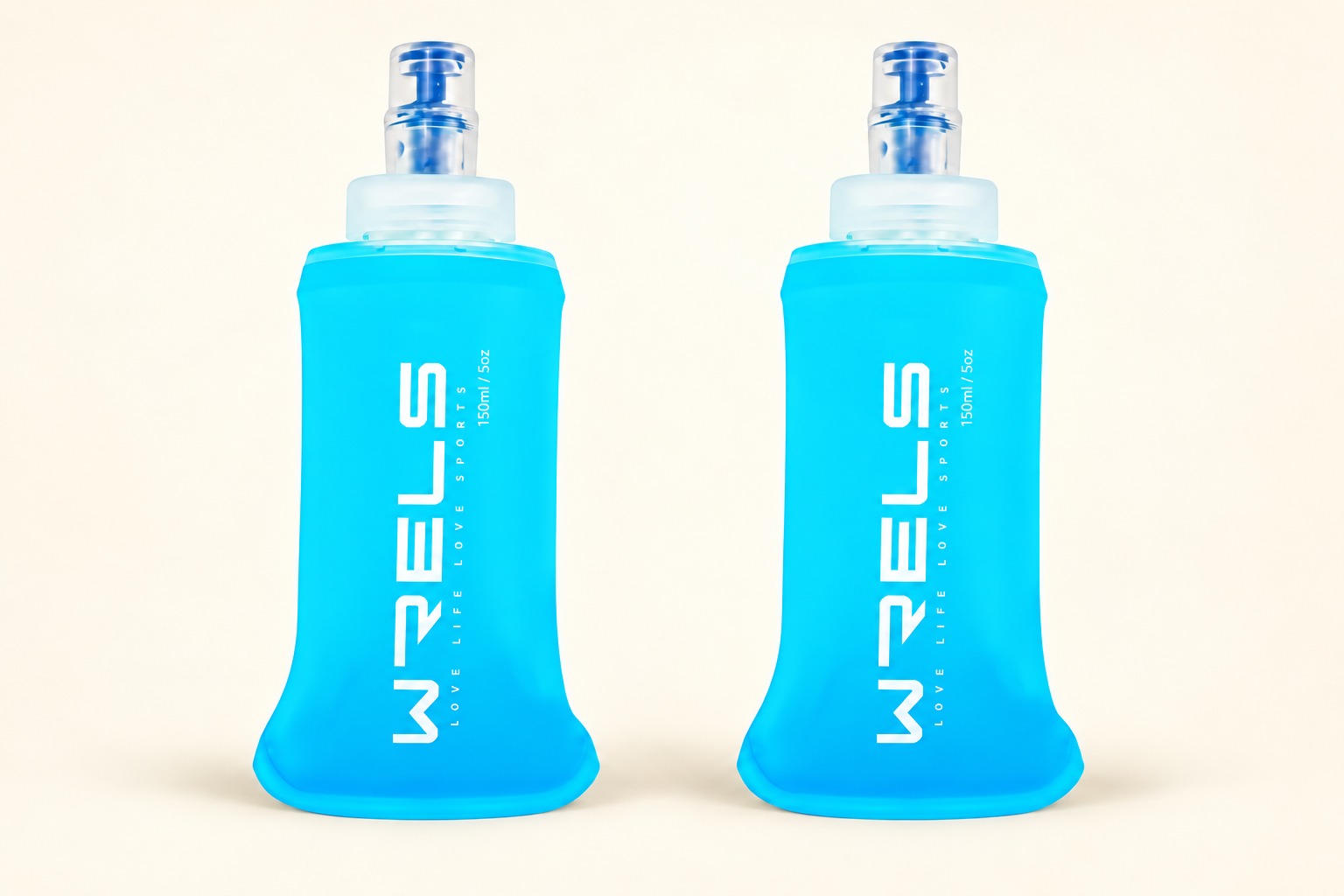
I have used the WRELS 150ml soft flask for a portion of gel on a longer run. Its wide opening made filling and rinsing manageable, and the body flattened as the contents went down. The small size fitted into the kind of belt or vest pocket where a larger drinks flask would be awkward.
This suits you if you like preparing the container before the run and cleaning it afterwards. Check the gel’s instructions and how it passes through the valve; do a training run with the exact combination before using it at a race. Keep it clearly separate from your drinking-water flask so you can identify it by position without rummaging.
The WRELS two-pack is listed as two 150ml flasks. Check the selected size when ordering. Treat the capacity as a container measurement, then plan the contents around the fuelling routine you have already established.
Check access with the rest of your kit on
Try the pocket while wearing your jacket and gloves. A jacket hem can cover a belt opening; a chest strap can sit across the pocket you intended to use. Put the phone, key and water in place before deciding the layout works.
After using a few gels, check how the remaining load sits. Spread the packets rather than allowing a hard stack to gather in one spot. If a belt is moving, our belt-fit guide helps you work through placement and load distribution.
Choose more storage only when you need it
For a compact phone-and-gels load, the Pulse is a sensible starting point if its size and pocket arrangement suit you. For drinks, food and an extra layer together, the ADV Hydra Vest 4 gives the load more places to go. Our hydration-pack guide compares the broader carrying choices.
After the run, remove every wrapper and clean any sticky pockets according to the garment instructions. If you used a refillable flask, clean the cap and valve as well as the body, then let it dry fully. Pack the same layout on your next training run so reaching for food becomes familiar.