Some links in my articles are affiliate links. I may earn a commission when you buy through them.
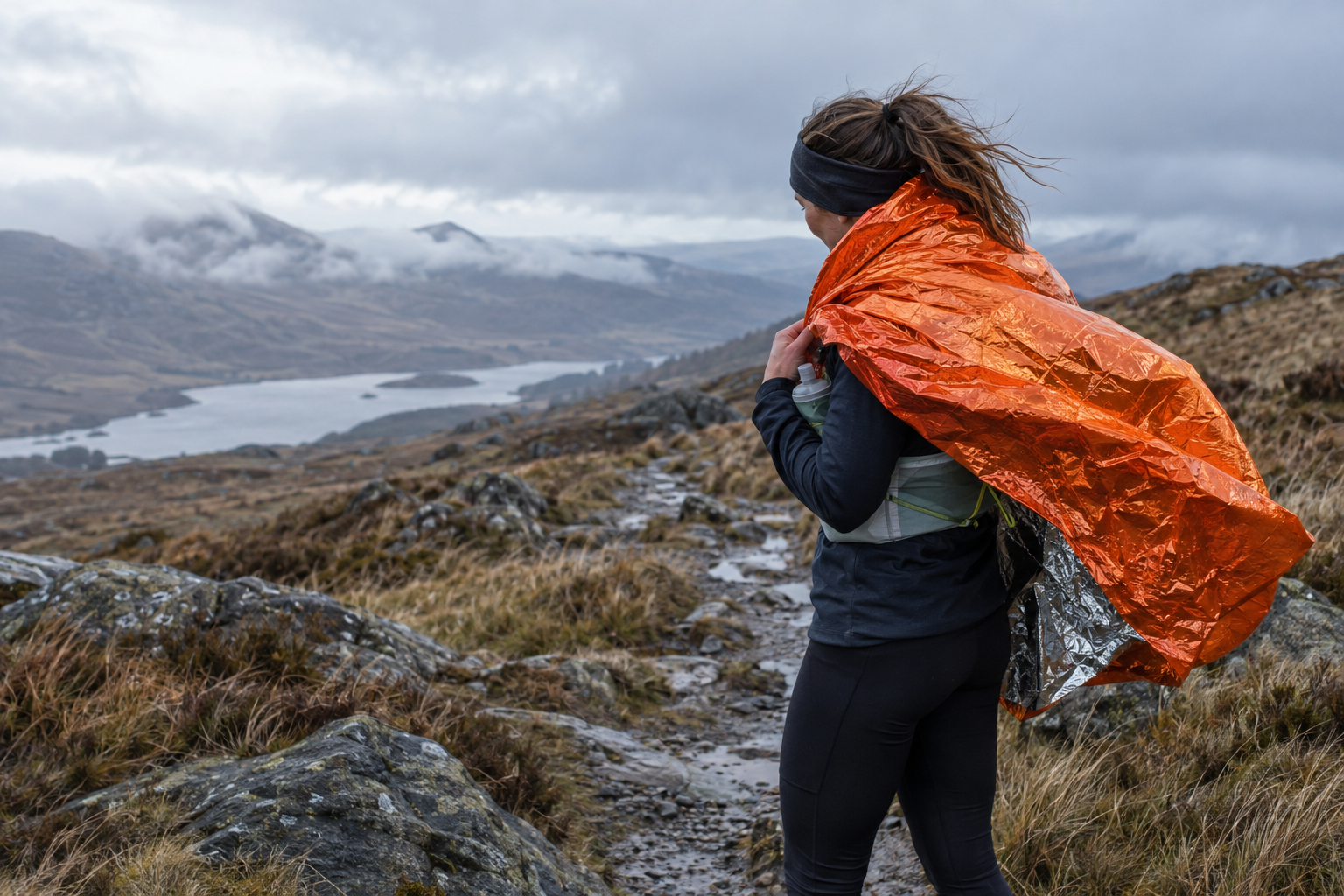
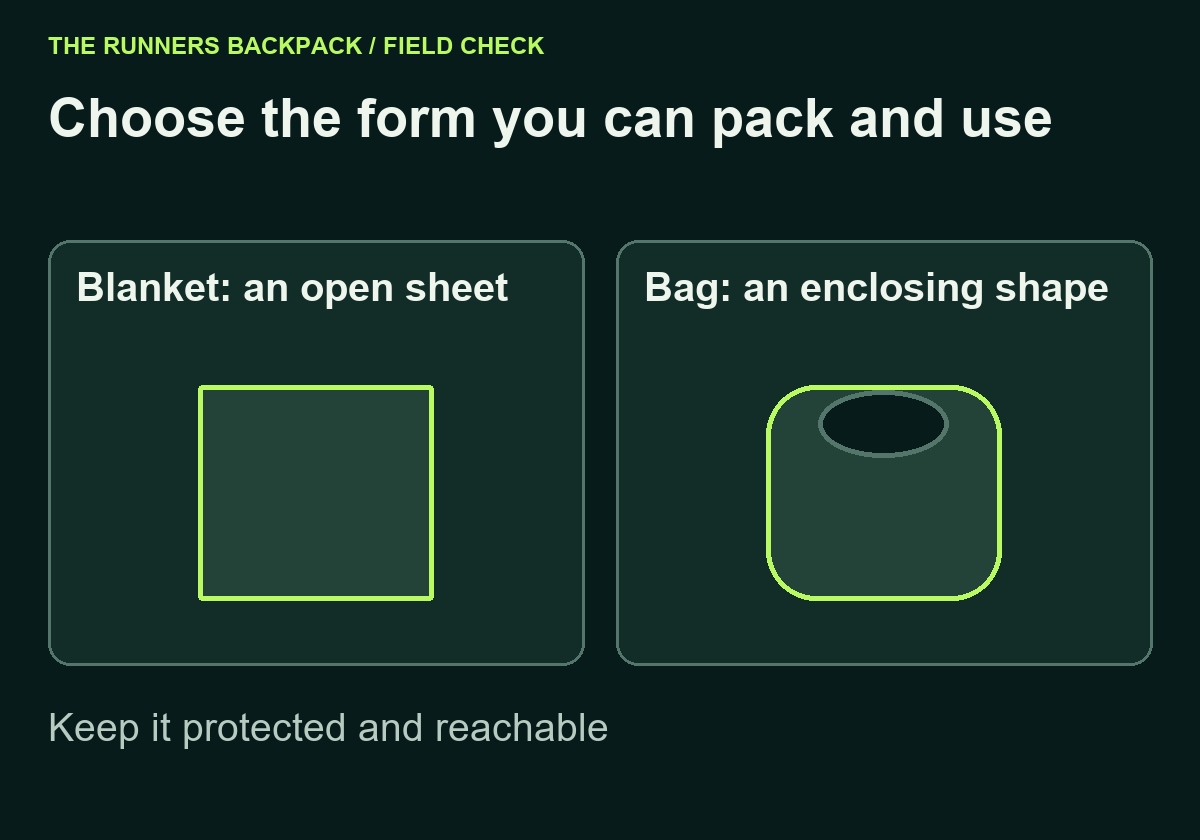
If your race kit list says “survival bag”, choose a bag. If it allows a thermal blanket, a flat foil sheet may meet that requirement. The two pack down small, but their shape changes how you use them: a blanket wraps around you, while a bag encloses the lower body and has fewer loose edges to manage.
I keep a General Medi foil blanket folded in my trail vest and another in the car. The twelve-pack is handy for replacing an opened one or keeping spares with different kit. For an event that specifically requires a bag, the Lifesystems Heatshield Thermal Bag is a compact option to compare with the organiser’s wording.
Choose the shape for the job
A flat blanket gives you flexible coverage: you can unfold it and wrap it around the parts of the body you need to cover. Its open edges need managing, particularly in wind. Check the unfolded dimensions rather than judging coverage from the small packet.
A thermal bag has a closed foot end and sides, so you do not have to hold those edges together. The current Heatshield bag listing gives an open size of 210 × 60cm and a packed size of 70 × 60 × 60mm at 104g. Check that the dimensions suit you with your running layers and compare them with any event requirement.
Read the race wording before buying
Look for the exact terms: blanket, bag, bivvy or another specified shelter, plus any minimum size. Do not assume a flat sheet can be folded into an acceptable substitute where the organiser requires a bag. Save the current kit list with your race information and check any updates before packing.
The General Medi pack is useful when you want several individually packed foil blankets across your vest, car and other outdoor kit. Keep a separate bag for events or outings that call for that design. Having both available makes it easier to pack the appropriate item.
Give it a reachable, protected place
Keep the packet where you can find it without emptying the whole pack, and protect it from sharp objects and repeated rubbing. If you transfer it between bags, include it in the check before each longer outing. A small item left in yesterday’s vest is easy to overlook.
Read the supplied instructions while you are at home. If you open one to understand its size and shape, inspect it carefully before repacking, and replace damaged material. My spare-blanket routine is about having the item ready to carry; I also pack clothing appropriate to the route and weather.
Plan the rest of the kit alongside it
A thermal sheet or bag is one part of preparing for an unexpected stop. Carry the shell, warm layers, navigation and communication equipment your outing needs. Put an accessible whistle and your first-aid pouch in familiar places too.
For a small blanket you can keep in several kits, the twelve-pack of General Medi blankets is practical. For an enclosed thermal layer, compare the Heatshield bag with your size and kit requirements. Pick the appropriate shape first, then check its condition and location whenever you pack.