Some links in my articles are affiliate links. I may earn a commission when you buy through them.
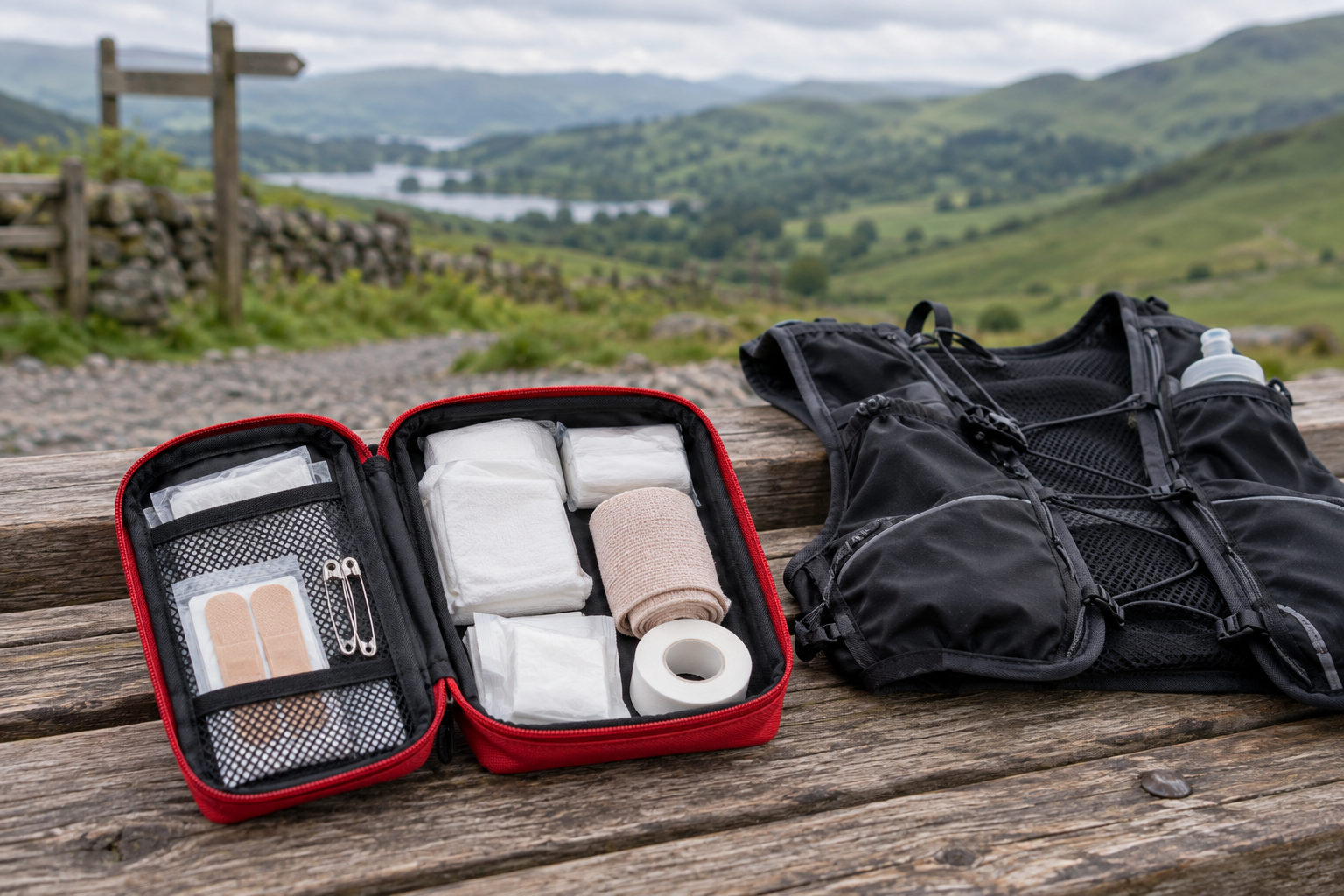
A little first-aid pouch is easy to pack and easy to forget about—until you need something from it. The useful question is whether it contains the things you expect to carry, in a pocket you can actually reach. Here’s how I’d choose a compact kit for a trail run, with particular attention to dressing capacity, waterproof storage and the space it takes in a loaded vest.
The quick choice
The Lifesystems Light & Dry Nano is a tidy starting point for one runner who wants a small kit with plasters, tape, wipes and a bandage. The Light & Dry Micro adds more dressing supplies for another 40g. That extra capacity makes sense for longer outings or a shared group kit, provided the contents match your plans and event requirements.
What does the extra space buy you?
The Nano listing specifies a 95g kit, a waterproof inner bag, zinc-oxide tape, saline wipes, swabs, assorted plasters, a blister plaster, an adherent dressing and a cohesive bandage. It also lists a sun-cream sachet. Think of it as a compact collection of everyday first-aid supplies rather than judging it by the number printed on the pouch.
The Micro weighs 135g and measures 150 × 120 × 45mm according to Lifesystems. Its current itemised list includes ten gauze swabs, four saline wipes, two additional adhesive wound dressings, three blister plasters, closure strips and two types of tape. The appeal is having more dressing supplies available without moving to a bulky general-purpose case.
Those extra 40g are a modest addition to a running load. Pocket shape is often the more useful distinction: a pouch that fits beautifully in an empty vest may be awkward once your waterproof and food are in there. Measure the intended pocket, then leave room to open it and pull the kit out.
Look inside before you choose
Read the itemised contents rather than relying on “32 pieces” or “complete kit”. Several wipes count as several items, while a roll of tape counts as one. The right mix matters more than the headline total.
- Dressings and blister supplies: check quantities and sizes against what you intend to carry.
- Water protection: the inner waterproof bag is useful in a damp vest, so keep its closure clean and properly sealed.
- Extra room: allow space for your own event-specific items without crushing sealed packaging.
- Replacement supplies: choose a kit you can keep topped up, rather than leaving used items missing until the next event.
There is a useful detail to catch on the Micro page: its overview mentions medication and water purification, but neither appears in the current itemised contents. Plan from the contents list and the pack you receive. That avoids buying it for something that may not be included.
Give it a proper home in your vest
Choose a pocket that opens fully. A first-aid pouch wedged underneath several other bags is less convenient than one you can identify immediately. If you run with other people, show them where it lives before you set off.
Try the access test with your vest packed for the actual run: bottles filled, waterproof stowed and food in place. You should be able to take the pouch out without unloading everything onto the ground. A small bright pouch has a practical advantage here—it is easier to distinguish from the bags holding cables or snacks.
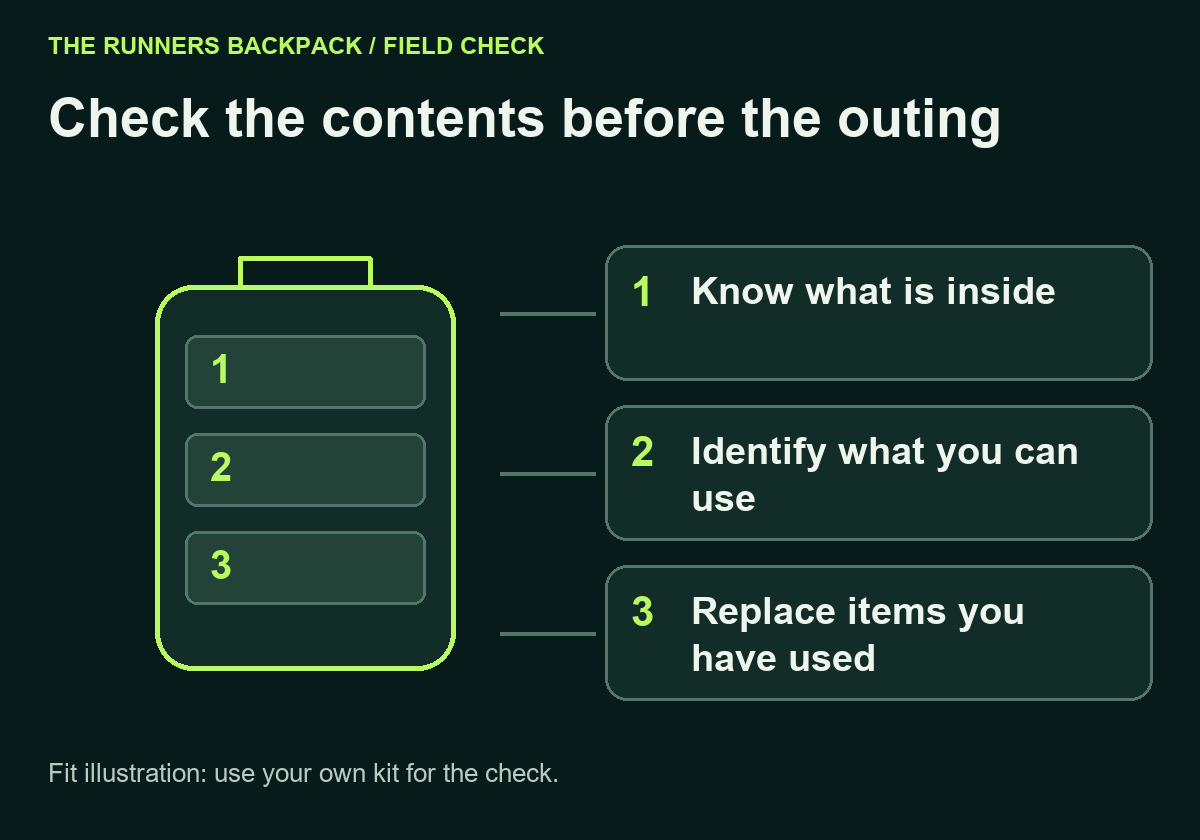
Before each event, check sealed packaging, expiry dates and the organiser’s precise kit list. After opening or using anything, replenish it while the run is still fresh in your mind. Our race-day checklist helps separate the kit you need on course from the things that can wait in your finish bag.
Which would I choose?
For a compact individual setup, I’d start with the Nano and check its contents against the event list. For longer routes or a shared kit, the Micro offers useful extra dressing capacity for very little additional weight. Choose the pouch that fits your plans, keep it accessible and make replenishing it part of packing for the next run.