Some links in my articles are affiliate links. I may earn a commission when you buy through them.
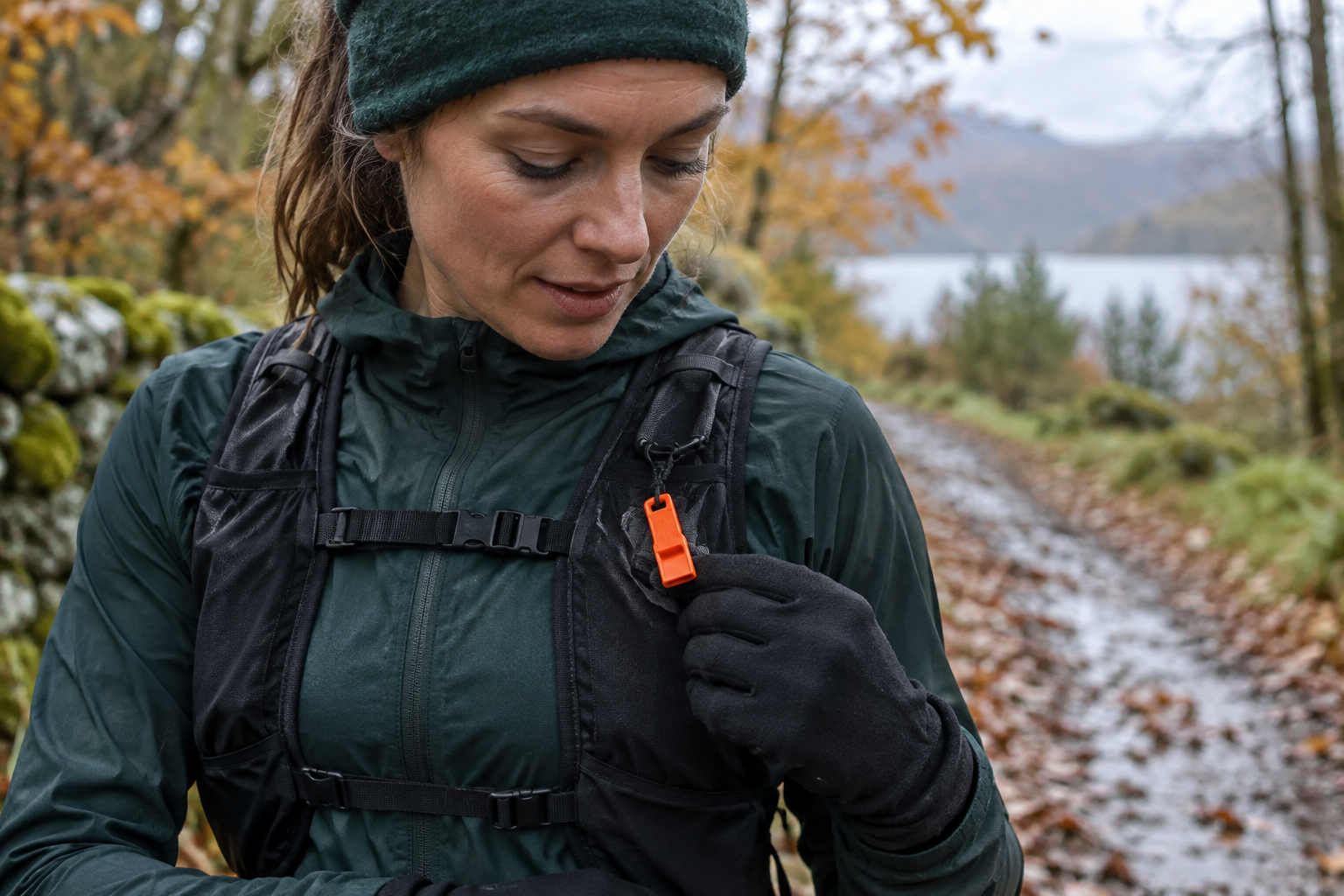
A running whistle is easy to carry well: give it a secure place near the front of your vest, then check that you can reach it with your jacket on. That small bit of preparation matters more than leaving another item loose at the bottom of a pack.
I fasten my Lifesystems Safety Whistle at the front of my trail vest, where I can find it without taking the pack off. The lanyard keeps it attached while I pull it out with cold hands. It is a straightforward choice if you want a small whistle with a dedicated attachment.
Check the whistle already on your vest
Some vests include a whistle in a buckle or on a short cord. Find it, check how it works and try reaching it while the vest is loaded. If it is easy to use and meets your event’s current requirement, you may already have what you need.
A separate whistle is useful when the built-in position is awkward, or when you move between different packs. Keep it attached to the kit you will actually wear rather than assuming it is somewhere in your running drawer.
Try the reach with your outer layer on
Zip your jacket to its normal position, put on gloves and reach for the whistle with either hand. Check that the cord gives you enough room to bring it to your mouth while staying securely attached. Tidy any loose length so it does not catch or swing against your face.
I prefer the front position for the Lifesystems whistle because it avoids searching through a rear compartment. If you change how you wear your jacket and vest, repeat the check: a good position over a T-shirt can become hidden beneath a zipped shell.
Look for simple controls and a useful attachment
The current Safety Whistle listing describes a dual-tone design, a clip lanyard and flotation. Those are useful construction details to compare, especially the attachment you will handle repeatedly. Choose a shape you can hold comfortably and keep the mouthpiece clear of dirt and loose fabric.
Check its operation in a suitable place before a remote outing, away from other people’s ears. Do not judge emergency usefulness from an advertised sound figure alone; where you keep it and whether you can use it promptly are practical checks you can make yourself.
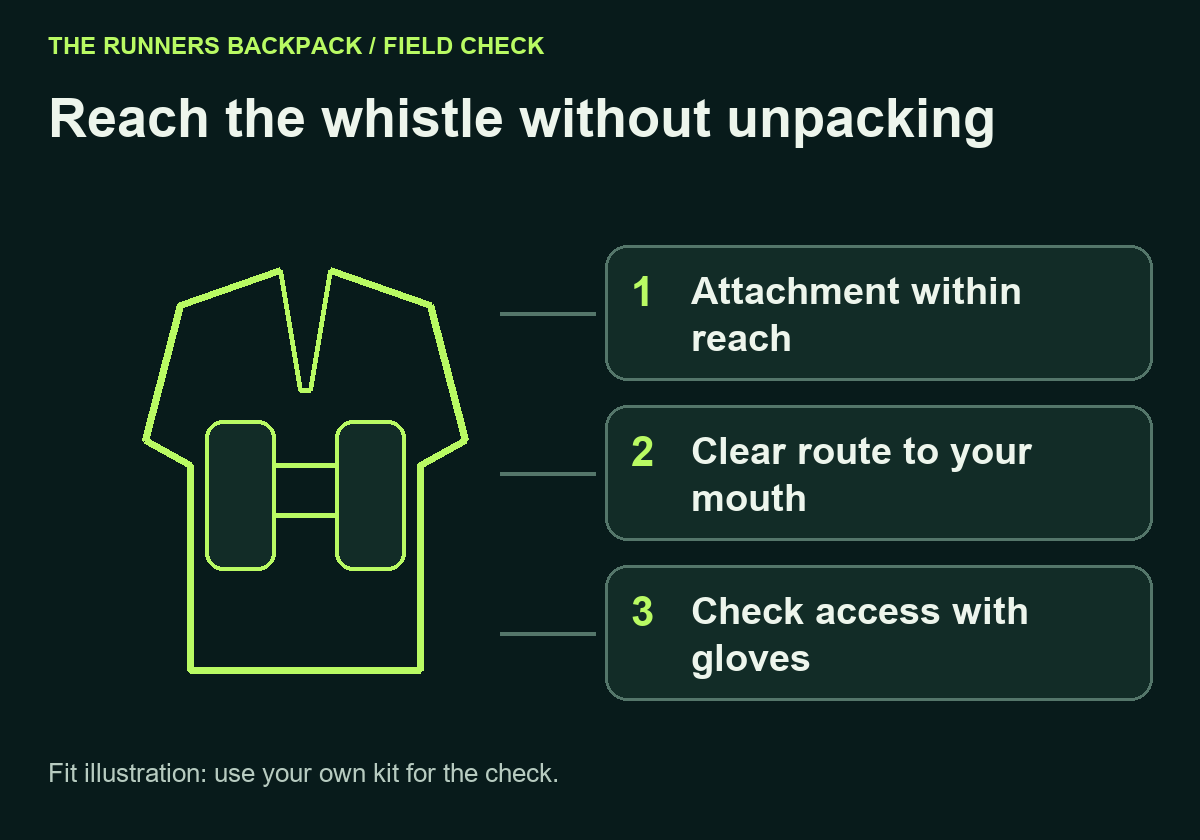
Make it part of the packing routine
Before a race, compare your whistle with the organiser’s current kit wording and check it is attached to the vest you are taking. Keep the event’s contact and emergency instructions with the rest of your route information. For independent outings, plan communication, navigation and the equipment you need for the conditions together.
Afterwards, clean and dry the whistle as directed and put it back in its usual place. Add an attachment-and-reach check to your race-weekend packing list. A small item that always lives in the same spot is much easier to remember.