Some links in my articles are affiliate links. I may earn a commission when you buy through them.
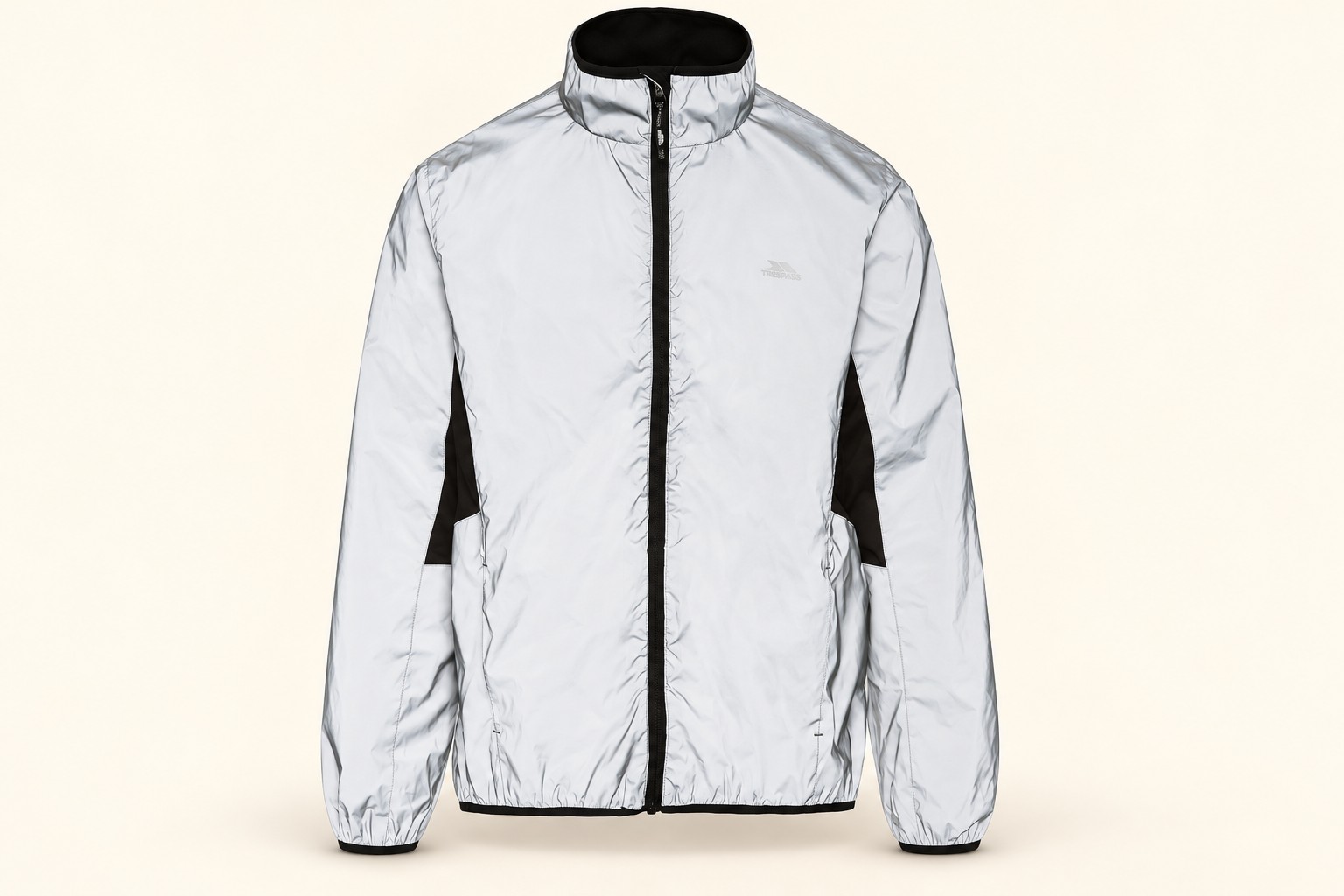
If you want a reflective outer layer for everyday evening runs, I would start with the Trespass Zig or Proviz REFLECT360 Active. The Zig is a straightforward silver shell with two zipped pockets. The Active’s stretch-mesh sides are worth a look if you want more give as you move.
Try the jacket with the lights and bag you actually use. Reflective fabric needs light falling on it; it does not illuminate the path ahead. A running vest can also cover much of the back, so check the jacket with your bag on, rather than judging it from the front-view picture.
Trespass Zig: a simple shell with useful zipped pockets
The Trespass Zig suits runners who want a straightforward outer layer with a full front zip and a high collar. The two zipped pockets give keys and small essentials a secure place, while elasticated binding at the cuffs and hem helps keep the edges settled.
The soft guard at the top of the zip is a detail I appreciate when fastening it high. Check where it sits beneath your chin with your head turned, rather than only standing square to a mirror. The same collar can feel different over a thin running top and a thicker neck layer.
For a light load, the pockets may let you leave a separate pouch at home. Put your actual phone and keys inside before deciding: the zip should close freely, and the contents should sit comfortably during an easy jog.
Proviz Active: stretch mesh for a more flexible fit
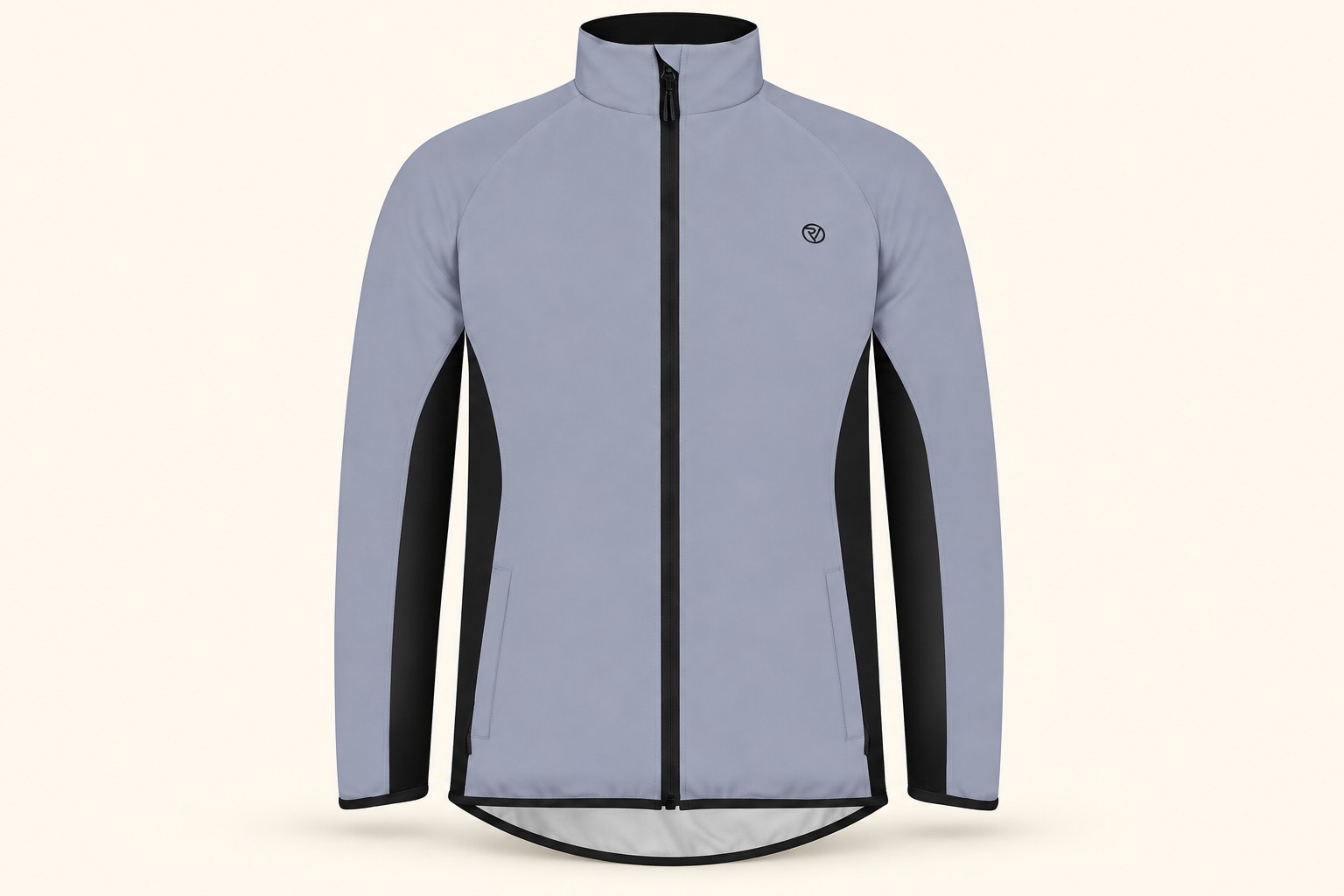
The Proviz REFLECT360 Active has stretch-mesh sides to give you room to move, with reflective panels across the main body. You also get two zipped side pockets and a fleece-lined collar that’s softer against your neck.
Proviz describes the main body as windproof and water-resistant for splashes and light rain. Keep the mesh panels in mind when judging coverage: they are there to admit air and stretch. Open the front zip as you warm up, and try the jacket over the top you expect to wear underneath.
Check that you are ordering the Active model. The brand also sells other REFLECT360 running and cycling jackets, with different fabrics and rain protection. The current Active comes in Black, Blue and Yellow variants; the picture and buying link here show Black, with grey main panels and black sides.
The zip pulls are another useful detail to try with your usual gloves. Reach both pockets while wearing your belt or vest, and check that a strap does not sit over the opening. Choose the size for that combination rather than expecting a stretch panel to make a tight jacket fit over a loaded pack.
Check the reflective areas with your bag on
Put the loaded bag on and look at the areas it covers. A reflective back panel can’t do much while it’s hidden by your pack. Shoulder straps, a chest-light harness and an open jacket can change which areas are exposed at the front too.
Check the outfit from the front, sides and back with help from someone at home.
A clip-on light can add a point of light where clothing and bags leave a gap. Put it on a secure attachment that does not disappear beneath your arm swing or a moving hem. For seeing the surface ahead, choose a suitable beam using the running headtorch guide.
Try the collar, cuffs and pockets together
Reach forwards in your running position and bend each elbow. The cuffs should still cover your wrists without pulling the shoulders tight. Try looking over each shoulder with the jacket zipped, then check that the collar does not catch on your neck gaiter or headphone band.
Put the key where it will not press against your phone. If you carry both in a jacket pocket, notice whether the weight pulls one side down or swings during a short jog. A familiar belt may be the more comfortable home for the heavier item, leaving jacket pockets for gloves or small essentials.
Practise opening the main zip with one gloved hand before you leave. A pull you can find easily is useful when a cool start turns into a warm climb. Our winter running checklist also helps you plan where the layer will go once you take it off.
Keep rain protection separate from reflectivity
Reflective fabric can still let rain in through seams and openings. For a wet or exposed route, choose the weather protection first and check how the rest of your visibility kit works with it.
For a hooded waterproof or mandatory race shell, use the waterproof running-jacket guide and the current organiser’s kit list. Check the exact model’s construction rather than treating all silver jackets as the same kind of shell.
Try your intended jacket-and-vest order before the outing. A shell over a pack needs room for the loaded pockets, while a pack over a jacket can cover reflective material and trap part of the zip. Keep the bottle openings and the light unit clear whichever way round you wear them.
For a light layer on ordinary training runs, the lightweight jacket guide compares soft stretch fabric with a thin hooded windbreaker you can pack away.
Make the jacket easy to carry and care for
Allow space for the jacket you may remove after warming up, as well as any gloves or neck layer. Try putting it in the actual pocket you plan to use, then retrieving it without emptying the rest of your kit. The Race Day Pack Planner is useful for putting those items on the same list.
Follow the care label for the exact jacket, including washing and drying instructions for its reflective fabric. Avoid assuming the wash routine for your ordinary running tops is suitable. Let damp kit dry before returning it to a packed bag.