The field guide
OCR race kit: what to take, carry and leave behind
By James Thompson · Updated 5 October 2026
Some links in my articles are affiliate links. I may earn a commission when you buy through them.
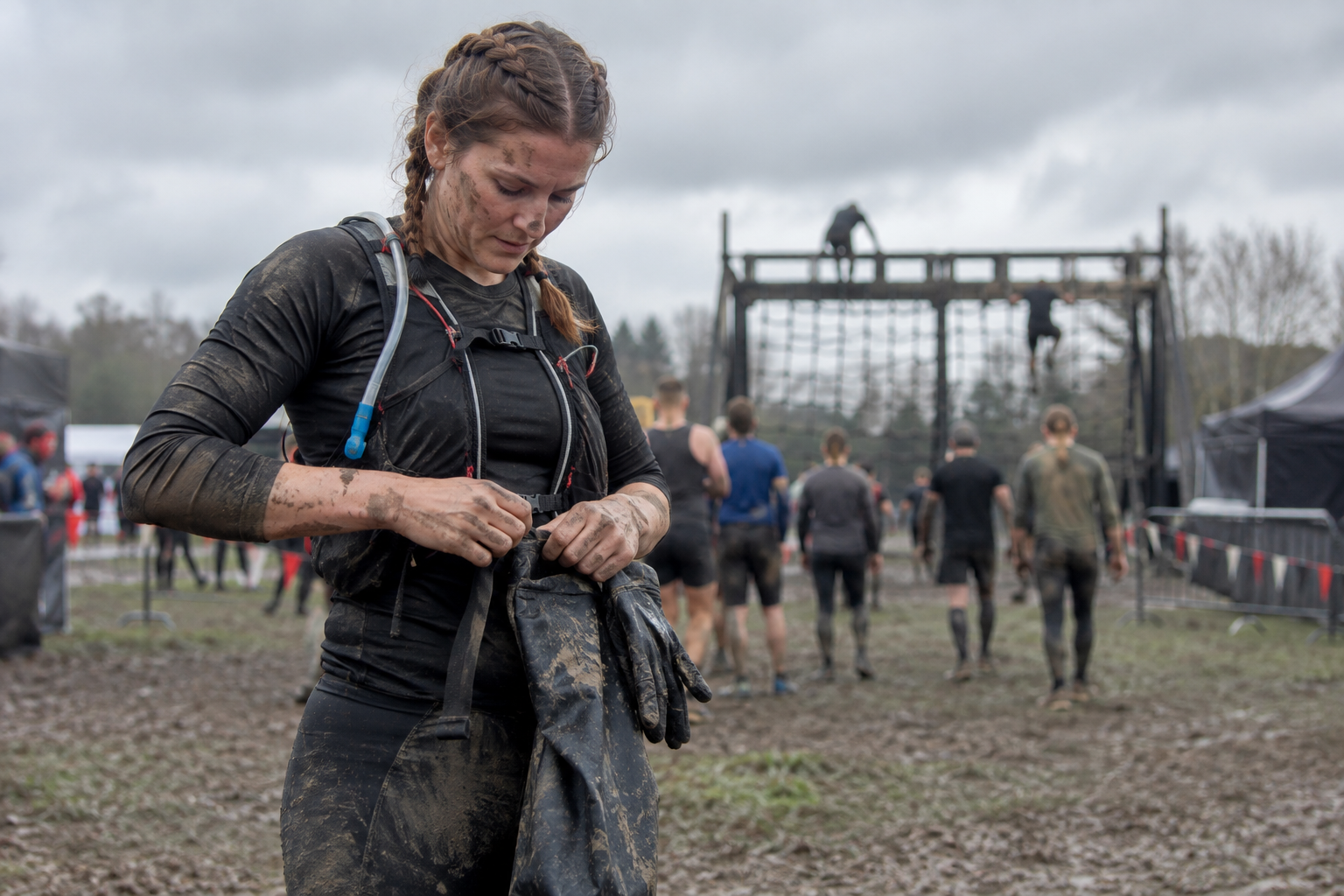
Your first obstacle race is exciting enough without wondering where the car key will end up. Start with two piles: what goes round the course with you, and what will make you comfortable after the finish. Keep the first compact and secure; give the second enough room for dry clothes, a towel and everything coming home muddy.
A phone pouch can protect the small things you need on the course, while dry bags keep your change of clothes separate. A pouch must stay comfortable and securely attached while you move. A change bag needs to open easily when your hands are dirty and you want your towel before anything else.
Still choosing an event? Compare the main UK obstacle events before deciding which course and format you want to prepare for.
Table of Contents
TogglePack for the event you have entered
Read the organiser’s kit information before choosing a belt or pack. Check what you must carry, whether bottles and packs are allowed, and where water is provided. Then look at the finish arrangements: bag drop, showers, changing space and the walk back to your transport.
That walk is easy to overlook. Keep a warm layer accessible if the finish and car park are separated, and put the bag-drop label where it remains readable. If the organiser supplies a particular bag, use small inner bags to organise it instead of buying a replacement they may not accept.
Check the load while bending and reaching
Put on your planned kit and bend, squat, lift your arms and reach across your body. A pocket that feels fine standing up can press into your hip when you crouch. Loose strap ends can flap or catch, while a phone can swing in a pocket that seemed snug when empty.
Secure the strap ends using the equipment’s intended retainers. Check every closure with the actual contents inside. Keep items you need together, so opening a pocket for food does not also release the car key. Familiar clothing and shoes give you fewer new adjustments to think about on the day.
Make drinking easy without overpacking
Work out the distance between the event’s water points and whether you need to carry your own drink. Where personal containers are permitted, choose a setup you can retrieve and close securely. Practise the refill as well as the drinking: a small opening or awkward pocket is more noticeable with wet hands.
For longer carrying needs, our hydration-vest guide explains loaded fit. Before using that arrangement for obstacles, check how bottles, hoses and straps sit when you crawl and reach. Pack according to this event’s requirements rather than copying a road-race bag.
A phone pouch needs a secure place to ride
The OverBoard arm pack provides a hands-free place for a phone and a few essentials. Check the empty sealed pouch in water, following its instructions, before trusting it with the phone. For an obstacle race, also check the event rules and how an arm-mounted pouch sits when you bend and reach.
The current large model uses a Slide Seal closure. Keep the sealing surfaces clean and follow its closing instructions; remove any grit before closing it around your phone. Check your cased handset against the internal dimensions, including the space needed to close it. Our phone-pouch guide covers those details.
Give your clean kit a separate home
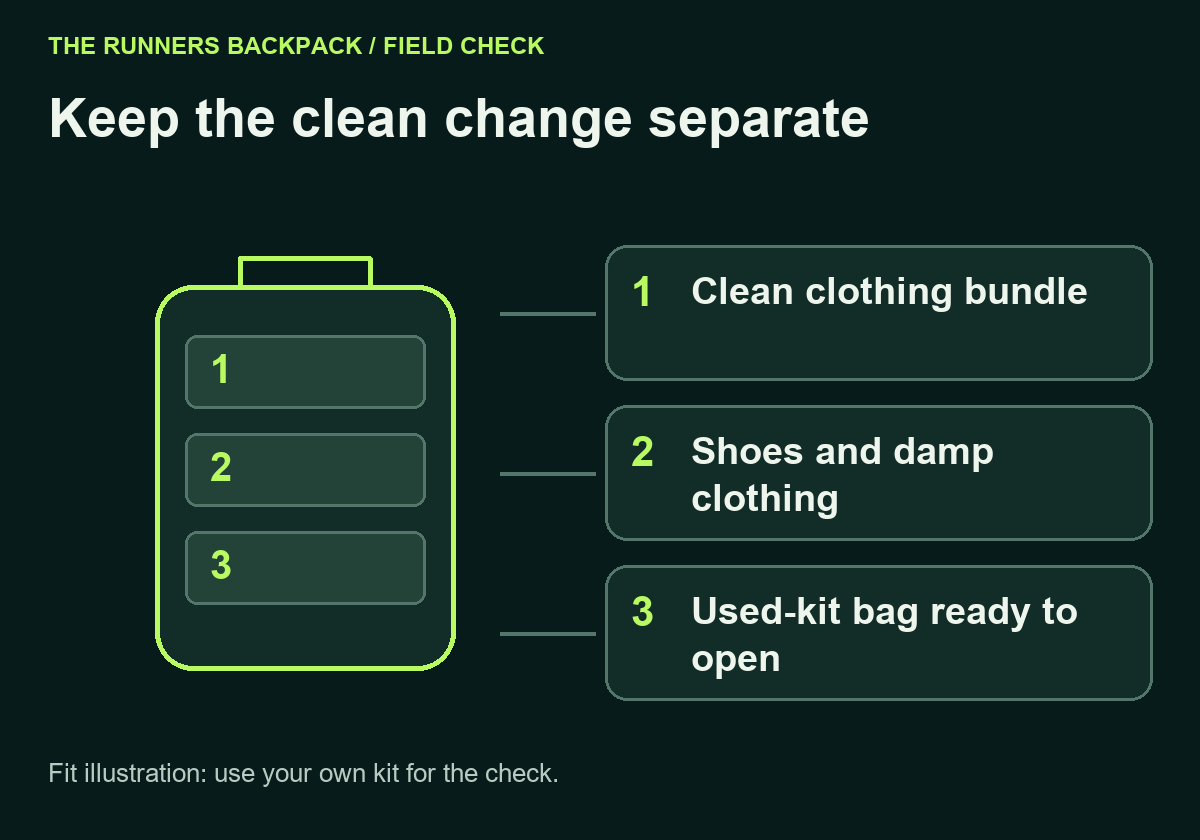
The kuou dry-bag set divides small essentials from larger dry layers, so you can reach one group without unpacking everything. For a post-race bag, use that same idea to keep clean socks and clothes together while leaving the towel easy to grab.
- Put the towel and any changing cover near the opening.
- Pack clean clothes and socks together in a dry inner bag.
- Keep clean footwear away from the space reserved for muddy shoes.
- Bring a separate container or bag large enough for the wet return load.
- Keep the car key or transport ticket accessible after changing.
Allow more space for the return journey: wet clothes are awkward to fold neatly, and you will not want to force muddy footwear beside clean belongings. The dry-bag guide explains how to size and close an inner bag without overfilling it.
Try the fiddly jobs before race morning
Open the pouch, retrieve a drink and refasten your loaded pockets with damp hands. Make sure you can tell when each closure is properly shut. Check that tightening a belt does not trap a shirt or push a buckle into you when crouching.
Lay out the change bag once, too. Imagine arriving with dirty hands: can you find the towel without rummaging through your clean clothes? A small rearrangement at home can save a surprisingly clumsy change in the car park.
Start with the kit you already have
If your clothes and shoes already suit the event, start with the gap in your carrying setup. The OverBoard pouch is worth a look when you need protected phone storage and the permitted mounting arrangement suits you. The kuou bags are useful for organising smaller dry items inside your post-race bag. Leave the change bags at bag drop; take only the items you need or are required to carry around the course.
Finish by checking registration details, arrival time and bag-drop instructions against our race-day checklist. Then put the kit somewhere ready to pick up, with your shoes and race clothes alongside it.