Running race-day kit checklist: pack without the panic
By James Thompson · Updated 5 October 2026 · Race-day kit
Some links in my articles are affiliate links. I may earn a commission when you buy through them.
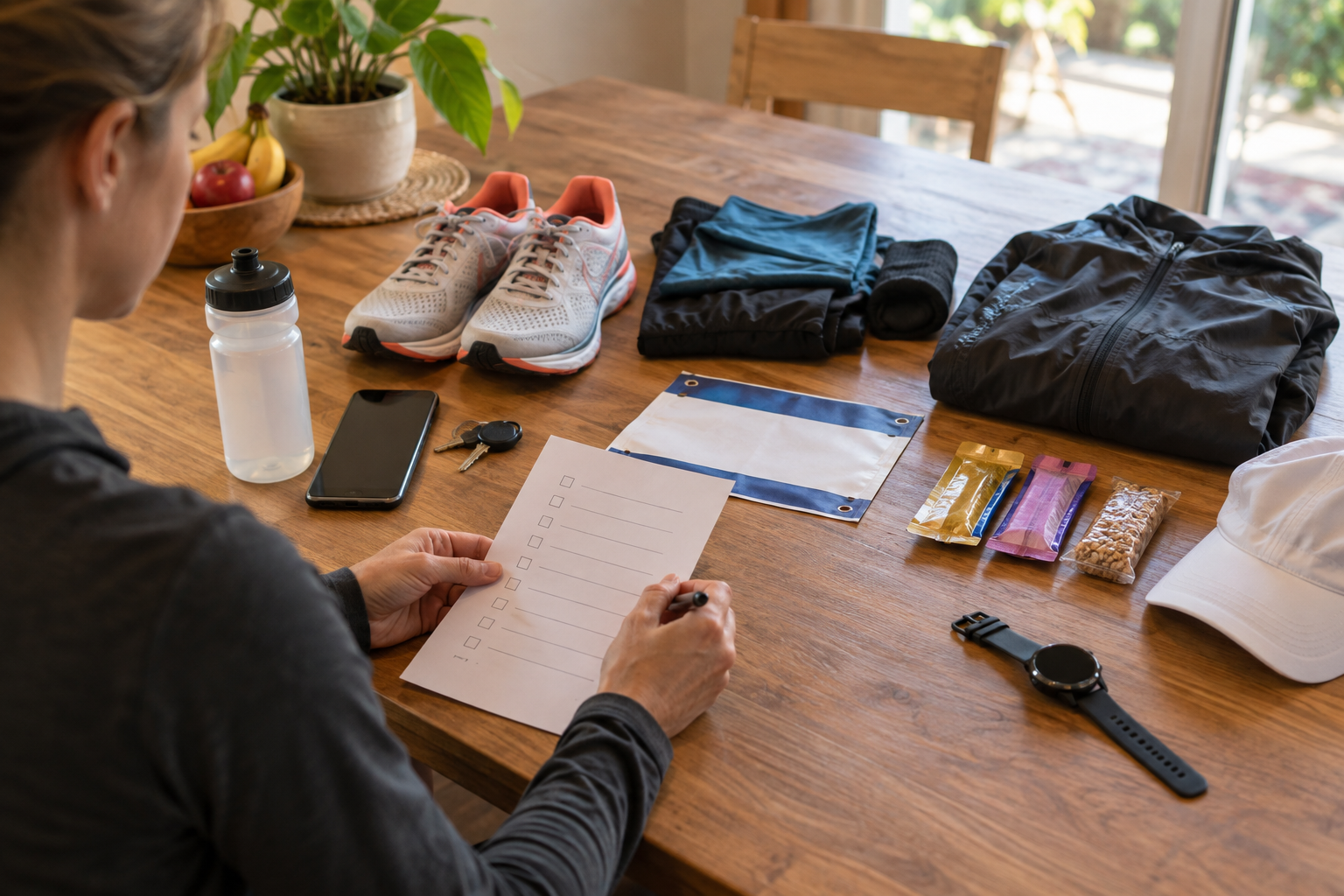
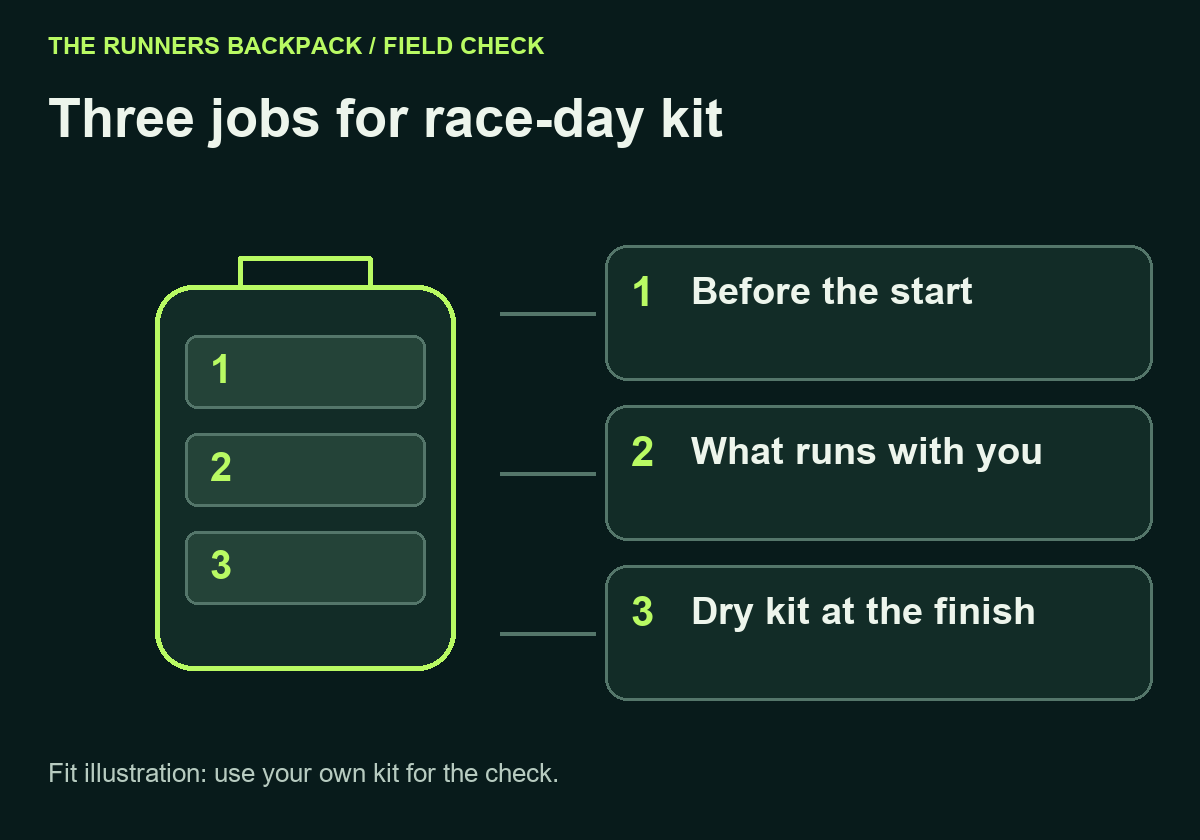
Race morning is easier when your kit is packed in the order you’ll use it. The number needs to be ready before the start, your phone and travel essentials need to stay accessible after bag drop, and the dry top should be easy to find at the finish.
A few small bags can help with that. The kuou dry-bag set lets you separate things needed quickly from clothes for afterwards. Give each group a recognisable bag so you can reach it without tipping out the whole pack.
Put on the top that will carry your number and check where the bib sits. If you have several layers, work out which one you’ll be wearing when the number needs to be visible. Follow the event’s instructions for its permitted fastening method.
I like the Ultimate Performance bib magnets for attaching a number without making holes in a favourite top. Align both halves, then nudge the bib into position. Attach them before leaving for the start; holding the fabric, bib and magnets together takes a little practice.
Check the pockets with everything inside
Load your belt or pockets with the phone in its usual case, the keys you need and any food you’ll carry. Sit down, stand up and jog a few steps. A bulky key bunch or a pocket covered by your bib is easier to rearrange here.
Try taking out the phone and putting it back without moving the other contents. The running-belt guide compares the pocket arrangements.
At bag drop: check what you’re giving away
Before handing the bag over, put a hand on the things that must stay with you: your race number or timing equipment, phone if needed, essential medication, route food and whatever you need to reclaim the bag. Check your transport arrangements as well. If travel payment is on the phone, its accessibility and charge matter beyond recording the run.
Keep the bag label visible and use the container the organiser requires. Small inner bags can keep things organised inside the bag the event supplies. Leave an outer pocket or a place at the top for the things you’ll want first after reclaim.
If you expect to remove a jacket or gloves, decide where they’ll go before you enter the start area. Make that space while packing, rather than filling every pocket and hoping the extra layer will fit later. Check the event’s arrangements for any clothing you intend to leave behind.
Find the first gel or snack without looking. Give the wrapper a home too: a separate pocket or a small suitable pouch keeps sticky packaging away from the phone. Our guide to where to carry gels and used wrappers helps you plan both halves of the job.
If the event asks runners to bring a cup, practise unfolding and stowing your collapsible race cup. It should be easy to find at the checkpoint and easy to put away empty afterwards.
At the finish: pack for tired hands
Put a dry top near the opening, with socks together rather than separated across the bag. Keep damp running kit away from those dry clothes as you change. A small bag dedicated to the journey home can hold travel details and anything you won’t need during the run.
I’d use the different sizes in the kuou set to keep smaller items separate from a dry layer. Leave enough space to roll each closure properly; compressing the clothing a little is more useful than filling a bag right to its opening.
Make the journey home easy to follow
Agree a meeting point with anyone collecting you and keep the return travel details accessible. Check the walk from the finish to bag collection and transport before the day, including whether those places are separate.
For an overnight trip, the race-weekend packing guide covers hotel charging, travel clothes and bringing damp kit home.
A final door check
Confirm the event location, start or collection time, entry information and the kit required by the organiser. Then rehearse the first minute after bag collection: open it, find the dry top, find your transport essentials. If those are buried beneath everything you packed first, change the order now.
Entering a fell race? Read its navigation, device and mandatory-kit requirements before treating this as your packing list. Our fell-race navigation and entry checks explain the questions to resolve.
The half-marathon packing guide separates the travelling, running and finish kit into three manageable groups.