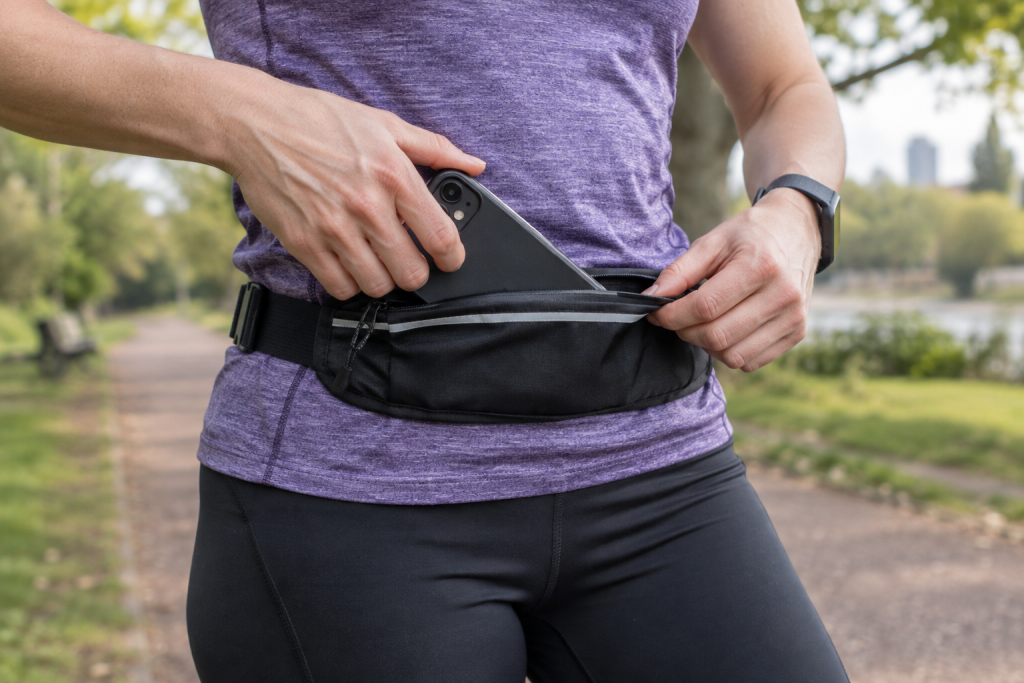
The best place for your phone is somewhere you can secure it without changing the way you run. A bigger handset, a bulky protective case and a bunch of keys can turn a comfortable empty pocket into an awkward load. Start with the phone you actually own, not the dimensions of the model without its case.
Start here → choose by use
For a phone and one key, try an existing zipped clothing pocket first. Move to a belt if that pocket pulls the fabric or moves excessively. Choose an armband only if upper-arm access suits you; a vest makes more sense when you already need water or spare layers.
Compare the practical trade-offs
| Option or check | Useful when | Trade-off to check |
|---|---|---|
| Zipped shorts or tights pocket | You already own clothing that securely fits the phone | Weight may drag light fabric; side and rear pockets feel different |
| Waist belt | You want phone and keys off your clothing | Sizing and pocket access change when loaded |
| Armband | You prefer the phone on your upper arm | Check sleeve fit, rotation and touchscreen access |
| Vest pocket | You are already carrying a running vest | Water storage and screen protection need separating |
| Hand carrying | You only need momentary access | A loose phone is not a secure long-run carrying system |
Measure the complete phone
Include the case, any protruding camera surround and a normal-sized charging connector if you plan to use one. Pocket dimensions alone do not reveal whether the opening is wide enough. Look for photographs of the closure, not just a stretched pocket with a phone inside. A zip must close without pressing sharply against the screen.
Decide how often you need access
An occasional emergency phone has different needs from one you check for route directions. Practise retrieving and replacing it with cold hands or your intended gloves. Avoid arrangements that require emptying keys onto the ground to reach the phone. If you want to take photographs, test the actual sequence while stationary before relying on it outdoors.
Separate water protection from retention
A secure pocket stops the phone falling out; it does not necessarily keep it dry. Sweat, rain and a leaking flask are separate problems. Check the precise protection claimed for the pocket or a separate pouch. Do not assume water-repellent fabric means the complete pocket is waterproof, or that a phone’s original water-resistance rating remains unchanged after damage.
Your pre-purchase checklist
- Load the phone in its normal case and close every fastening.
- Jog, turn and bend to check movement and pressure.
- Secure the key separately from the screen.
- Rehearse removing and replacing the phone without dropping other contents.
When not to buy
You may not need a new accessory if an existing zipped pocket passes the loaded test. Do not buy a vest solely for a handset unless its extra storage solves another genuine need.
A shopping starting point
The FlipBelt Zipper is a model to investigate. The button below links to a retail listing. Confirm the selected size, current product generation, supplied items, seller and return conditions before purchase. Our comparison criteria above matter more than the brand name.
Check FlipBelt Zipper on Amazon UK
Questions runners ask
Will any belt fit a large phone?
No. Check the exact pocket opening and dimensions with your case included; a stretchy fabric claim is not a fit guarantee.
Is a rear pocket better than a side pocket?
There is no universal answer. Test reach, movement and pressure with your own clothing and handset.