Some links in my articles are affiliate links. I may earn a commission when you buy through them.
Your phone should stay close enough that you can forget about it until you need it. For a simple phone-and-keys run, I like the Classic FlipBelt. Choose the zipped FlipBelt if a zipped place for valuables would make the setup easier, or Salomon Pulse when you also want space for gels and the gloves you take off after warming up.
Whichever you choose, measure where you’ll wear it and try your phone with its usual case on. A comfortable belt should let you reach a pocket without wrestling your top out of the way.
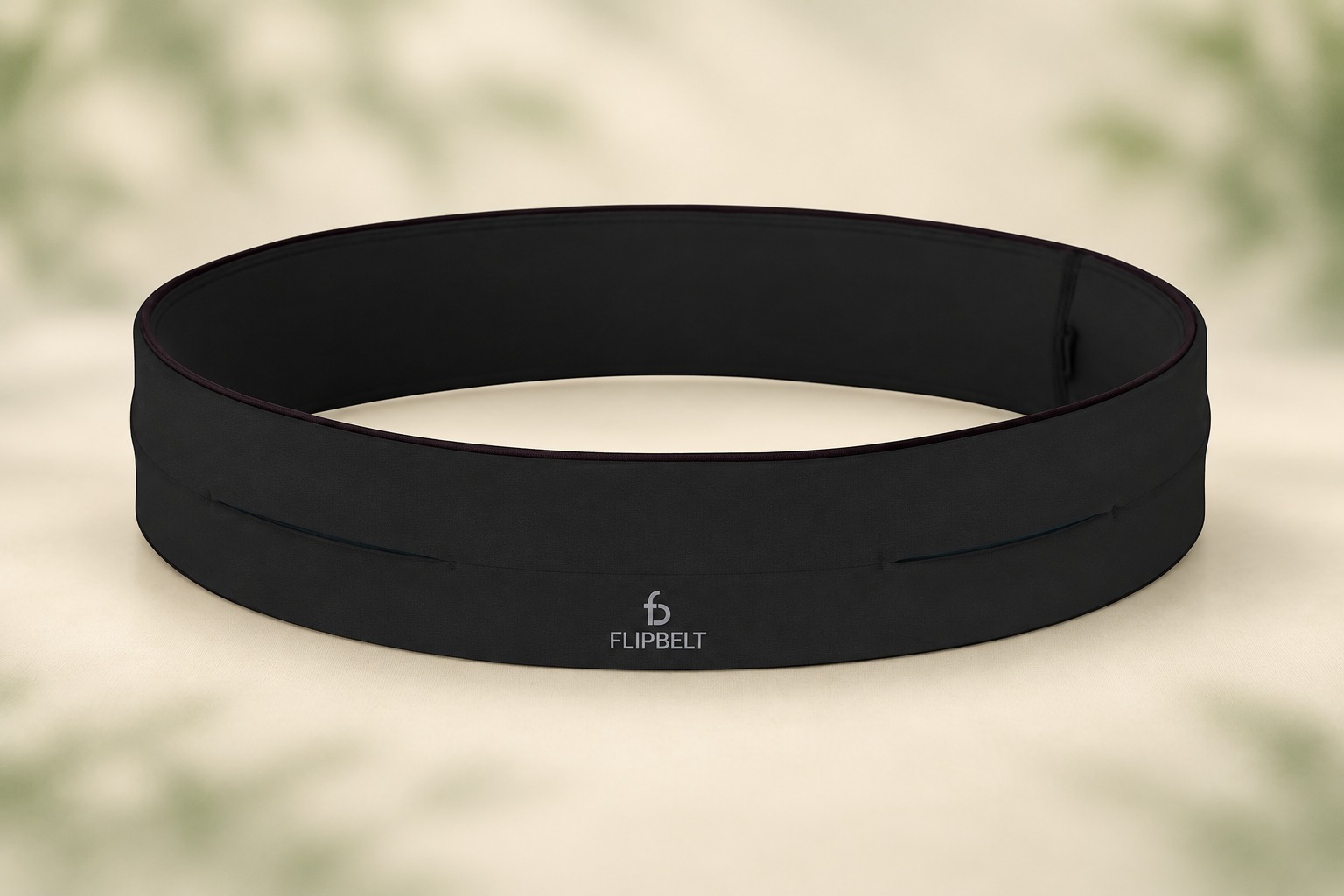
This is the belt I would choose for ordinary runs when I do not need to carry water. The continuous stretch pocket lets you spread the phone, a card and other small items around your waist. It has no buckle sitting at the front, which helps the whole arrangement feel unobtrusive beneath a loose top.
Slide the phone through one opening and hook the key inside. Distributing the load around the belt keeps it steadier and less conspicuous than stacking everything in a dangling pouch. Choose the fitted size carefully.
The openings are easy to use, but they are different from a zipped compartment. Attach the key and check how the phone sits when you bend or take a longer stride. A large handset in a thick case needs its own fitting check; the screen diagonal alone will not tell you how easily it passes through the opening.
Choose your size for the position where you will wear it. A belt worn low on the hips needs to fit a different circumference from one on the natural waist. Use the current size chart and measure that position rather than relying on trouser size.
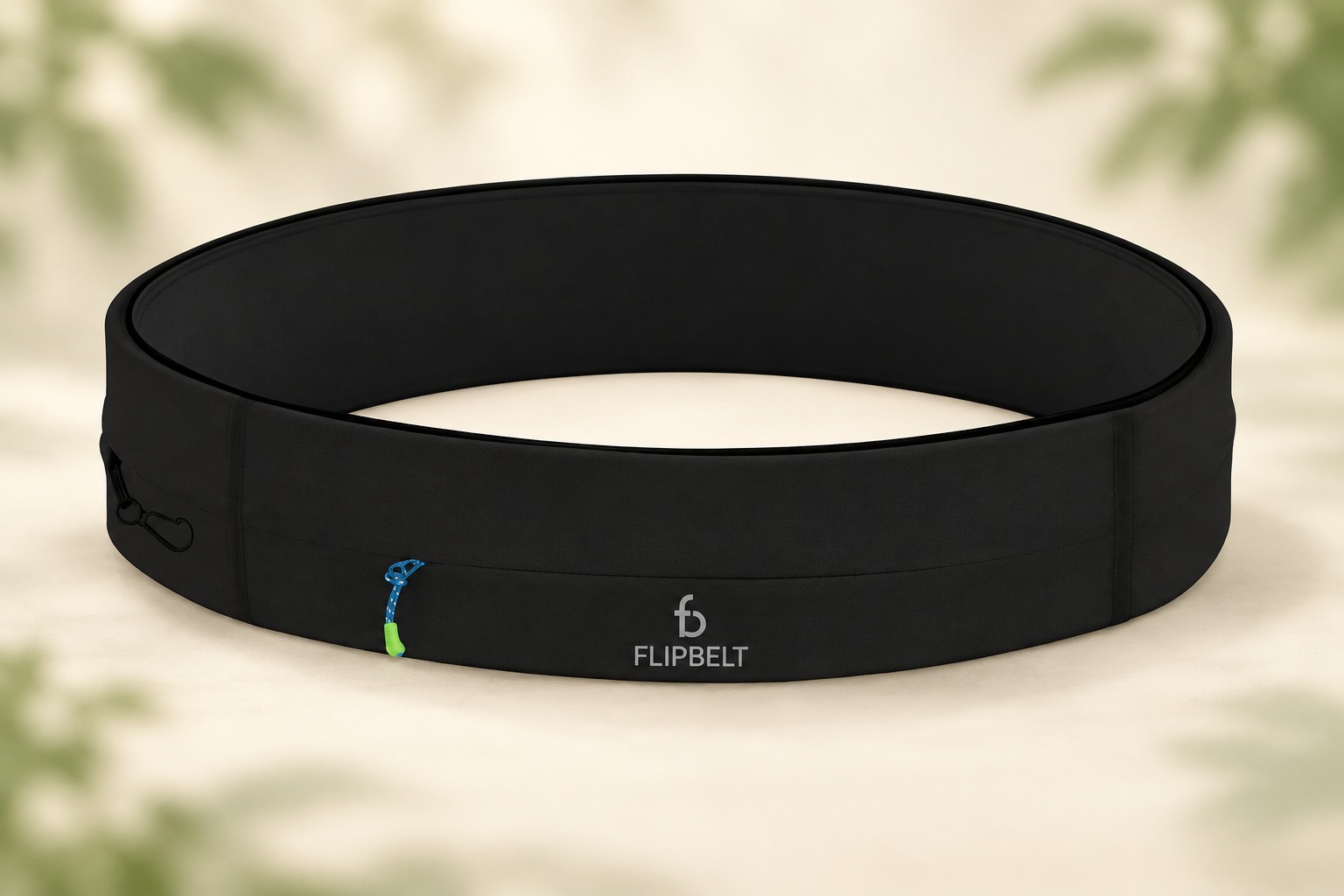
If you like a pull-on belt but feel happier with your key zipped away, this is the one I’d look at. It has one zipped pocket, three other openings and a key hook inside, so you can keep valuables secure without opening a zip every time you want a gel.
Use the zipped section and key hook together for a second safeguard. Put the phone and gels through the other openings to spread the load around your waist. There are no hard waist fasteners to press into you when leaning forward.
If you check your phone often for directions, try keeping the key and card zipped away and the phone in another opening. See which arrangement you can manage comfortably with cold fingers.
This would be my first look if keeping a particular small item enclosed matters most. The simpler Classic suits me when those extra closures are unnecessary.
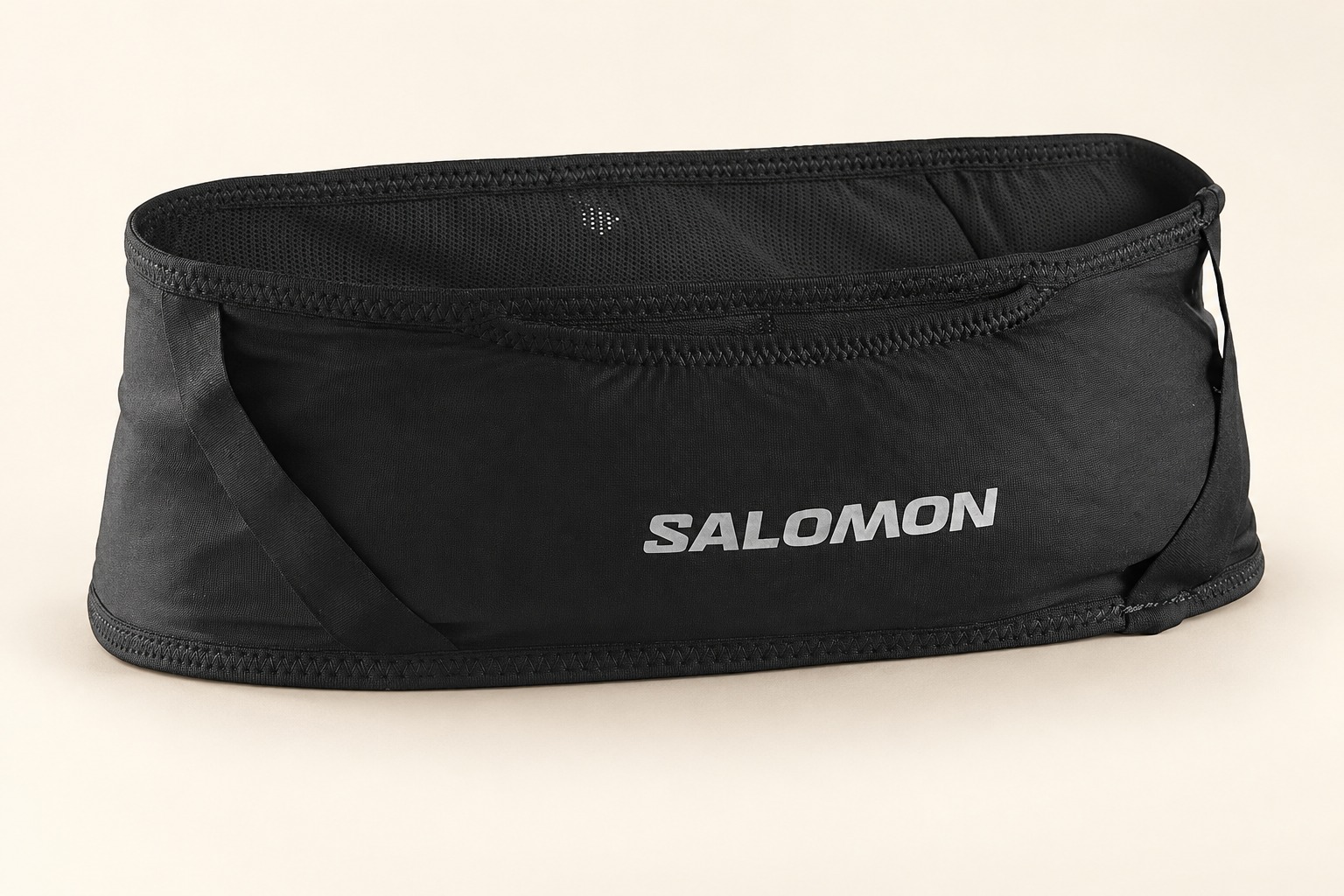
This suits the middle ground where your shorts cannot hold everything but a vest would feel excessive. Use the stretch pockets to spread a phone, keys, gels and a light pair of gloves. The zipped pocket gives small valuables a separate place.
Spread the contents around the pockets rather than making one heavy lump at your waist. Getting the size right keeps it close and steady, particularly on warm runs when you’d rather leave the pack at home.
There is scope for a suitable soft flask, but buy and fit the drinking setup together. Flask capacity does not tell you its filled width, height or how much the cap will protrude. Practise putting it back after a drink as well as taking it out. The flask-fit guide explains what to measure. If water and a jacket are routine requirements, look at the hydration-vest options too.
Check your phone with its case on
Lay out the actual phone, case, key and any protective sleeve you use in wet weather. The case adds thickness, while a waterproof pouch changes how smoothly the handset slides through a pocket opening. Try the complete combination before deciding it fits.
Keep a hard key away from the phone screen and from the spot where it presses against your body. A key hook helps retain it; it does not stop an awkwardly placed key rubbing against the handset. Use another part of the belt where possible.
A soft fabric belt can be comfortable against sweaty clothing without being waterproof. If your main worry is rain or sweat around the phone, read the phone-protection guide and include that extra layer in the fit check.
Try the belt full, then partly empty
Put the loaded belt where you expect to wear it and jog, lean forward and take a few longer steps. Redistribute the load if one side moves more than the other. For fitted belts, follow the maker’s chart and check that the fabric stays close without restricting you.
Take the phone out, then repeat. Removing the heaviest item changes the load; the belt should still sit sensibly. Put it back while wearing your normal top and jacket. You need access without pulling several layers out of the way or trapping the hem in the pocket. If frequent screen checks make the belt awkward, our armband-or-belt comparison helps you try both carrying positions with the same load.
Leave a little room for a used gel wrapper or the gloves you remove later. You’ll need that space after eating or warming up. Our belt sizing and bounce guide helps you diagnose the fit if it keeps moving.