The field guide · Running after dark
Choosing a night trail race: railway track, downland or hill course?
By James Thompson · Updated 28 October 2026
Some links in my articles are affiliate links. I may earn a commission when you buy through them.
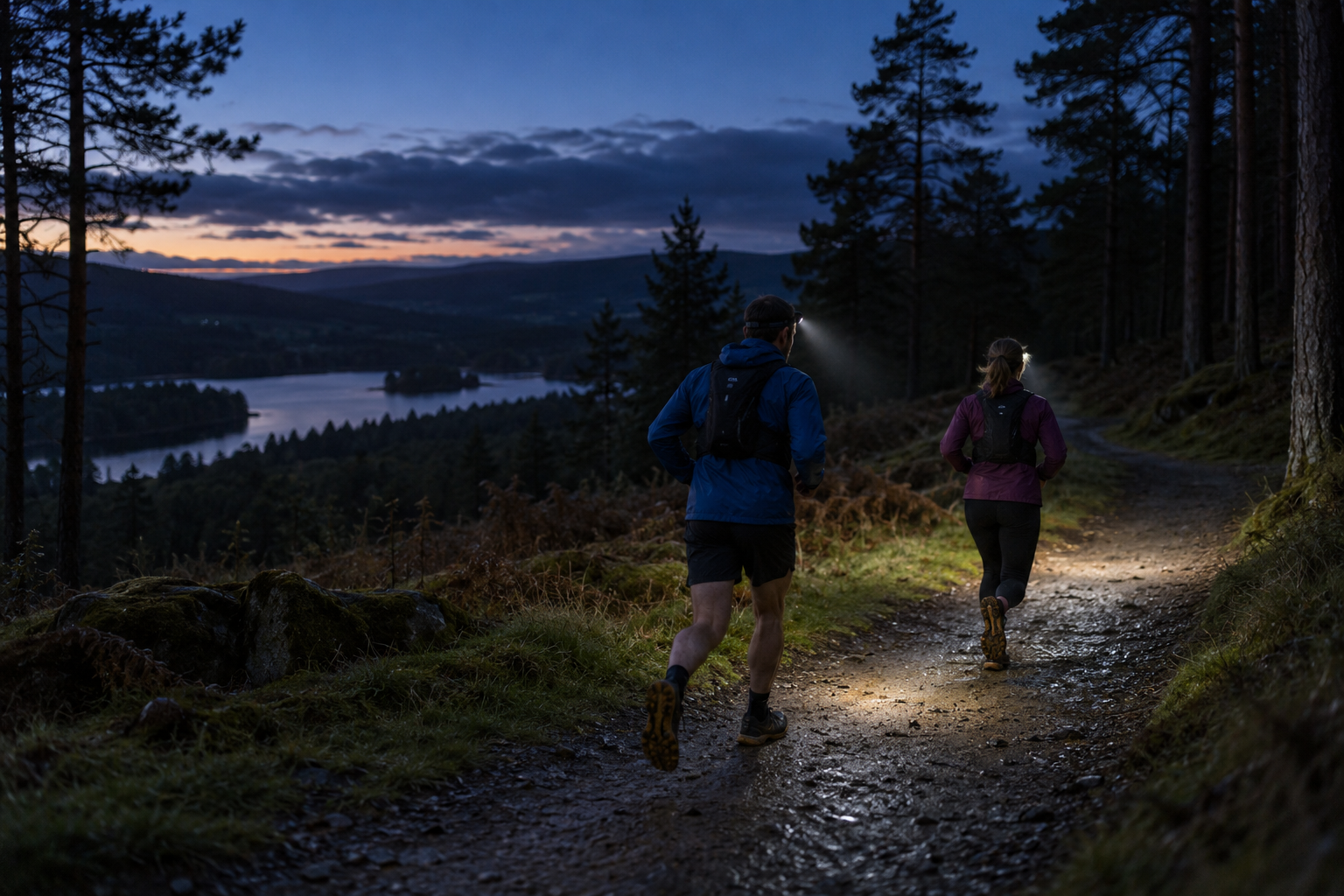
For a first organised run after dark, choose the ground and climbing before the distance. A former railway out-and-back can let you concentrate on running by torchlight; a marked downland loop adds junctions and hills; a short forest event can still send you up a steep climb.
The 2026 editions of Tunnel Vision, BigNightOut and the Illuminator show those differences well. These are course examples, rather than a list of three races currently available to enter: Tunnel Vision is sold out and the Illuminator took place on 24 October. Details below were checked on 28 October 2026.
Table of Contents
ToggleCompare the challenge behind the distance
| 2026 example | Ground and climbing | Route finding | Main question |
|---|---|---|---|
| Tunnel Vision, 5 miles | Flat former railway, with awkward tunnel footing and a ford crossing. | Out-and-back; volunteers at the tunnel and turn. | Would a dark enclosed tunnel suit you? |
| BigNightOut, listed as 12km or 22km | Trails around Winchester; the longer route climbs to Cheesefoot Head. | Fluorescent directional markers; organiser also advises GPX. | Which distance fits your hill experience and cut-off? |
| Illuminator, 8km, 15km or 15 miles | Forest and hill terrain; even the 8km includes the steep Craigendinnie climb. | Reflective markers, arrows and marshals, according to the estate. | Do you want sheltered woodland, a more exposed ridge or the longer hill outing? |
Sources: Tunnel Vision race pack, BigNightOut event details, the Illuminator 8km, 15km and 15-mile descriptions, plus Glen Tanar’s event information. The ground descriptions support a comparison of demands, not an objective easiest-to-hardest ranking. These descriptions do not supply like-for-like ascent totals.
Tunnel Vision: simpler route shape, unusual footing
The 2026 pack describes five miles on the flat Brampton Valley Way, turning at 2.5 miles. It is largely compacted and fairly level, with less secure footing in Oxendon Tunnel. The organiser’s main page identifies ruts and puddles; the pack says summer work has improved the tunnel surface. Expect to watch your footing rather than assume railway track means smooth tarmac.
You pass through the tunnel in both directions. Keep left for returning runners, ease down where the surface needs it and leave room at the narrow start. There is also a small ford: the pack describes an alternative crossing and warns that its wooden platform can be slippery. Follow the edition’s water-level updates.
Mood lighting in the tunnel is part of the atmosphere, not the light you rely on. The pack requires a headtorch or handheld torch. A short event with a dark enclosed passage may appeal if that is the experience you want; choose another format if the tunnel itself is the part you would dread.
The 2026 Night Run is on 5 November, with a Dawn Run on 6 November. The pack says there is no official baggage facility and dogs are not permitted. Plan where dry clothes and valuables will stay before copying the bag-drop routine from a larger race.
BigNightOut: a marked loop with a longer hill option
BigNightOut’s 7 November 2026 page describes a signed course leaving Winchester Athletics Track, using the South Downs Way and other trails. Its 22km route climbs steadily to Cheesefoot Head before a longer loop; the shorter route joins later. This suits a runner looking for a trail outing beyond a railway corridor, provided the chosen distance and hills already fit their experience.
The fluorescent arrows help with route finding, but the organiser advises downloading the GPX because markers can be tampered with. Learn the course shape and check how you are expected to recover a missed turn. A marked trail event and a self-navigation fell race can have very different device rules.
There are two inconsistencies to resolve before relying on the details: the entry and cut-off sections call the shorter distance 12km, while the route narrative says 11km. The detailed start section gives 17:45 for the shorter race, but its entry card shows 17:30. Confirm the final distance and start instructions with the organiser.
The page requires a headtorch or chest torch and at least 500ml of fluid. It advises backup light; it also provides a bag-drop tent and excludes canicross. Those are this event’s arrangements, not rules for every night trail race.
Illuminator: the shortest route still climbs
The 2026 8km course description offers solid woodland trails and allows running or walking, yet explicitly sends the short route up the steep approach to Craigendinnie. Choose it for a shorter hill challenge and the light-zone experience, rather than because 8km sounds like a flat introductory run.
The 15km route also allows walking, but crosses an open ridge described by the organiser as more exposed than the 8km. The 15-mile option is for runners only and adds a longer hilly outing. If you dislike exposed ground after dark, shortening the distance and choosing the more sheltered course are separate decisions.
The estate describes reflective markers, arrows and marshals. The organiser publishes a compulsory kit list, including a suitable headtorch, spare power or a spare headtorch, weather protection and an extra warm layer. Read the complete requirements for the actual edition rather than treating a lamp and a race number as the whole list.
The 24 October 2026 event has already happened. These profiles help explain the format; future dates, routes and entry conditions need a fresh check when announced.
Choose the part you want to practise
If you are comfortable on level paths but new to torchlight, look for a short event with ground you already understand, a clear route and straightforward ways to stop. Try your light on familiar ground first, checking that you can comfortably read the surface and turnings.
If ordinary trail hills are familiar, compare the shorter marked loops before moving straight to the longest distance. For an event with a steep climb or exposed ridge, assess your ability on that ground as well as how far you can run. Night scenery is mostly what your light reveals nearby; a famous daytime viewpoint need not be the main attraction.
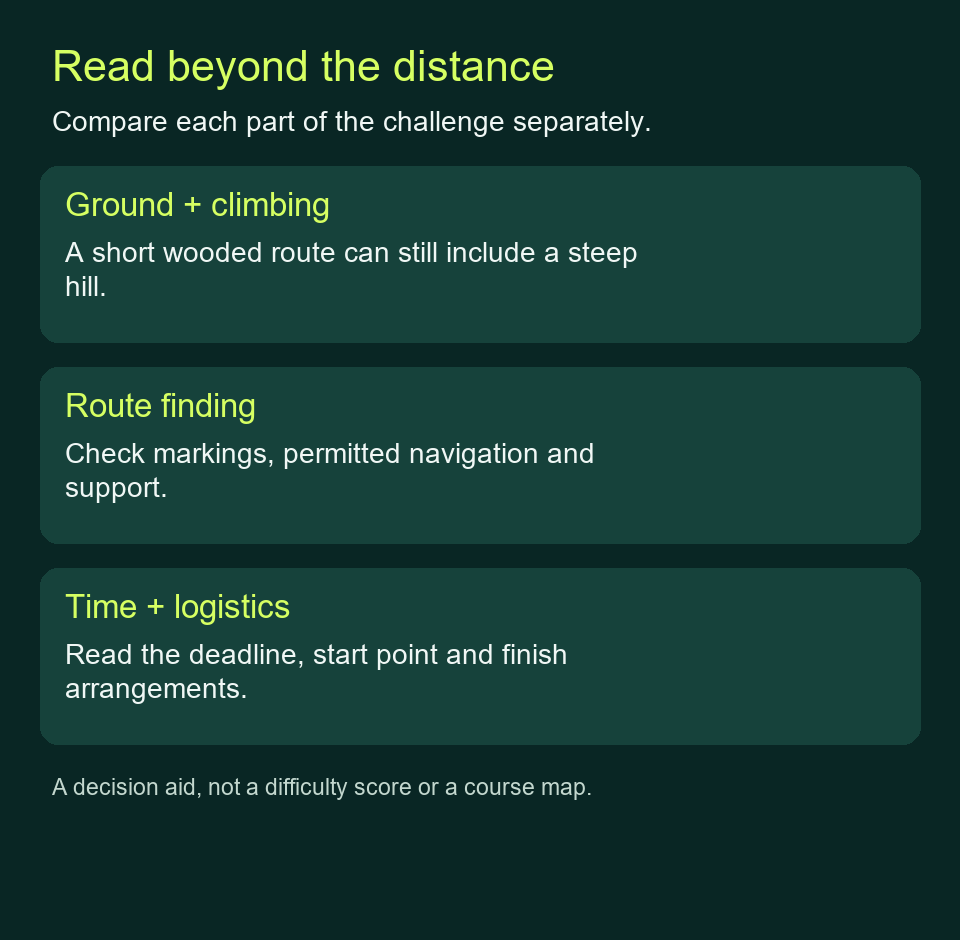
Check the edition before committing
Confirm the final route, start, cut-offs, marking, compulsory kit and retirement instructions. Our night-race cut-off guide shows how to compare finish allowances and clock-time checkpoint deadlines. Walking being allowed does not mean that the course stays open indefinitely.
The Race Atlas can help you discover alternatives by place and distance; follow each organiser’s current information for what happens after dark. Once you have chosen the event, use the headtorch runtime guide to plan usable light for the run and the return to transport.