Some links in my articles are affiliate links. I may earn a commission when you buy through them.
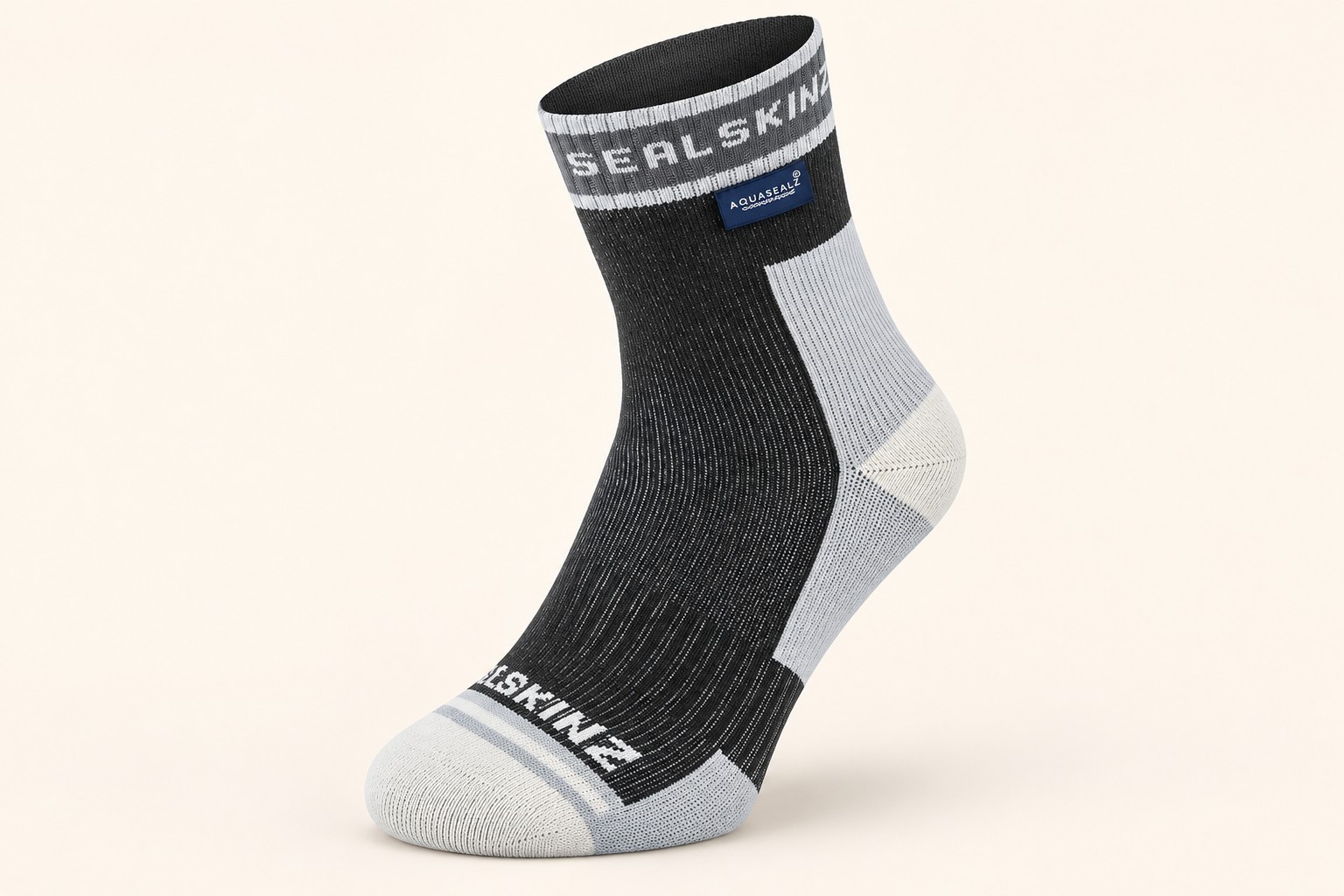
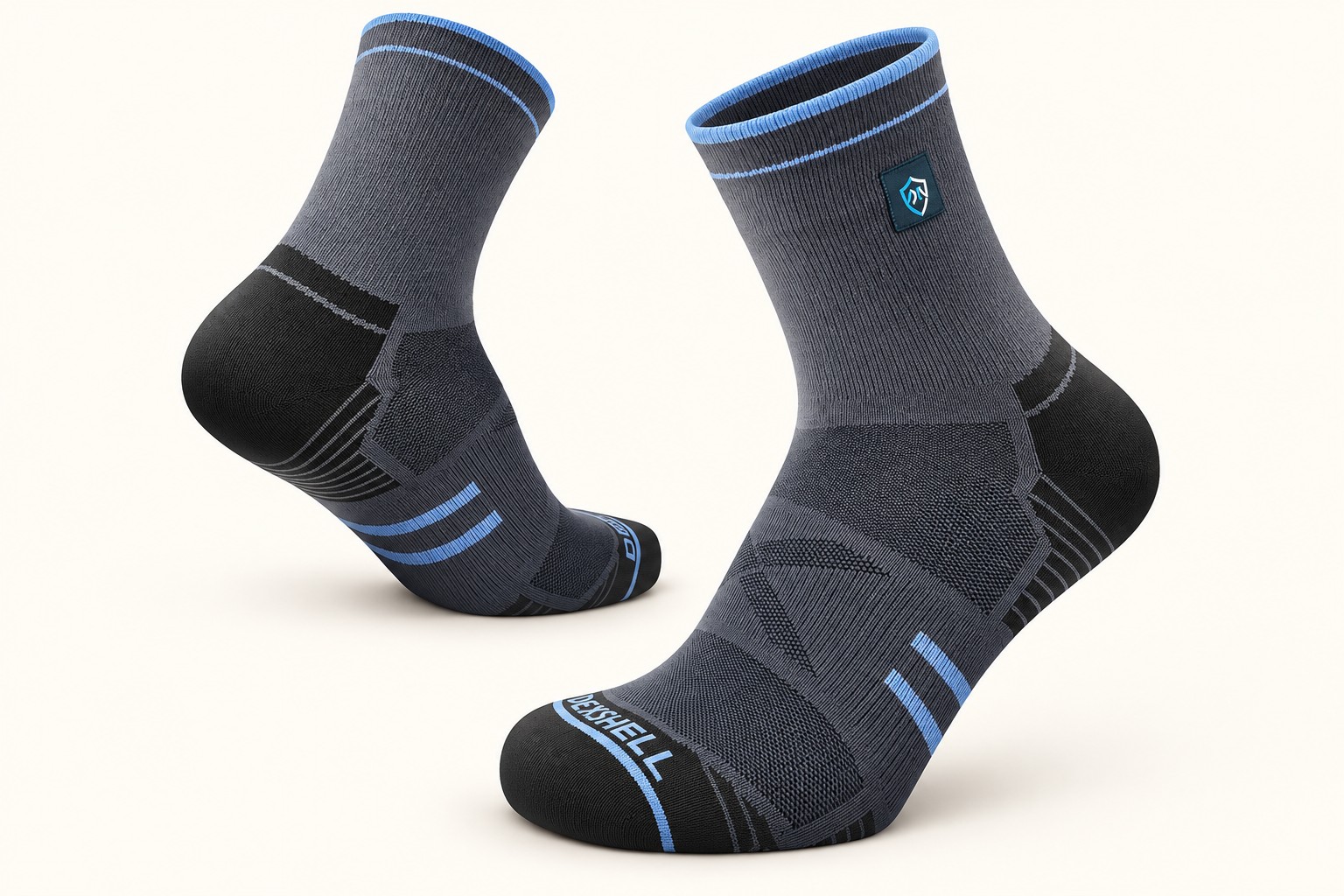
Wash waterproof running socks to their own care label, then give the inside time to dry before putting them away. For the current Sealskinz Holverstone socks, the maker allows a 40°C wash and drip drying. DexShell’s general guidance sets a lower 30°C maximum and natural drying; the UK listing for the DexShell Running Lite 2.0 socks says hand wash only.
I would make drip drying away from direct heat the simple shared routine. Keep the washing instructions separate, though. It’s easy to pick the wrong cycle if the two pairs go in the same load.
Take the socks out of your shoes or wet-kit bag after the journey home. Separate the pair and open them out so you can see the inside. Check for grit around the toe and heel before pulling hard at any muddy fabric.
Remove loose surface dirt gently and rinse away mud with cool or lukewarm water. Avoid scraping the knit with a sharp edge or a stiff tool. DexShell specifically warns against puncturing its membrane, including by wearing the socks without appropriate footwear.
If grit keeps appearing inside, check the shoe opening and the gaiter fit before the next trail run. Keeping debris out can reduce the amount you have to remove from the sock and shoe afterwards.
DexShell: max 30°C, mild detergent; linked UK listing says hand wash only
Natural drip/line drying; no wringing or direct heat
Use the label supplied with the actual pair if it is more restrictive. Keep a photo of it if the lettering will be difficult to read later. That way you’ll still have the instructions for your pair.
Keep within the stated temperature even when the socks are muddy. Follow the stated detergent and cycle guidance as well. Do not add bleach, solvent cleaner or a water-repellent treatment in an attempt to repair a suspected membrane fault.
Holverstone: a straightforward wash-and-drip routine
For a simple routine, drip dry the pair where air can circulate. Smooth the fabric gently rather than leaving the toe folded into the heel. Keep both socks open and separate from a pile of wet clothes.
Check the inner surface before deciding they are ready. A dry cuff is easy to feel first and may tell you little about moisture at the toe. Turn or reposition the pair during drying as needed, without pulling hard at the layers.
DexShell: mild washing and no direct heat
For the Running Lite 2.0, use mild detergent and stay at or below 30°C under the maker’s current care guidance. The linked UK listing specifies hand wash only, so that is the method I’d use for that pair.
DexShell says not to wring, bleach, iron or dry clean its waterproof products. It also warns that direct heat from radiators, heaters or irons can damage the laminated construction and cause the layers to separate.
Allow the socks to drip or line dry naturally away from those heat sources. If you need another pair before they are dry, use a suitable spare and leave these to finish drying naturally.
Check the lining before storing or packing
Feel inside the toe and heel with a dry hand. If either feels damp, open the pair out again and give it more drying time. They may need longer than overnight, especially in a cool room.
Store the clean dry pair loosely with the rest of your running kit. Before the next outing, check for rough spots inside the shoes and confirm that both socks still fit comfortably. If they keep feeling wet inside even when they started dry, work through the cuff, moisture and damage checks.
For race travel, pack the clean pair with dry clothing and give the used pair its own place for the return. The Pack Planner is useful for keeping the clothes you intend to wear separate from your finish-line change.