Some links in my articles are affiliate links. I may earn a commission when you buy through them.
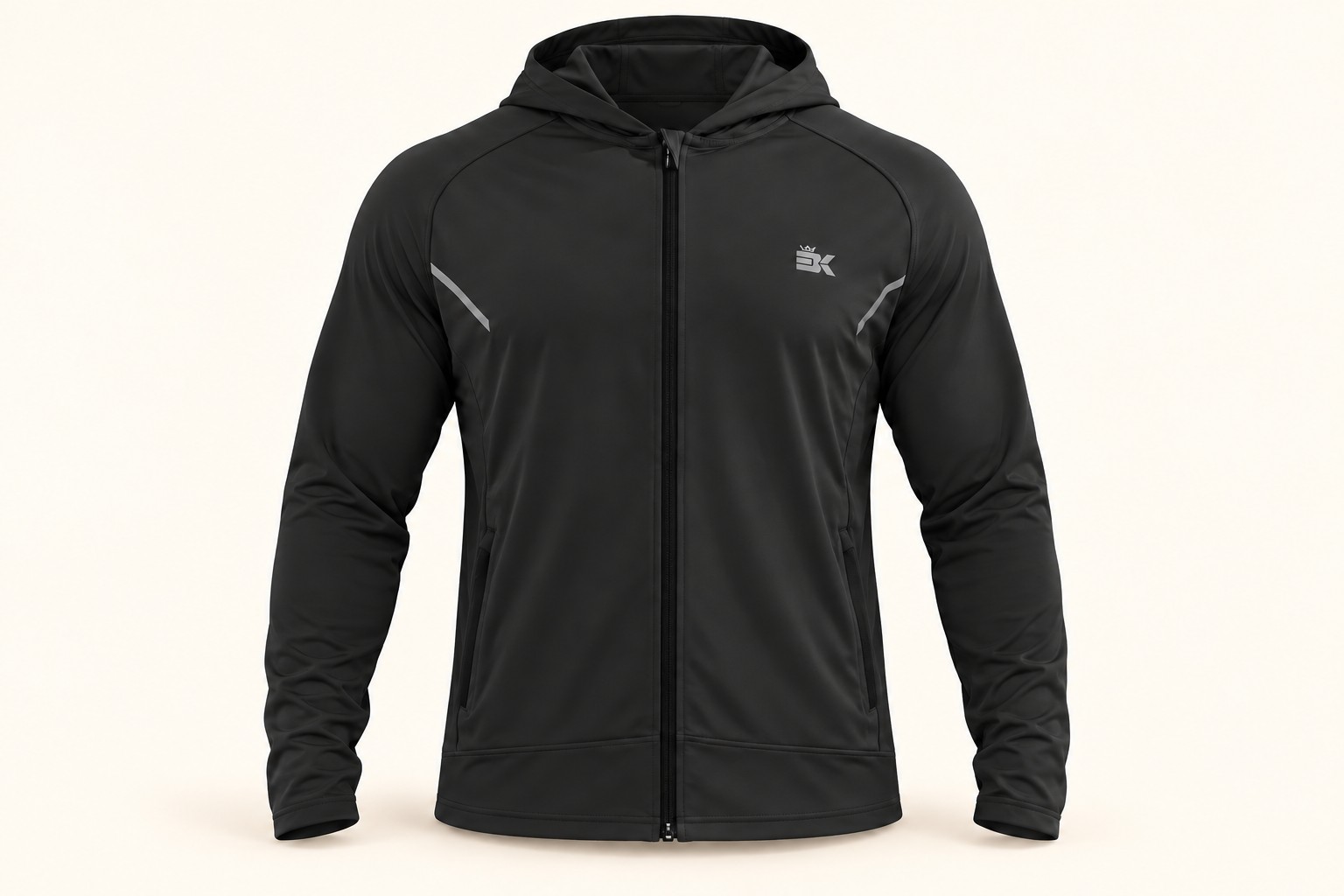
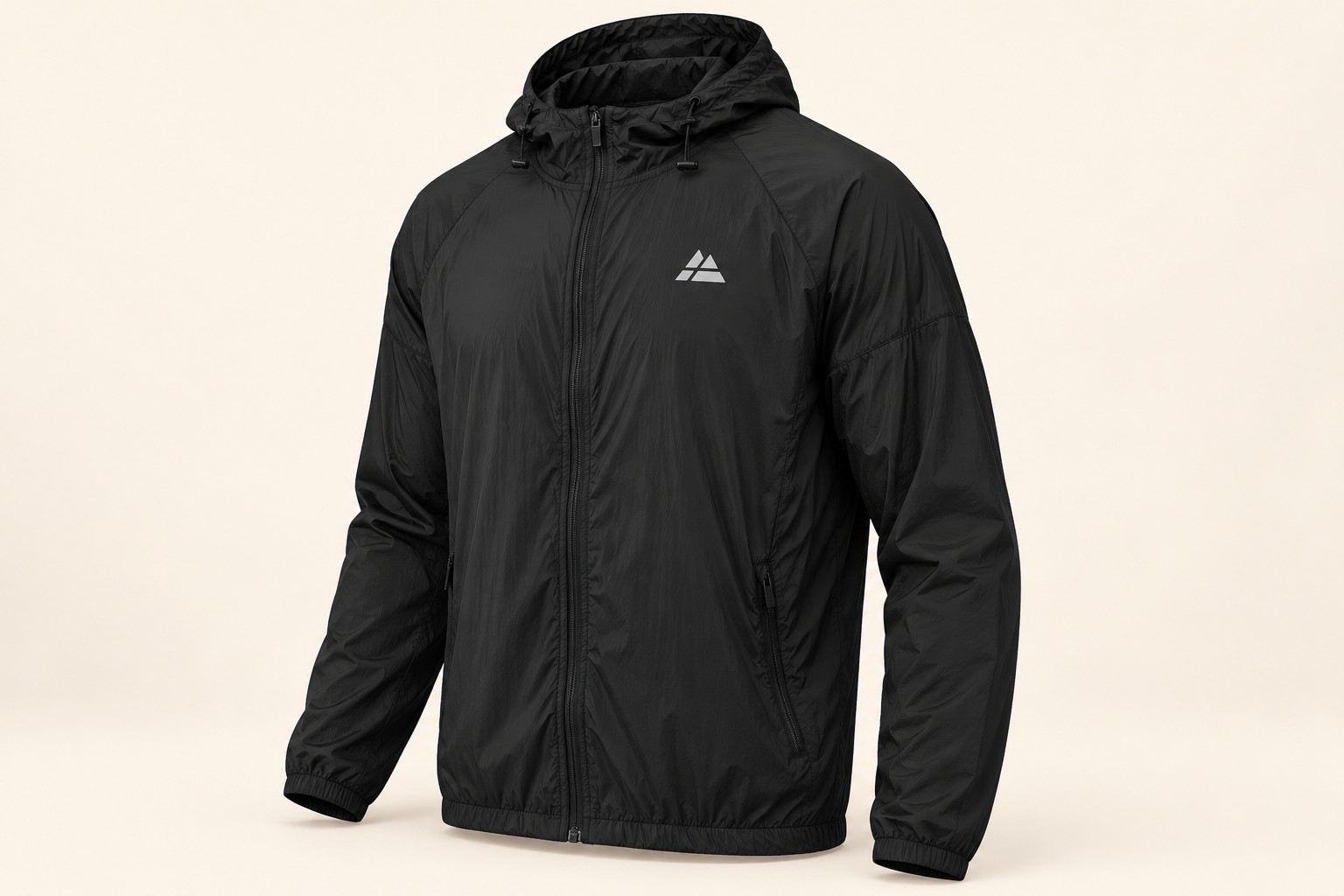
For a jacket you expect to wear through a relaxed, cool run, I would start with the BROKIG stretch jacket. Its soft stretch fabric is comfortable over a T-shirt and gives your arms room to move. If the layer will spend much of the outing in a pocket, the Danish Endurance windbreaker is easier to pack away. It’s a thin woven layer with an adjustable hood.
Think about how long you’ll wear it, what will be in the pockets and where it will go when you warm up. For sustained rain or an event requiring a waterproof shell, use the waterproof jacket guide instead.
The BROKIG stretch jacket suits a cool start when you want something supple over a light top. You get a hood and full zip, with stretchy fabric that gives your shoulders and elbows room to move.
A soft layer is pleasant when your arms brush your sides, and the zip gives you a quick adjustment as the effort rises. Leave enough room to reach forwards without pulling the back hem up; you’ll want that freedom once your arms are swinging too.
Look closely at the pockets. The main side openings are open pockets, with a hidden zipped compartment inside the right one on the current version. Put a key or card in that secured compartment rather than assuming everything dropped into the outer opening is zipped away. Check where your phone sits when you bend at the waist.
The body and sleeves deserve a size-chart check if you prefer a close running fit. Extra fabric can be comfortable for an easy outing and less welcome when you want a trim layer under a pack. I’d choose this one to wear through the run, rather than to squeeze into a small belt.
Danish Endurance: a hooded layer to take with you
The Danish Endurance windbreaker is the one I’d take when I expect to pull the jacket on and off. The men’s Black version shown is a thin woven layer with an adjustable hood, elastic cuffs and zipped side pockets.
It comes out for a breezy stretch, then packs away without taking over the whole bag. Check the bundle against your actual pocket rather than assuming “packable” means it fits any running belt.
Set the hood before you leave. Turn your head in both directions, open and close the front zip, and check whether the hood edge moves into your view. With the hood down, notice where its fabric and cords sit beneath a vest or around a headtorch strap.
The zipped side pockets are useful when you need to secure small essentials. A loaded phone pocket may still pull at a very light jacket, so try the same load you intend to run with. If you will usually stow the jacket, keeping the phone in a familiar belt means you can remove the layer without reorganising everything.
Choose for the warm middle of the run
Think about the part of your route where you usually open the zip or push the sleeves up. A jacket that feels comfortable outside the front door can feel quite different on a climb. Start with a suitable top underneath and use the front zip to make small adjustments before deciding to remove the layer.
A thin windbreaker gives you coverage over your arms without the bulk of a padded jacket. A soft stretch layer may feel nicer when you’re wearing it throughout. Try either over your usual top: the same jacket can feel very different on an easy jog and a hard climb.
If your arms are comfortable in a long-sleeve top and you mainly want a little cover across the torso, a sleeveless layer may be worth considering.
Try pockets and sleeves with the rest of your kit
Put on your watch and usual gloves, then reach forwards and bend each elbow. Check that the cuffs do not pull hard against your wrists. Open the main zip with the gloves on and make sure a sleeve does not cover the watch controls you use.
With a vest over the jacket, shoulder straps can hold fabric in one place while your arms move elsewhere. Reach a front flask and both jacket pockets, then turn at the waist. A pocket that works without a pack may sit directly beneath a strap once the load is on.
For evening use, consider where the lights and reflective areas will sit in that complete arrangement. Our reflective running-jacket shortlist covers garments chosen around reflective fabric; the clip-on light guide helps with an additional visible point.
Allow space for the layer you take off
Pack the jacket with the rest of the kit already in the bag. An empty rear pocket can be misleading if it normally carries food, gloves or a spare top. Keep the opening accessible and contain the sleeves so that nothing trails beneath the bag.
Give a damp layer its own place, away from clothing you want dry for the journey home. Once back, unpack it and follow the care label rather than leaving it compressed until the next outing. The winter running checklist is useful for planning the clothing you wear, remove and save for afterwards.