Some links in my articles are affiliate links. I may earn a commission when you buy through them.
A rechargeable headtorch is convenient when you can charge it between runs. Replaceable batteries are useful when you want to fit a fresh set during a longer outing. Think about what you’ll do when the light runs low, then try it with the kit you’ll carry.
Lay out the torch and everything you need to keep it working. For a rechargeable model that may mean its cable, an appropriate power source and a second charged light. With replaceable cells, include a full compatible spare set in a protective holder. Include all of that when comparing weight and pocket space.
A power bank already packed for your phone can look like an easy answer. Check the torch’s connector and instructions first. If the lamp needs to be switched off while charging, plan a stop or use another light during charging.
Your routine
Useful starting point
Check before choosing
Home between short evening runs
Rechargeable lamp
A convenient charging place and a clear ready-to-run routine
Longer outing with a planned power change
Replaceable cells or an approved swappable pack
Exact battery type, a complete spare set and access with gloves
You need light if the main unit fails
A separate working torch
Its beam, charge, controls and reachable carrying position
Recharge at home and keep a spare ready
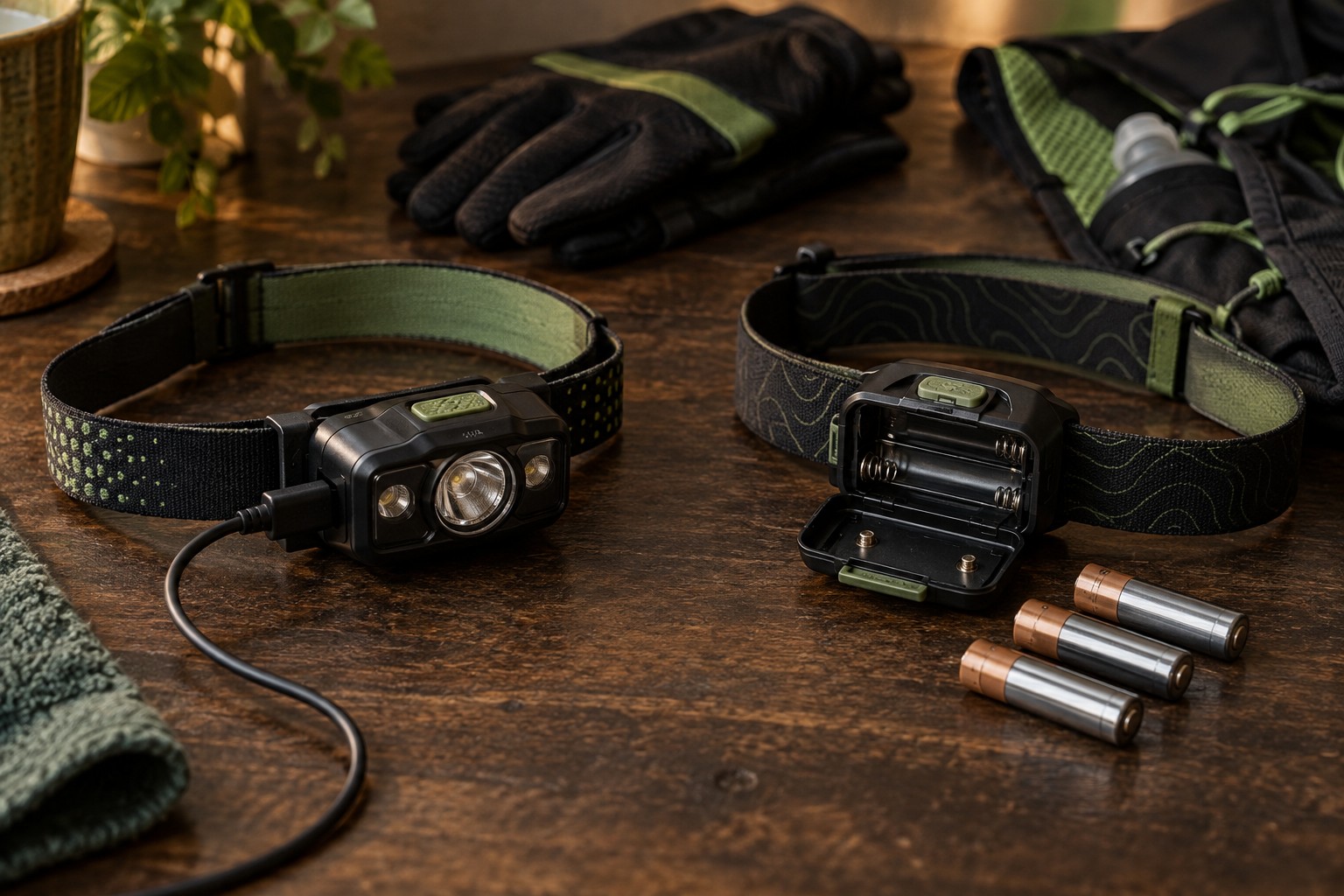
The Blukar rechargeable two-pack is useful if you want one unit with your running kit and another ready elsewhere. Its long-press dimmer lets you ease the beam back on lit streets, then adjust it for a darker stretch. Learn that press before leaving, so a brightness change does not become a tour through unwanted modes.
Make charging part of putting the kit away: return home, check the lamp, charge it as instructed and put it back with your kit when ready. If two people share the pair, decide which light each person is taking. An identical spare is only useful if it is charged too.
Keep the correct charging lead with the lamp. Connect it to the power source you will carry before packing it, especially if the same pouch holds different leads for a watch and phone. Our running power-bank guide covers connecting and packing the complete setup.
Prefer fresh batteries? Pack a complete set
The Lepro battery headtorch uses three AAA batteries. Pack another complete set for a changeover. Follow the instructions for compatible cells and fit a complete set as directed; the spare should be ready to install, rather than a handful of loose batteries mixed with keys.
Practise the compartment latch in good light, then with your usual running gloves. Find the polarity markings, check how the cover closes and make sure you can keep hold of the cells. A small pouch opened over a stable surface is easier to manage than emptying a vest pocket onto a dark path.
This suits you if you’d rather swap batteries than stop to recharge. The lamp also offers spot and flood settings, so choose the beam you need before assessing how long a set lasts. Use the headtorch runtime check to separate a useful running setting from the longest low-mode figure.
Decide whether you need spare energy or a spare light
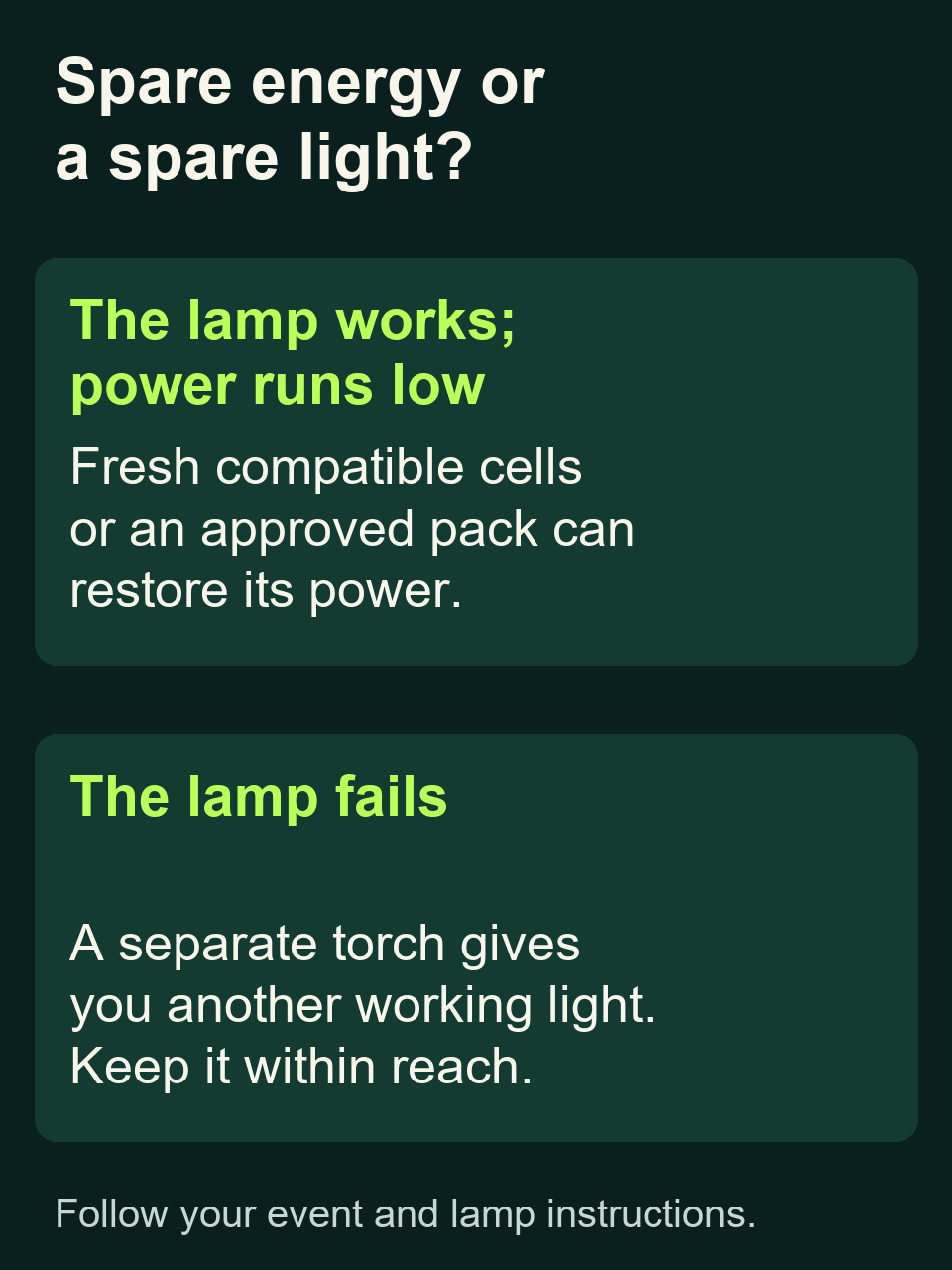
A spare set of batteries helps when a working lamp runs low. A separate torch also gives you another unit if the main light or its controls stop working. For remote or overnight running, start with the event’s current lighting and backup requirements, then assess whether each light gives enough useful illumination for the route.
Place the backup where you can find it with your pack on. Practise the sequence: stop somewhere suitable, take out the spare, turn it on, then deal with the main lamp. Burying the spare beneath a waterproof and food makes the change harder when you most need your hands free.
Try the changeover before the longer run
Wear the hat, hood and gloves you expect to use. Check that the band stays comfortable as you turn your head, and that you can find the power control by touch. If a motion sensor is enabled, see whether a sleeve or a hand reaching for a flask switches it unexpectedly; use the ordinary controls when that suits the situation better.
Time a rehearsal of your planned power change. Include opening the pouch, reaching the correct mode and packing everything away. If the pouch is difficult to open or the latch needs bare fingers, adjust the carrying position or choose a more manageable backup before taking it out in cold weather.
Use the runtime plan to check the duration you need before deciding how much spare energy to carry.