Some links in my articles are affiliate links. I may earn a commission when you buy through them.
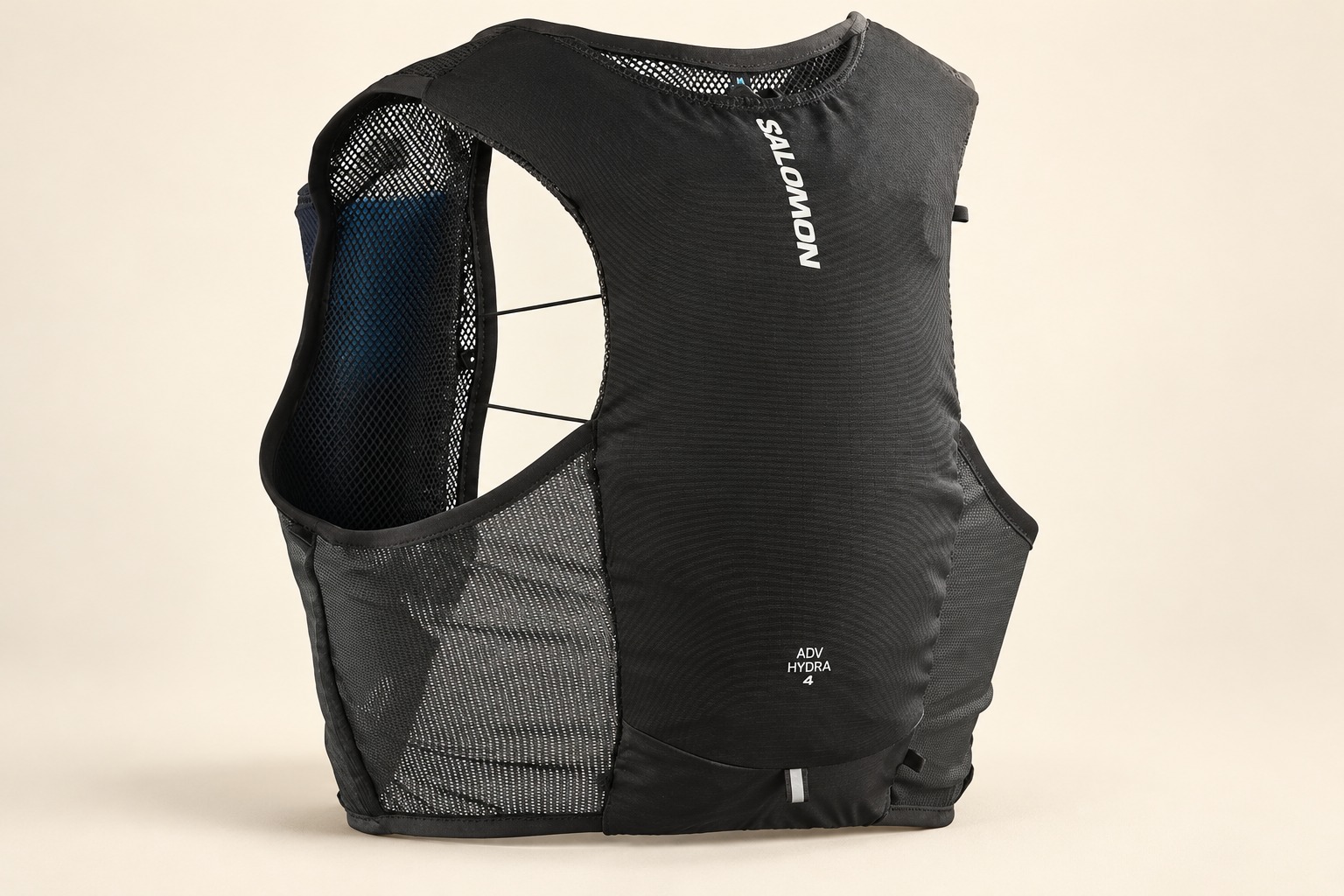
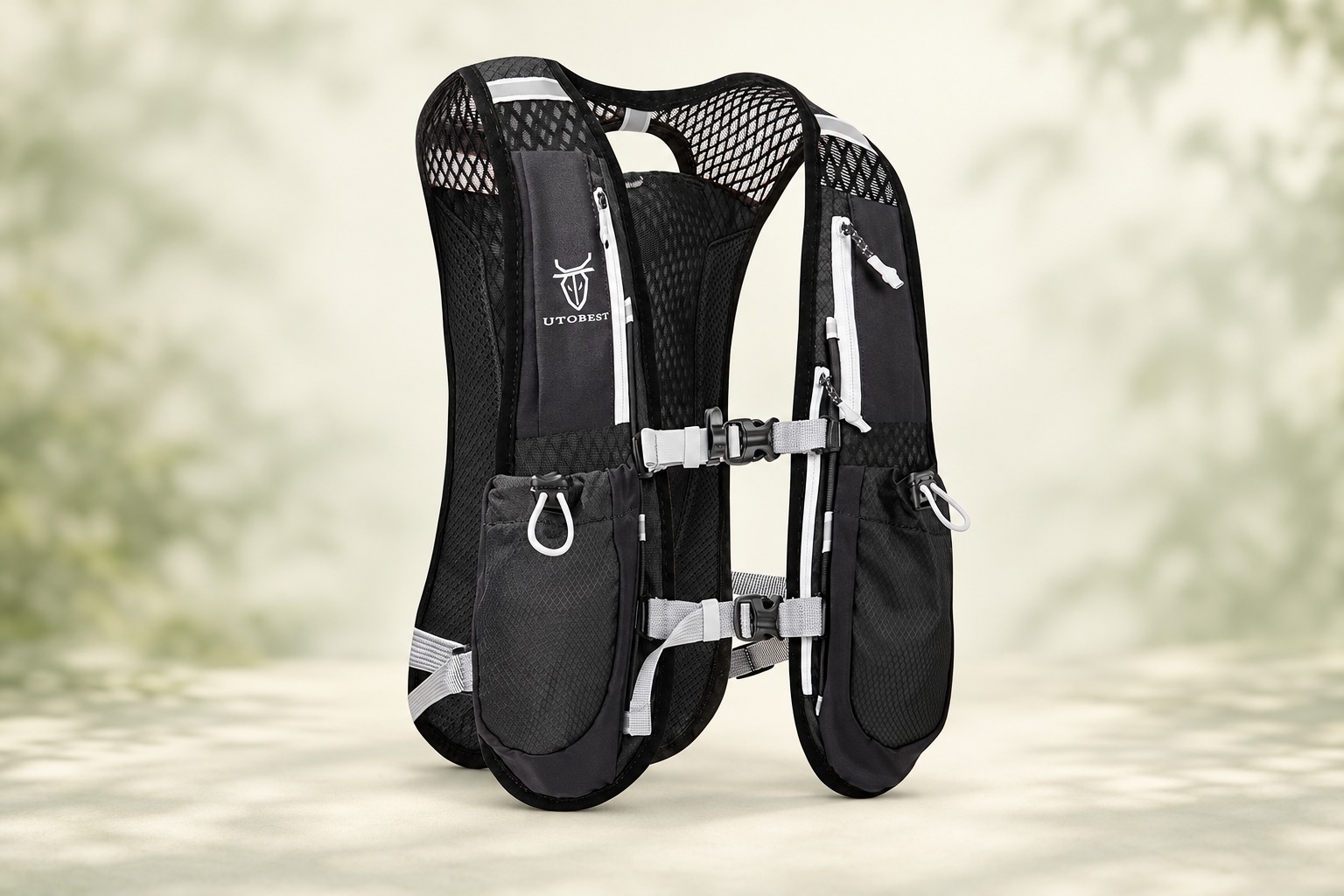
If you’re tired of stopping to find a drink or a gel, a vest with useful front pockets can make a longer run much easier. For that, I’d start with Salomon Hydra 4. If you want rear space for a waterproof and prefer to choose your own reservoir, I would start with the UTOBEST 5-litre vest.
Try both layouts with your water and spare layer packed. You want the things you use often within reach and somewhere to put the jacket when you warm up.
The supplied flasks sit on either side of your chest, with stretch pockets for gels nearby. You can take a drink or find the next gel without rummaging behind your back.
The elastic closure moves with your breathing while keeping the load steady.
Try it with both bottles filled. Your chest shape, the layers underneath and the bottle position affect how it feels. A vest that seems comfortable empty can sit differently once its front pockets carry a litre of water. Tighten it enough to bring the load close, then take several deep breaths and swing your arms.
There is rear storage for a light layer and a secure place for a key. If you expect to carry substantially more kit, lay it out before choosing this compact setup. For a race, the organiser’s required items should determine the storage you need.
This is the option I would consider when a belt has run out of room and a waterproof may spend part of the run in your pack. There’s room at the back for the layer, phone and keys, plus a compartment for a compatible 1.5-litre bladder. You’ll need to buy the bladder separately.
Pack a light waterproof, phone and keys at the back, with a soft flask in front. Adjust the straps to bring the load close and stop it thumping against your back, then check you can reach a gel from the smaller pockets. This suits a changeable trail day when you need room to put a layer away after warming up.
Decide on the drinking setup before buying. Using an existing reservoir may make sense, but its shape and hanging arrangement still need to work with the compartment. The 5-litre label describes kit storage, not the size of bladder it takes.
Think about the route as well as the kit list. A reservoir lets you carry water behind you and drink through a hose, while front bottles make separate drinks easier to organise. Our flask-versus-bladder guide explains that choice.
Work out how much you need to carry
Start with the gap between reliable refill opportunities, then add the food, clothing and small essentials for that route. A supported training loop and an exposed trail outing can be the same distance yet require very different packs. Check that planned water stops are available on the day.
Keep drinking capacity and storage capacity separate on your shopping list. Two 500ml flasks give you one litre of water. A 4- or 5-litre vest description refers to the space for kit and does not settle how much water is supplied. Check the selected bundle for flasks, a bladder and the required hose before comparing prices.
If your usual runs need only a phone, key and a small amount of food, you may find a running belt easier. When water, food and a jacket are regular companions, the vest gives them more useful places to live.
Fit the vest with your real load
Fill the bottles or reservoir, pack the layer you intend to carry and put the vest over your normal running top. Adjust the chest fastening in small steps. You should be able to breathe fully, turn your shoulders and reach your drink without dragging the whole vest around.
Jog briefly, walk up some steps and bend as if tying a shoe. If the back lifts and drops, check the strap adjustment and where heavier items sit. If the front bottles press uncomfortably, changing the pack size or bottle position may help more than pulling the fastening tighter.
Repeat after drinking some water and removing the jacket. The load changes during a run, so the vest needs to remain comfortable in both states. Our loaded-vest fitting guide gives you a fuller sequence, and the 5-litre versus 12-litre comparison helps if your kit keeps overflowing.
Give each pocket a job before your first proper run
Put the next gel in an accessible front pocket and leave somewhere for its wrapper. Keep the key secured away from your phone, and try taking the phone out while wearing the vest. Place the waterproof where you can remove it without unpacking the food beneath it.
Practise drinking with the exact valve or hose you will use. Then check what happens when you lean forward: the caps and closures should stay secure, and the bottle pockets should hold the flasks without obstructing their removal. A short loaded trial near home makes these adjustments easy.
If reaching behind for food is what bothers you about your current pack, try the front pockets on Salomon Hydra 4. If you already have a reservoir you like, check its fit in the UTOBEST 5-litre vest. Planning an event? Find its official details through the Race Atlas and use the Pack Planner to organise the required kit.