Some links in my articles are affiliate links. I may earn a commission when you buy through them.
Choose your soft flask for the pocket and the job it needs to do. For a full-size drink in a vest, I would start with the AXEN 500ml flask. The Azarxis soft flask is worth considering as a flexible spare or replacement. For carrying a small portion of liquid fuel, the WRELS 150ml flasks fit places where a full-size bottle will not.
I have used these formats for water and fuel. The small details make a difference: whether the filled bottle slides into your pocket, how easily you can rinse the opening and where the valve sits when you lean forward.
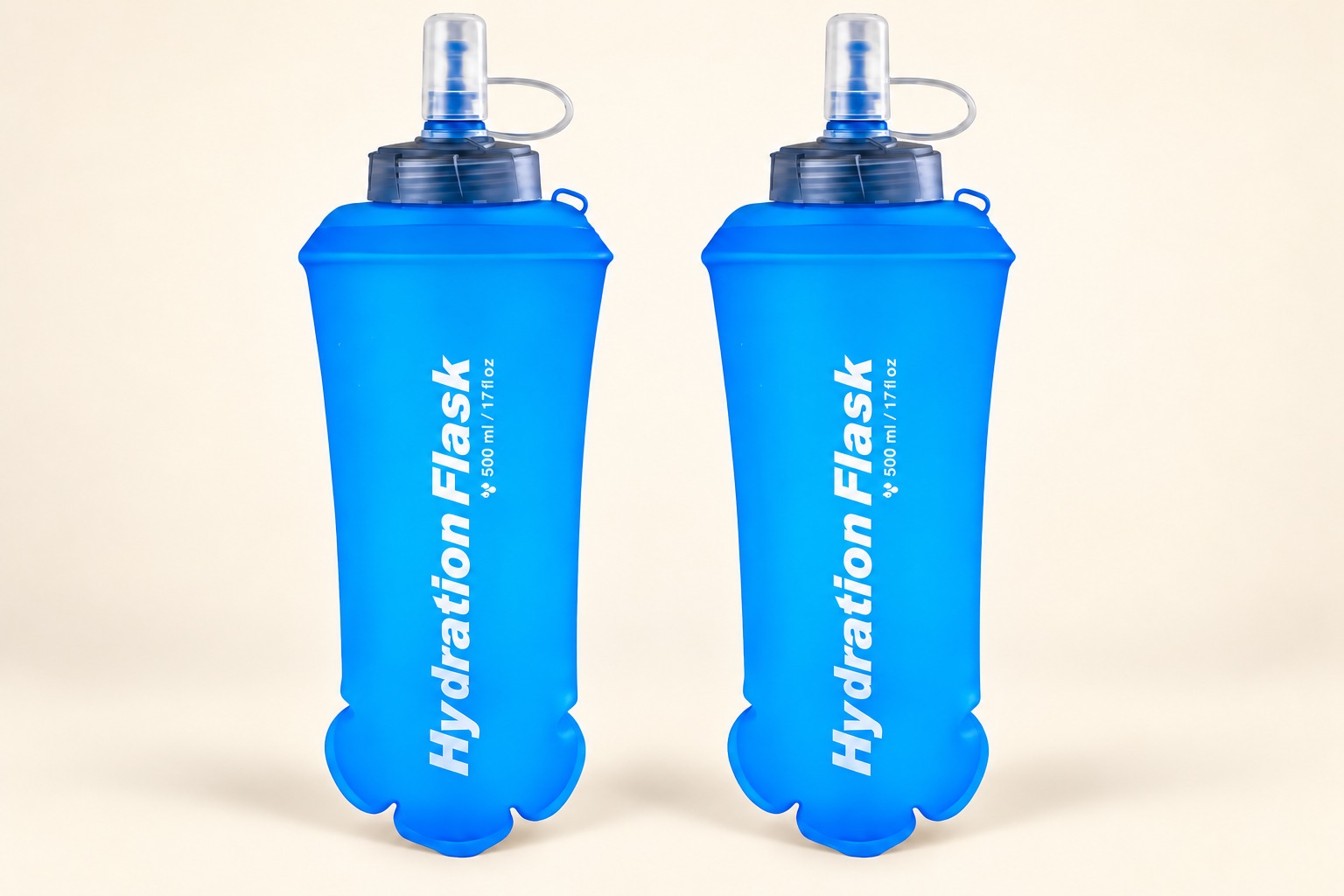
This is my choice here when you want half a litre of water within reach. The soft body shrinks as you drink, and the bite valve lets you take small sips without repeatedly opening a cap. The dust cover is useful when the flask spends time in a muddy race bag or on a trail.
I slid mine into a vest pocket for a longer run and liked having the water close at hand. As it emptied, it took up less room than a rigid half-empty bottle. I would still check the pocket before buying: two flasks with the same capacity can have different heights and widths.
Measure the usable pocket depth as well as its opening. Include the cap and valve in the overall height, then check that you can reach the mouthpiece without hauling the bottle upwards. A snug pocket should retain it while allowing you to remove it for refilling.
If you use a drink mix, follow its dilution instructions and give the valve attention afterwards. A bottle that looks rinsed can retain residue around the mouthpiece. Our soft-flask cleaning guide covers washing and drying.
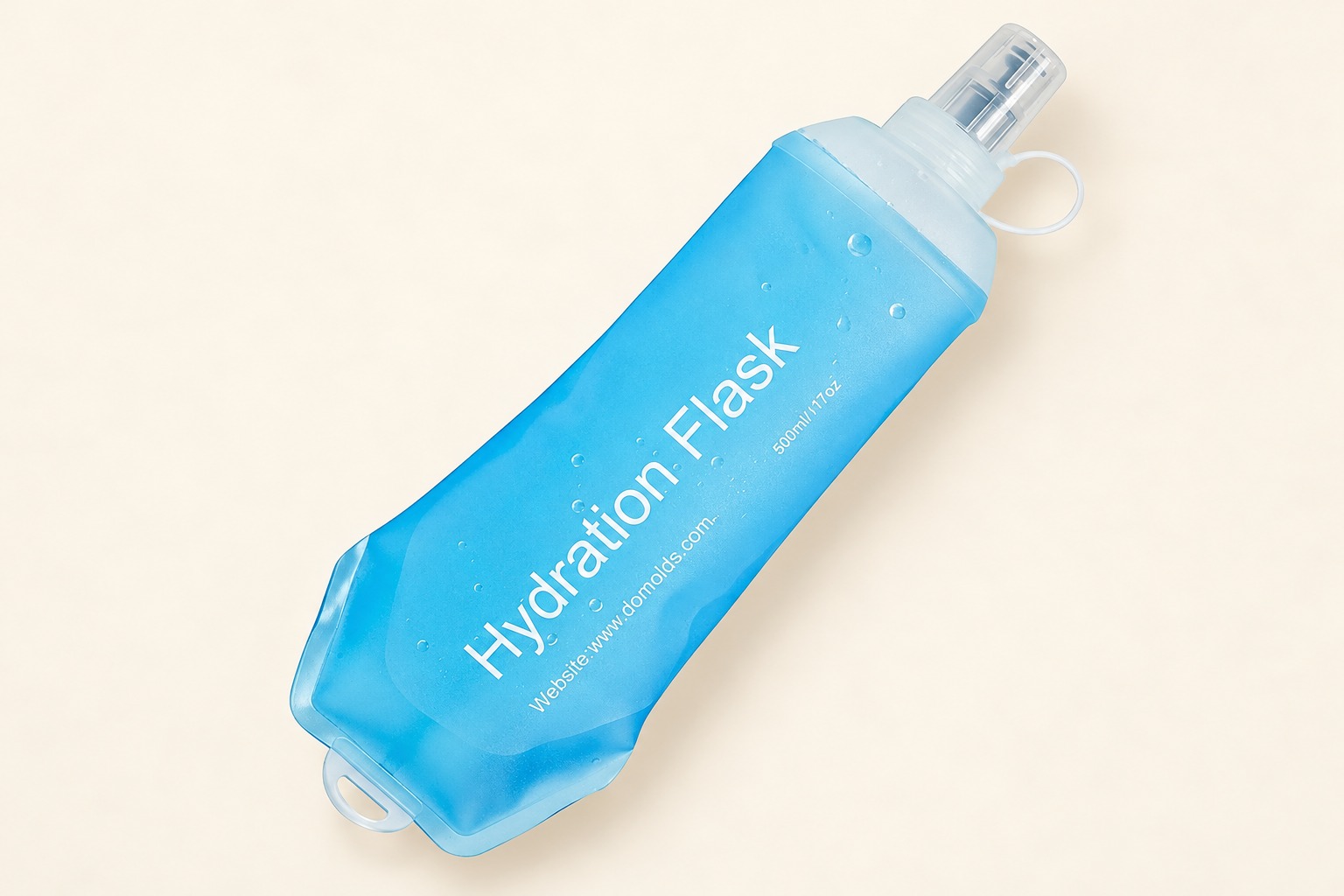
Consider this when you want to replace a rigid bottle or carry an extra flexible flask that can fold down once empty. Choose the capacity and cap configuration carefully; a product family with several sizes is not one universally compatible bottle.
The wide opening on the one I used made filling straightforward, and the bite valve let me drink while moving. As it emptied, it folded down and freed some pocket space. I also found it convenient as a spare rather than carrying a second rigid bottle for the whole route.
Check the mouthpiece position against your vest. A longer straw can make access easier in some pockets, while a short valve keeps the package simpler in others. Use the version that lets you drink naturally without catching the valve on your clothing.
Before first use, wash and rinse it thoroughly, check the closure and fill it at home. I left mine filled overnight and checked the taste before taking it on a long run. This is an easy time to spot a poorly seated cap or a configuration that does not suit your kit.
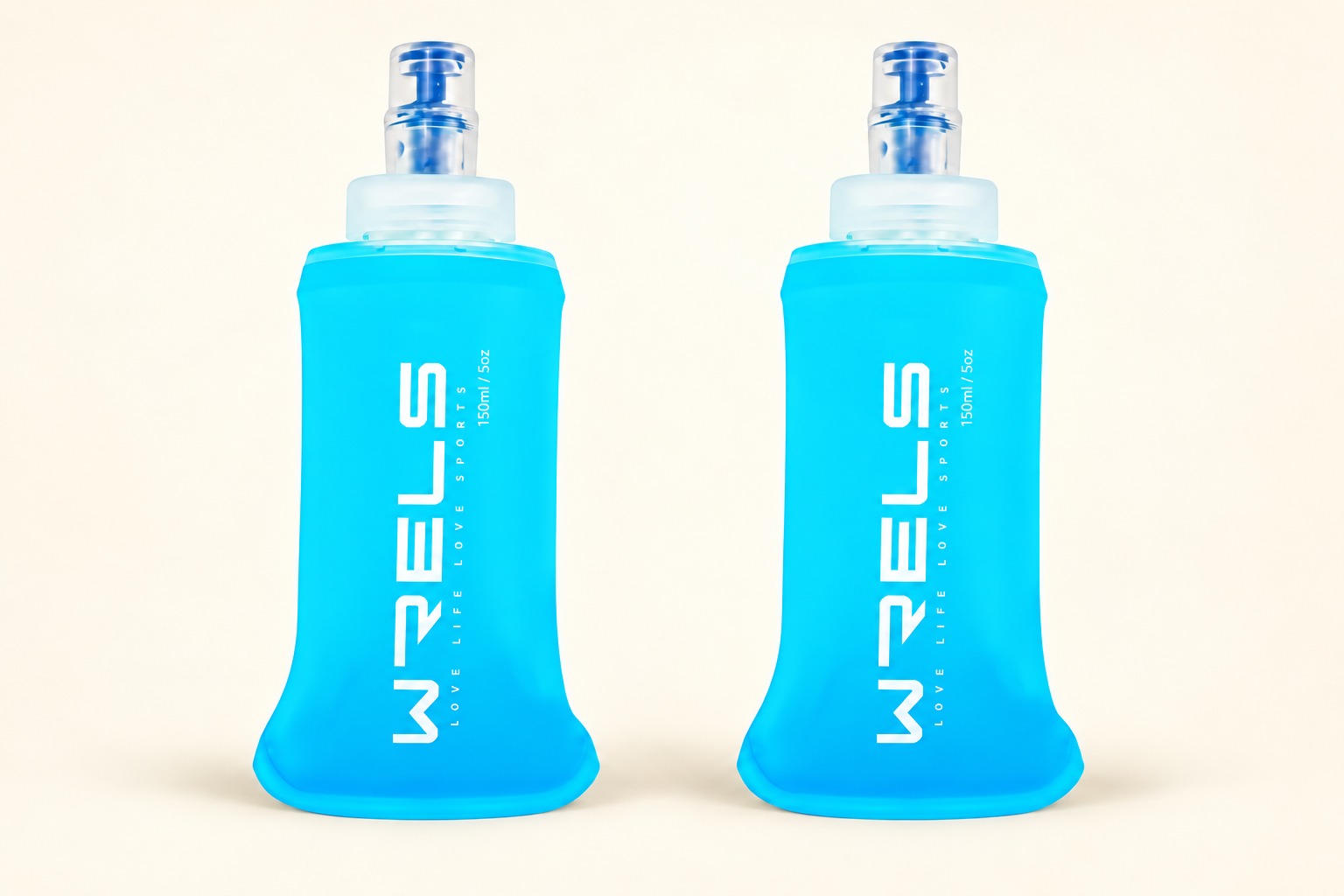
These small flasks have a different purpose from a main water bottle. At 150ml each, they can carry a measured portion of gel or a small drink top-up in a belt pouch or vest pocket. They make sense when you want convenient fuel access without carrying a large bottle for a small amount.
I used one for drink and the other for a measured portion of energy gel. The opening made filling and rinsing less fiddly, and I could use the bite valve without opening individual wrappers. That is useful when your preferred fuel works through the valve.
Try the actual gel before relying on the flask for an event. Thickness varies, and a convenient water valve is not automatically convenient with every concentrated fuel. Mark or otherwise organise the portions so you know how much you have carried and consumed.
Plan water separately. Two small fuel flasks are not equivalent to two 500ml hydration bottles, even if they share the same soft-bottle format. If you want to organise flasks, gel packets and used wrappers together, see how to carry running gels.
Why pocket fit matters more than matching capacity
Take the dimensions of a filled flask, not just its empty outline. The body becomes wider when full, the cap is rigid and the shoulder shape affects how readily it enters a narrow pocket. A bottle that folds neatly in your hand can still be awkward in a specific vest.
Check the filled height, the cap diameter and where any retaining loop sits. Then practise refilling and reinserting the flask while wearing the vest. The last part is easy to miss: a bottle may come out readily but require two hands and a lot of pushing to go back in.
If you are replacing an original supplied bottle, compare its dimensions and mouthpiece arrangement with the new one. Our replacement-flask fit guide helps you check compatibility before ordering.
Pack for refills, not just the start line
Decide which flask you will finish first and how you will reach it at a water stop. Keep caps and valves clear of sticky food wrappers, and leave room to put a partly empty flask back in its pocket. With two bottles, use an arrangement that makes plain water and mixed drink easy to distinguish.
Check the seal after filling, then squeeze gently over the sink. Place the flask in your loaded vest or belt and move around before putting it beside a phone. Rinse it after the run and let the body and valve dry fully.