Some links in my articles are affiliate links. I may earn a commission when you buy through them.
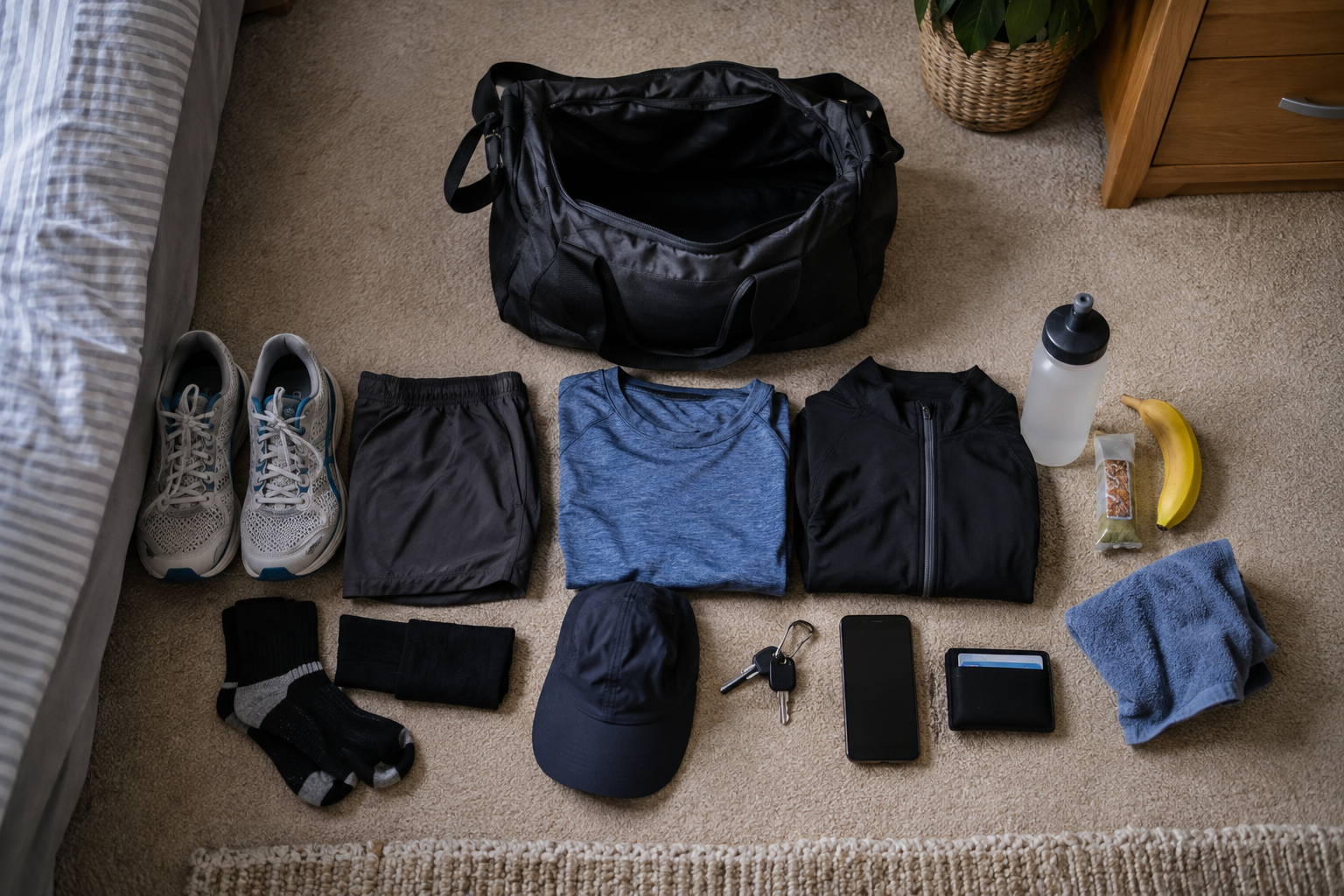
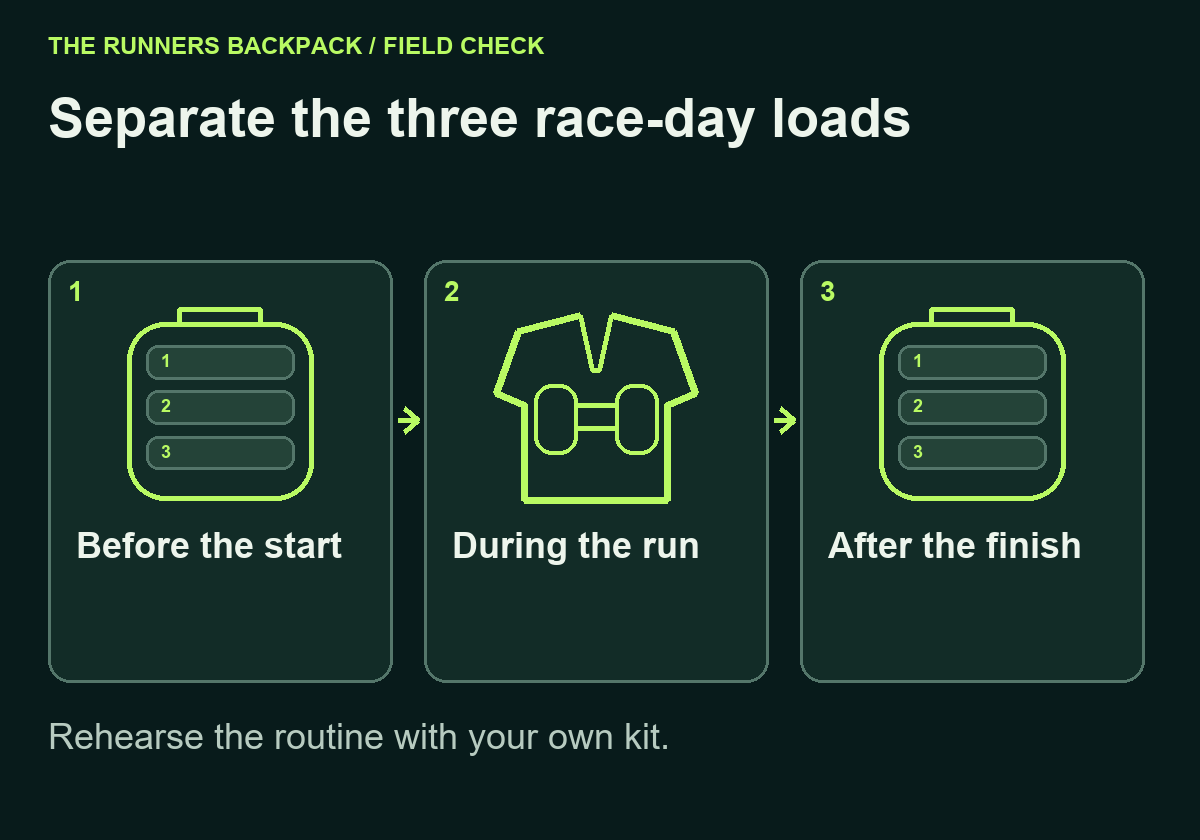
Pack your half-marathon kit in three groups: what gets you to the start, what comes on the run and what waits at the finish. It’s much easier to hand over your bag when you’ve already separated the things that must stay with you.
If your running load is a phone, keys and a few gels, the Salomon Pulse gives you more pocket space without putting on a vest. Try it with your actual load during training so the pocket arrangement is familiar.
The things that get you to the start
Keep the event instructions, travel details and any collection information accessible. Check what the organiser supplies and what you must bring: number collection, bag labels and bag-drop arrangements differ between events.
Lay out your running clothes with the shoes and socks you’ll wear together. Attach the number using a fastening method the event permits, then put the top on. Check that the number doesn’t cover the pocket you use for food or force you to keep a layer zipped when you would otherwise open it.
If you’ll wear an extra layer while travelling or waiting, decide whether it goes into bag drop or travels with you. A jacket you remove just before running still needs somewhere to go.
The smaller load that runs with you
Pack the phone, necessary keys and the food you’ve already practised using. Check where the event provides water and how that fits your usual drinking routine. If you bring a bottle, practise carrying and refilling it with the rest of the load.
Spread phone, keys and smaller extras around the Pulse’s pockets. A snug fitted size keeps that load steadier than a loose pouch. Keep the first gel reachable and leave a place for the wrapper rather than packing every pocket solid.
Take your phone out and put it back while wearing the belt. Include the case and any rain protection you intend to use. That brief check catches an awkward pocket opening before you meet it with cold or sweaty fingers.
If you need a drink-carrying belt, compare the arrangements in the hydration-belt guide. A vest becomes useful when your load includes more water, food or a layer.
The bag that waits for you
Put a dry top and socks near the opening, with suitable clothes for your onward journey. Keep those together so changing doesn’t mean laying everything out on the ground. Use the organiser’s required bag and keep its identification visible.
Separate the damp things after changing. An empty bag or compartment for the used kit stops you putting wet socks back among clean clothes. Keep your journey-home essentials where you can find them as soon as you collect the bag.
The final check before handing it over
- Have your number, timing equipment, essential medication and running essentials stayed with you?
- Can you access what you need to reclaim the bag?
- Is the food you’ll use on the run in reachable pockets?
- Do you know where removed gloves, layers and wrappers will go?
- Can you find the dry top without unpacking the whole bag?
The race-day walkthrough follows those transitions from leaving home to travelling back. If you still need somewhere for the phone and gels, the running-belt comparison covers a few different pocket layouts.