Some links in my articles are affiliate links. I may earn a commission when you buy through them.
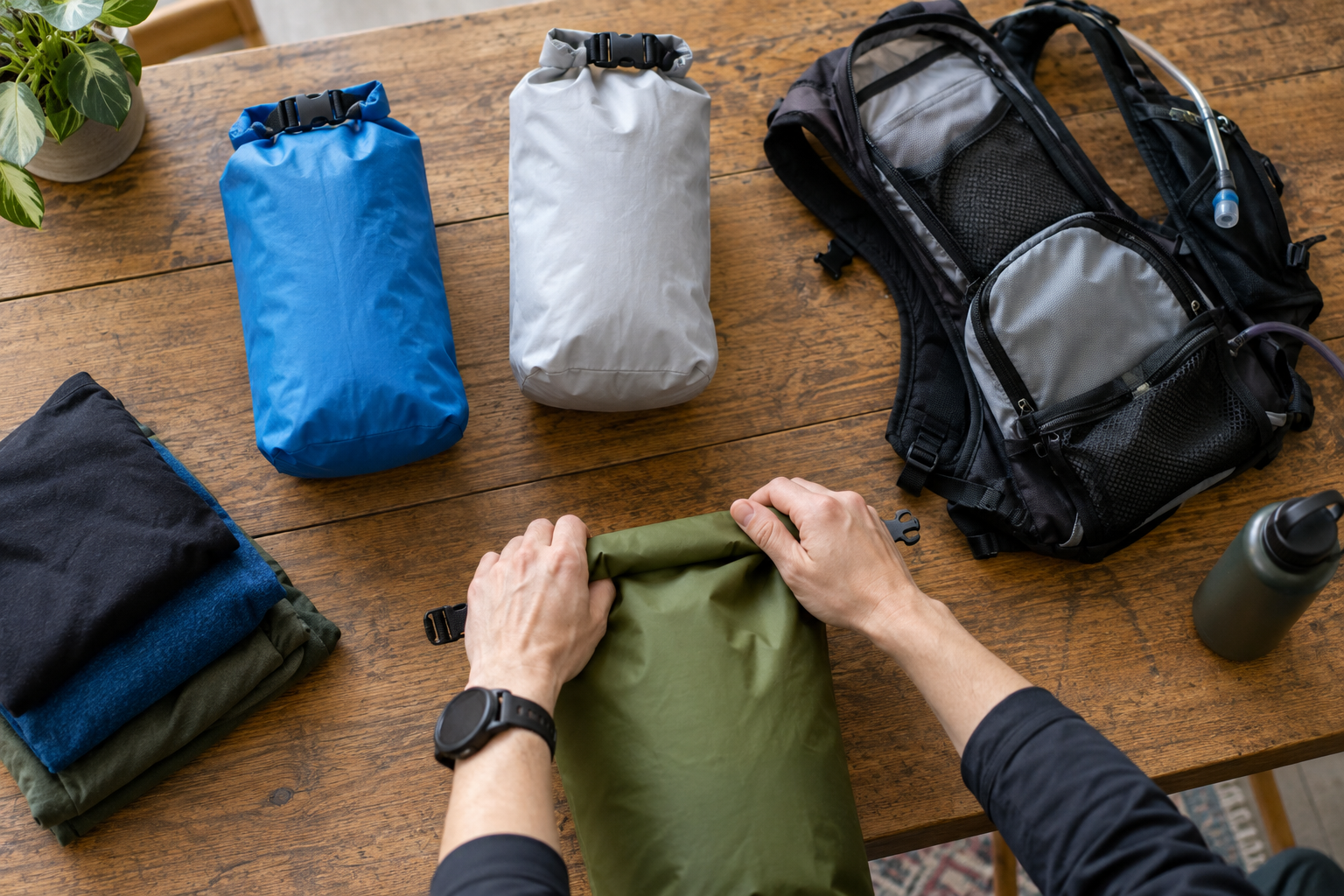
A couple of small dry bags can make a running pack much easier to live with: one for things you may reach for on the run, another for clothes you want to leave packed until afterwards. Choose their sizes around those two piles, leaving room to close each bag properly.
The kuou five-piece set is useful when you want several sizes to organise small items and clothing. For one simple roll-top sack, the Osprey Ultralight Dry Sack is another lightweight option. You may only need one or two bags, leaving regularly used food and drink easy to reach.
Separate things by when you need them
Use a smaller bag from the kuou set for your phone and spare socks, and a larger one for a dry layer. The five sizes, from 1.5 to 6 litres, help separate things needed quickly from clothes for after finishing. The light fabric takes up less room than several rigid cases.
Keep anything you’ll open during the run in an accessible bag or pocket. Keep the dry finish layer in a separate closed sack. You can then reach one small item without exposing every piece of dry clothing to the weather.
Leave gels and the drink you use regularly in suitable reachable pockets. Putting every small item inside another closure can make the pack harder to use.
Check the shape with the bag closed
A sack can have enough capacity and still be an awkward shape for a narrow vest. Pack the actual layer, remove excess air, close the top and try it in the compartment. It should go in without forcing the zip or pushing awkwardly against your back.
Leave spare material above the clothes for the roll-top closure. If your jacket fills the bag right to its mouth, move up a size or split the contents. Check the selected size on the listing; the Osprey sack comes in different capacities, while the five-piece set gives you several small sizes to try.
Give the closure a little attention
Squeeze excess air from the Ultralight Dry Sack before rolling the top. The rolled closure is straightforward to secure, and the empty bag adds little weight to the pack.
Keep clothing out of the opening and follow the bag’s instructions for rolling and fastening it. Check the closure after repacking, particularly if you’ve pushed a damp jacket in quickly. Make a fresh, tidy roll each time you close it.
If the sack feels like a balloon, release trapped air before finishing the roll. It will be easier to settle into the space around other soft kit.
Plan where the damp kit goes
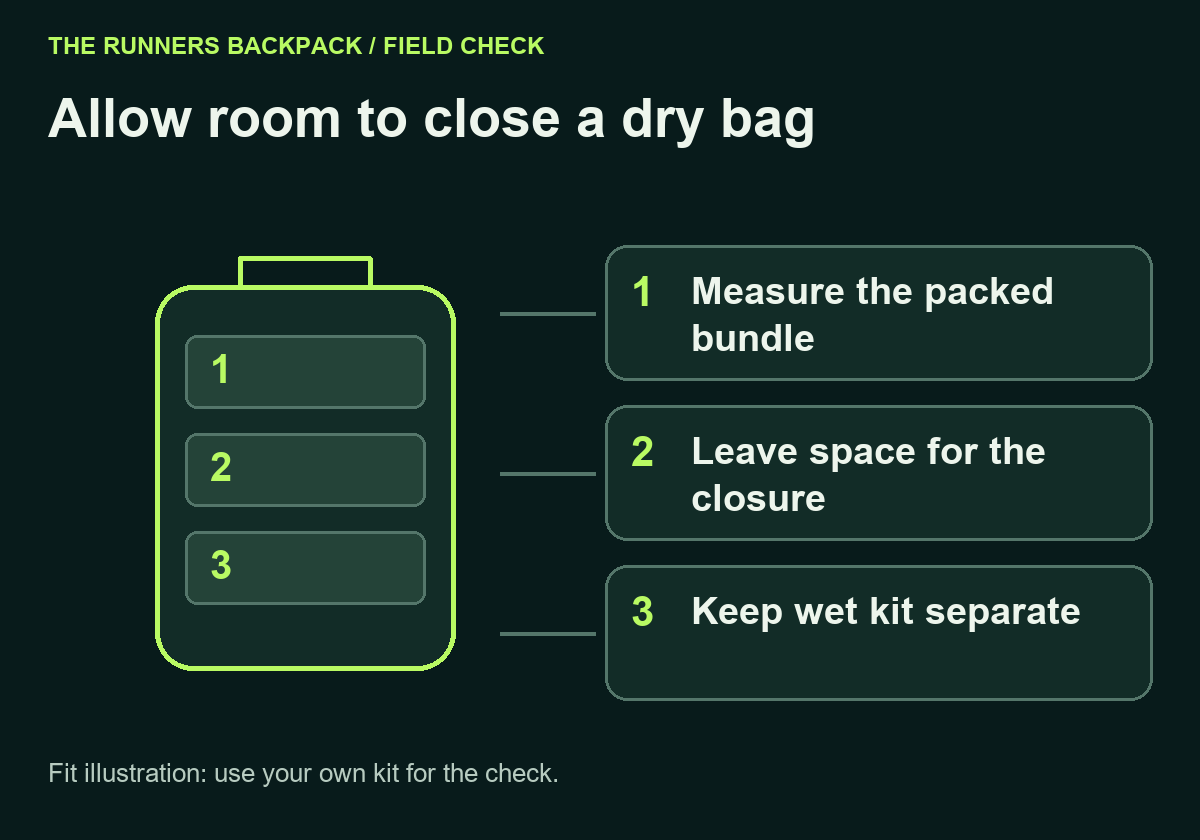
Once you’ve changed, keep worn clothing away from the remaining dry items. Leave room for the less tidy bundle you’ll have afterwards: wet sleeves and loose socks rarely pack as neatly as the clothes you folded at home.
For bag drop, put the first dry layer near the opening; our packing-order guide shows an example. For mud-heavy events, the OCR change-bag guide separates the changing area, dry clothing and used kit.
Match protection to the contents
For a spare layer inside a pack, light roll-top storage is convenient. A phone carried where it may be immersed needs an enclosure designed for that exposure; check the rating and fit with its case in the phone-pouch guide. If a race specifies particular dry-kit storage, use its current requirements when choosing the bag.
For a wet commute, you may want an outer cover as well as protected clothing. Compare rain covers and internal dry bags before buying a cover for the loaded pack.
Afterwards, empty and dry the sacks before folding them away. Repack the dry layer once everything is ready, so your next run starts with usable spare clothing.