Some links in my articles are affiliate links. I may earn a commission when you buy through them.
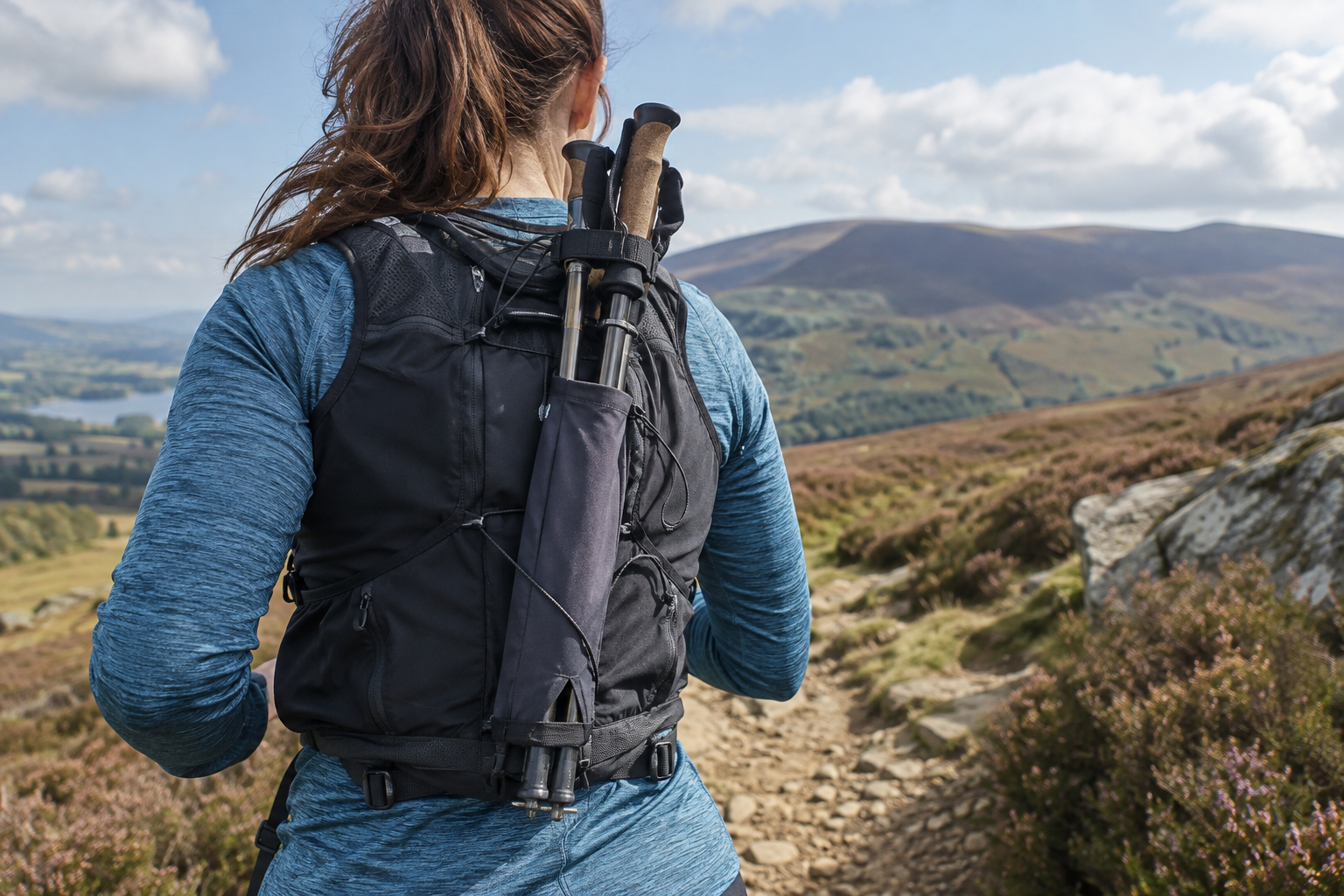
A pole quiver is most useful on a route where you alternate between using your poles and running with your hands free. It gives folded poles a dedicated home, often within reach over your shoulder. Before buying one, check the vest you already own: the right attachment points matter more than the quiver’s colour or weight.
The Salomon Custom Quiver is a useful option to investigate for a compatible vest. Its structured opening helps guide the poles in, while a compression lace holds them together. Confirm compatibility with your exact vest model and version before ordering.
Find both attachment points
Look at the vest’s instructions and the quiver’s fitting diagram together. Identify where the top and bottom connect and how the quiver is meant to sit. A loose-looking loop on a shoulder strap is not automatically a suitable mounting point.
Check the version as well as the brand. A manufacturer may change attachment layouts between generations, and a similarly named vest can have different fittings. If the stated compatibility is unclear, get the exact combination confirmed before buying rather than improvising with a strap that may swing or pull the vest out of shape.
Measure your poles folded
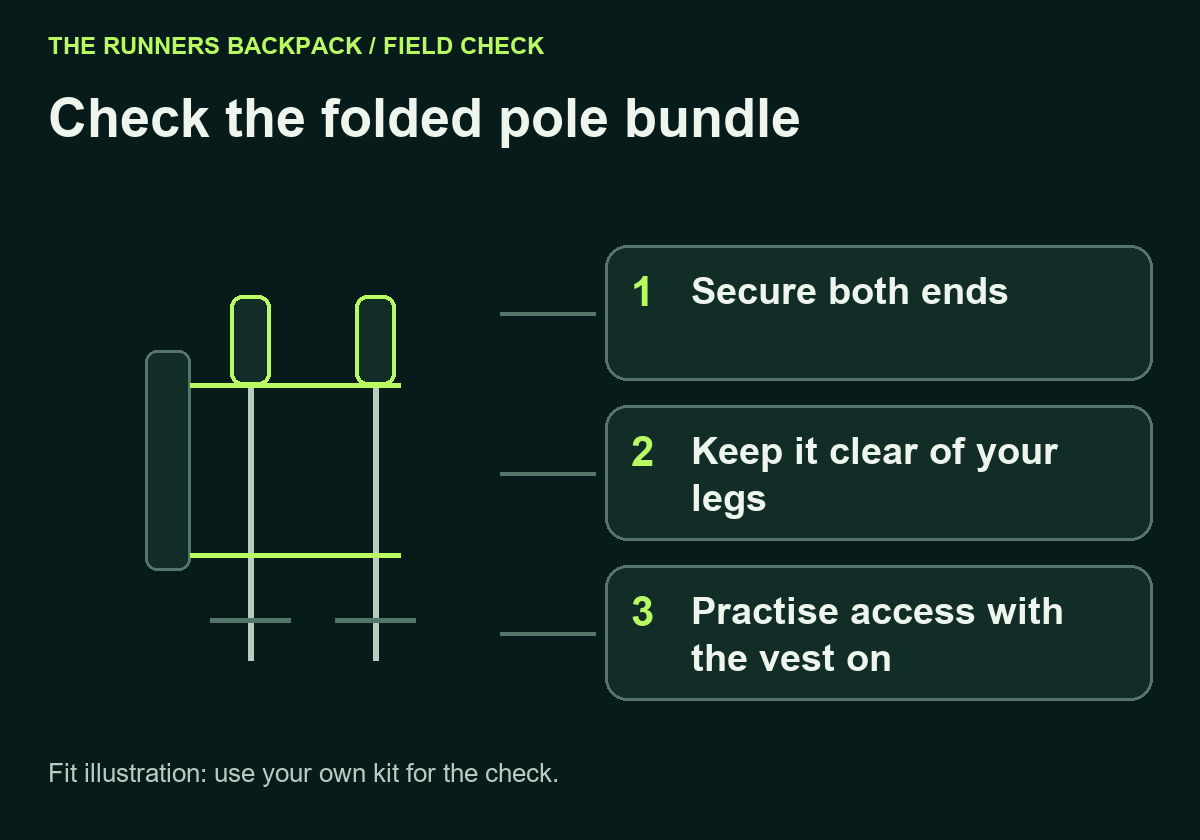
Fold the poles as you will carry them and measure the bundle, including the handles, baskets and tips. Check that both poles fit the quiver opening and that their ends sit safely inside the intended storage area. The folded length of a pole can vary with the size you buy.
The wide opening on the Custom Quiver is useful for guiding a bundle into place. The compression lace then helps reduce movement. Leave straps tidy so they do not catch as you remove the poles, and follow the fitting instructions for the direction the tips should face.
Test it with the vest loaded
Fill the flasks and pack the layers you usually carry, then fit the quiver and poles. Reach for them while standing still. Check that you can locate the opening and release the retention without twisting awkwardly or dragging a pole tip past your face.
Jog a short, familiar section and listen for movement. If the bundle knocks against your back or the vest pulls to one side, review the attachment and compression before changing anything else. A quiver that feels fine on an empty vest may sit differently once the rear compartment is full.
Compare it with the storage already on your vest
If you use poles for one long climb and then put them away for the rest of the route, the vest’s existing attachment system may be convenient enough. Repeated changes between climbing and running make easy retrieval more valuable.
Practise putting the poles away and taking them out on level ground before using the arrangement on a trail. Stop where you have room, keep the tips clear of other runners, and check the bundle is secure before moving off. Your choice of folding poles and their packed shape should be part of the same decision.
The Salomon quiver is a sensible shortlist option when your vest has the correct fittings and you want a dedicated, accessible pole compartment. Confirm those fittings first, then try the whole loaded setup.