Some links in my articles are affiliate links. I may earn a commission when you buy through them.
Start with the care label, even if the gloves look like an ordinary knitted pair. For DexShell waterproof gloves, the current maker guidance is a mild wash at or below 30°C, mild detergent and natural drip or line drying. Keep them away from direct heat and do not wring them out.
Before the next run, feel inside the fingers and cuff. A dry outer can hide a damp liner, particularly if you leave the gloves folded together in a pocket.
DexShell’s current care instructions cover its multi-layer waterproof socks, gloves and headwear. They specify a maximum 30°C mild cycle and mild detergent, natural drip or line drying, and no bleach, wringing, ironing or dry cleaning.
You may find older or regional care pages giving different temperatures. Follow the label and maker advice for your actual model; if they conflict, ask the maker before using the more demanding treatment. Don’t assume the wash you use for a waterproof jacket suits the gloves too.
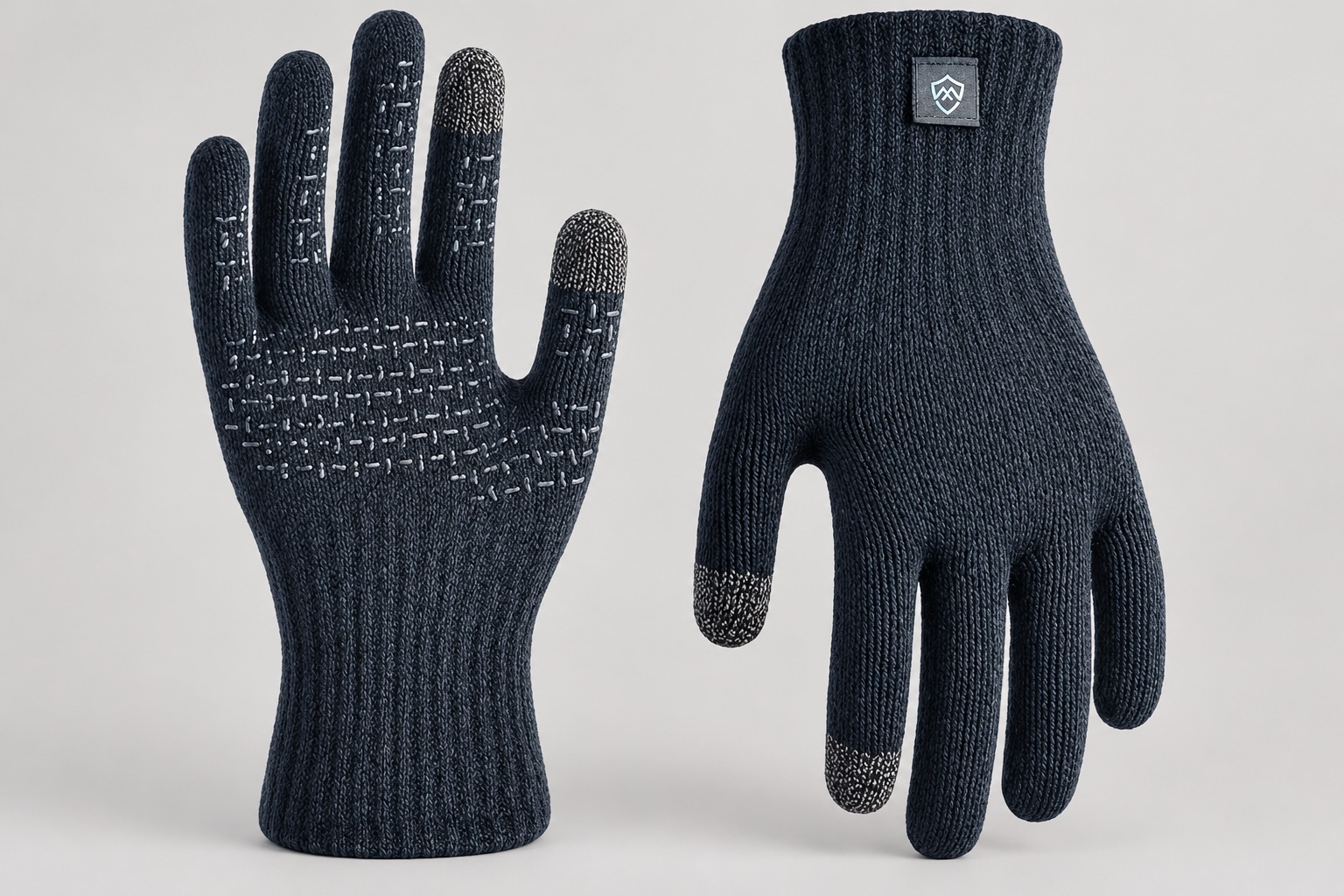
The DexShell Everyday knit is the example here. Leather gloves, heavily insulated pairs and removable liners may need different care. Keep their instructions separate if you have several pairs.
Empty, separate and clean gently
Take the gloves out of the pack as soon as practical after the run. Separate the pair and remove loose grit gently. Look at the cuff and fingertips for caught debris before rubbing the knit or pulling the gloves on again.
Use the detergent and programme on the label. If the gloves still smell stale, check they’ve been rinsed and dried thoroughly before adding more detergent. For a small mark, a gentle local clean may be enough if the maker allows it.
Support the fabric while handling the gloves and avoid tugging an internal liner out through a fingertip. Remove a liner only if the model is designed for that. With a fixed lining, leave the layers together.
Rinse without twisting the fingers
Make sure detergent has been rinsed from the cuff, palm and fingers. If a thicker area still feels soapy after hand washing, rinse it again.
DexShell says not to wring the gloves. Let excess water drain instead of twisting the fingers into a rope. Keep the fingers and cuff gently arranged in their ordinary shape; avoid pulling hard at the lining.
Do not use bleach, an iron or dry cleaning on these DexShell gloves. If you are considering a cleaner or treatment beyond mild detergent, check with the maker that it suits the gloves.
Let air reach the cuffs and fingers
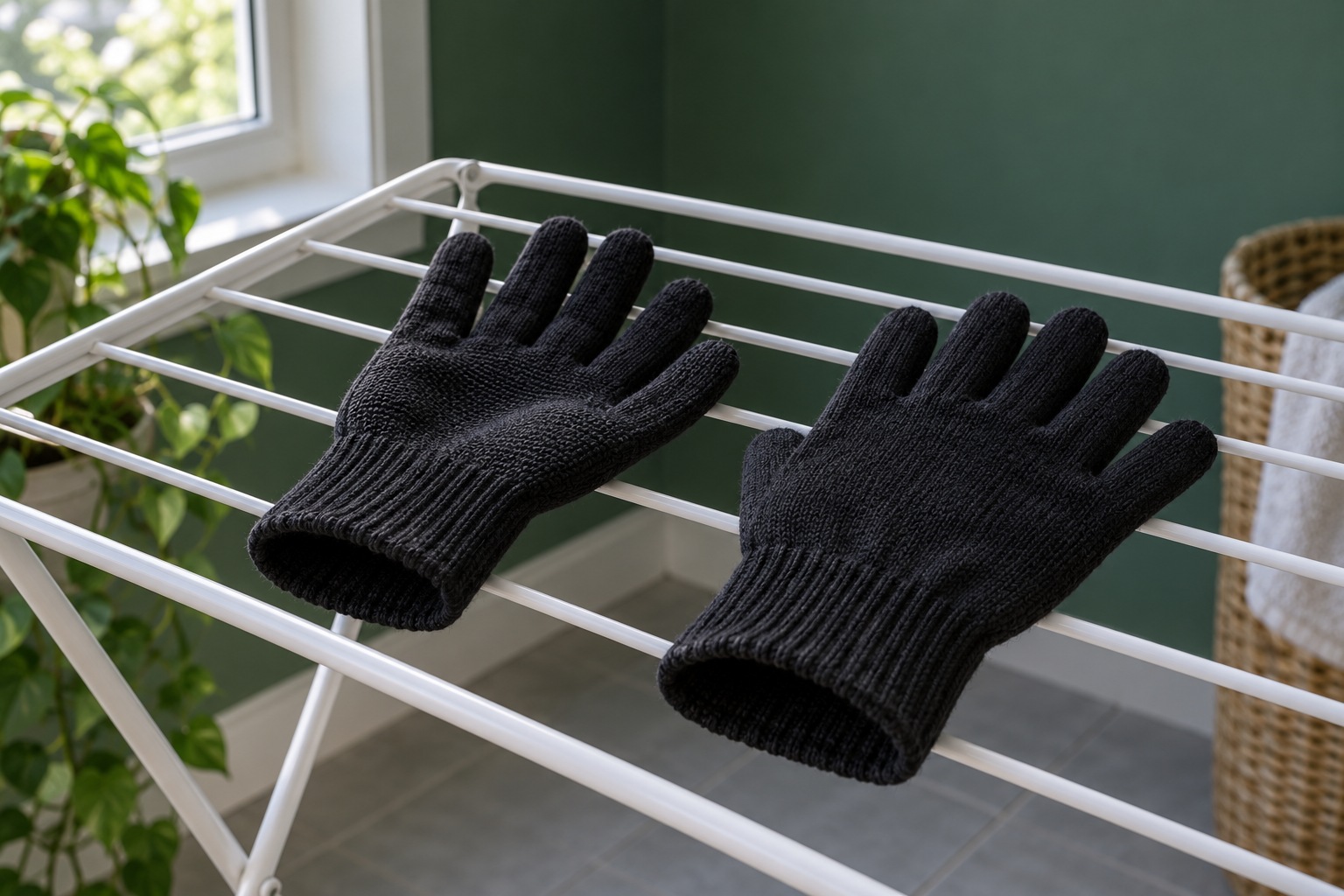
Dry the gloves separately where air can circulate. Keep the cuffs open and the pair away from direct heat. DexShell specifically names radiators, heaters and irons as heat sources that can damage the bonds between the layers.
Check inside a finger and around the cuff before packing the pair. Turn the whole glove or change its position on the rack to expose damp areas to air, without forcing a fixed liner inside out. If the fabric still feels damp, give it more time.
For back-to-back running days, have a suitable spare ready in case the lining is still damp.
If the inside keeps feeling damp
Begin with fully dry gloves and hands. Check whether moisture is appearing before you leave, after working hard, or after rain reaches the cuff. That helps you work out whether it’s leftover dampness, sweat or rain getting in at the wrist.
The Everyday’s outer knit can become wet in sustained rain, so a wet-looking outside doesn’t necessarily mean a leak. If the inner repeatedly wets in a way you cannot explain, contact the maker or seller with the model details rather than testing it by prolonged immersion.