Some links in my articles are affiliate links. I may earn a commission when you buy through them.
Choose waterproof running socks when water coming through the shoe is the recurring problem and your shoes have room for the extra structure. Stick with ordinary socks if they feel comfortable in mild weather, or if deep water will keep coming over the cuff anyway.
I would make that decision from the route and the shoes already in the cupboard. You don’t need new socks just because rain is forecast. Think about where you will get wet, how hard you will run and what you will change into afterwards.
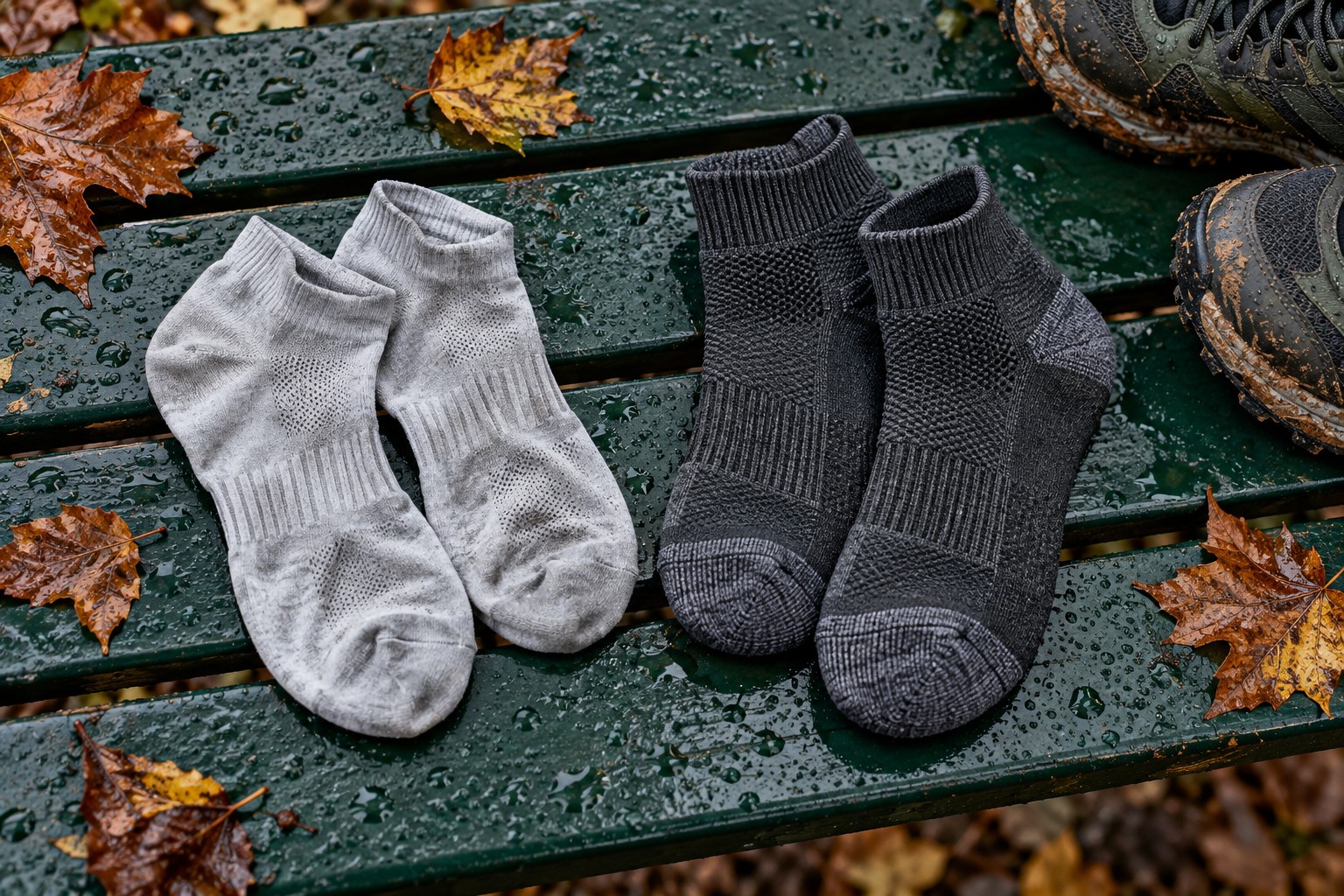
A mesh shoe can admit water as you brush through long wet grass or step in shallow puddles. A waterproof membrane sock puts the barrier around the foot inside that shoe. The outer shoe can remain wet while the membrane blocks water through the covered sock fabric.
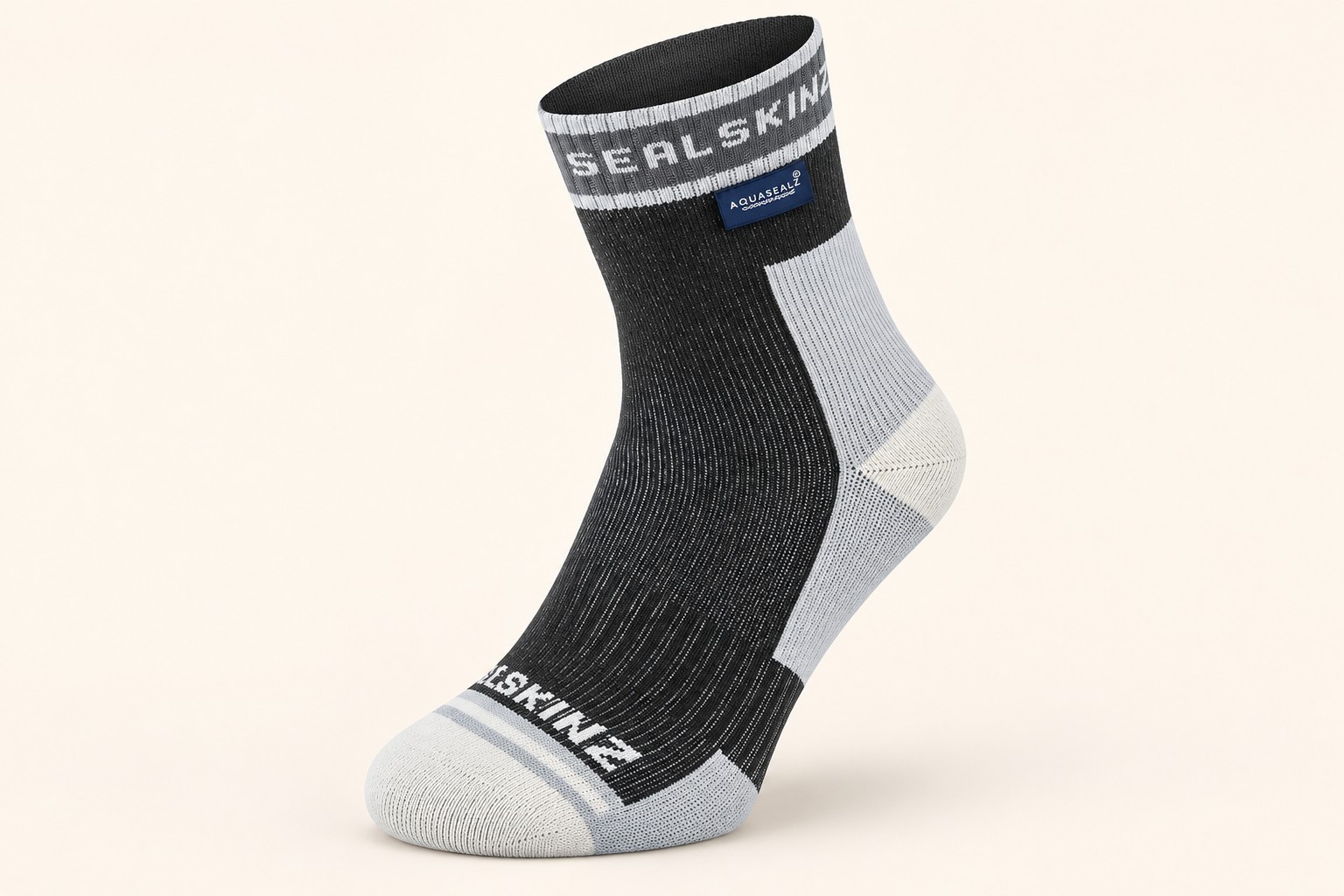
This is where I’d consider the Sealskinz Holverstone ankle sock: a light, fitted option with a bamboo-blend lining. You can keep using trail shoes that fit you well while adding a waterproof layer inside them.
Check where the puddles reach relative to the cuff. An ankle sock leaves less fabric above the shoe than a taller version. On a route with repeated deep crossings, water can enter from the top even while the membrane itself is intact.
For a warm, hard run, try your usual socks first
A waterproof membrane is also a layer between your foot and the air. Makers describe these socks as breathable because moisture vapour can pass through the construction. On a hard effort, your feet can still sweat faster than that moisture escapes.
If your main problem is hot feet in a close-fitting road shoe, try your familiar ordinary sock first. A thin fabric can leave more room around the foot, and you already know how that combination feels at pace. Keep any thicker or membrane option for a separate fit check.
The ordinary sock guide covers cushioning, heel position and pairs for rotation. Extra cushioning can feel pleasant underfoot, but it also occupies space inside the shoe; check that space before trying a waterproof pair too.
Deep crossings need a plan for water above the cuff
Imagine the deepest water on the route rather than the average puddle. If it reaches above the top of the sock, there is an entry route down the leg. Wet trouser fabric tucked inside a cuff can also bring moisture into that opening.
Sealskinz’s cuff explanation places its waterproof limit at the membrane stitching, below the very top. Even its Hydrostop treatment is not a watertight seal. I would avoid buying a waterproof sock on the assumption that a tighter cuff solves wading.
For an obstacle race, read the organiser’s current kit and course information and choose a combination you have tried in training. A waterproof sock can still fill from the top in a submerged obstacle. Our OCR kit guide covers the wider carrying and changing arrangements.
Try them in the shoes you already own
Try the ordinary sock and shoe you already use, then try the membrane pair in the same shoes. Settle the heel, smooth the toe area and use your normal lacing tension. Notice whether the upper presses harder across the foot or the heel sits differently against the collar.
My sock choices often come down to that space over the toes. Cushioning that feels welcome in one shoe can feel crowded in another. For a membrane sock, you should still be able to flex your foot without the toe or cuff pulling tight.
Do this indoors while the new pair is clean. If the membrane combination only feels acceptable with the laces barely holding the heel, choose a different pairing rather than hoping the fabric will stop being noticeable after a few miles.
Pack the dry pair for when it will help
A dry pair for the journey home is useful whichever sock you wear on the run. Keep it away from the wet shoes and used clothing. Put it where you can reach it without emptying a muddy bag onto the car seat.
Changing socks while putting your feet straight back into saturated shoes can quickly wet the fresh pair. For the finish, pack suitable dry footwear as well. For a longer outing, decide in advance where a change would be practical and how you will contain the used pair.
The Pack Planner can help organise the return kit. If you have decided a membrane fits your route, the waterproof running-sock shortlist compares two lightweight running-specific options by lining, ankle fit and care.