Some links in my articles are affiliate links. I may earn a commission when you buy through them.
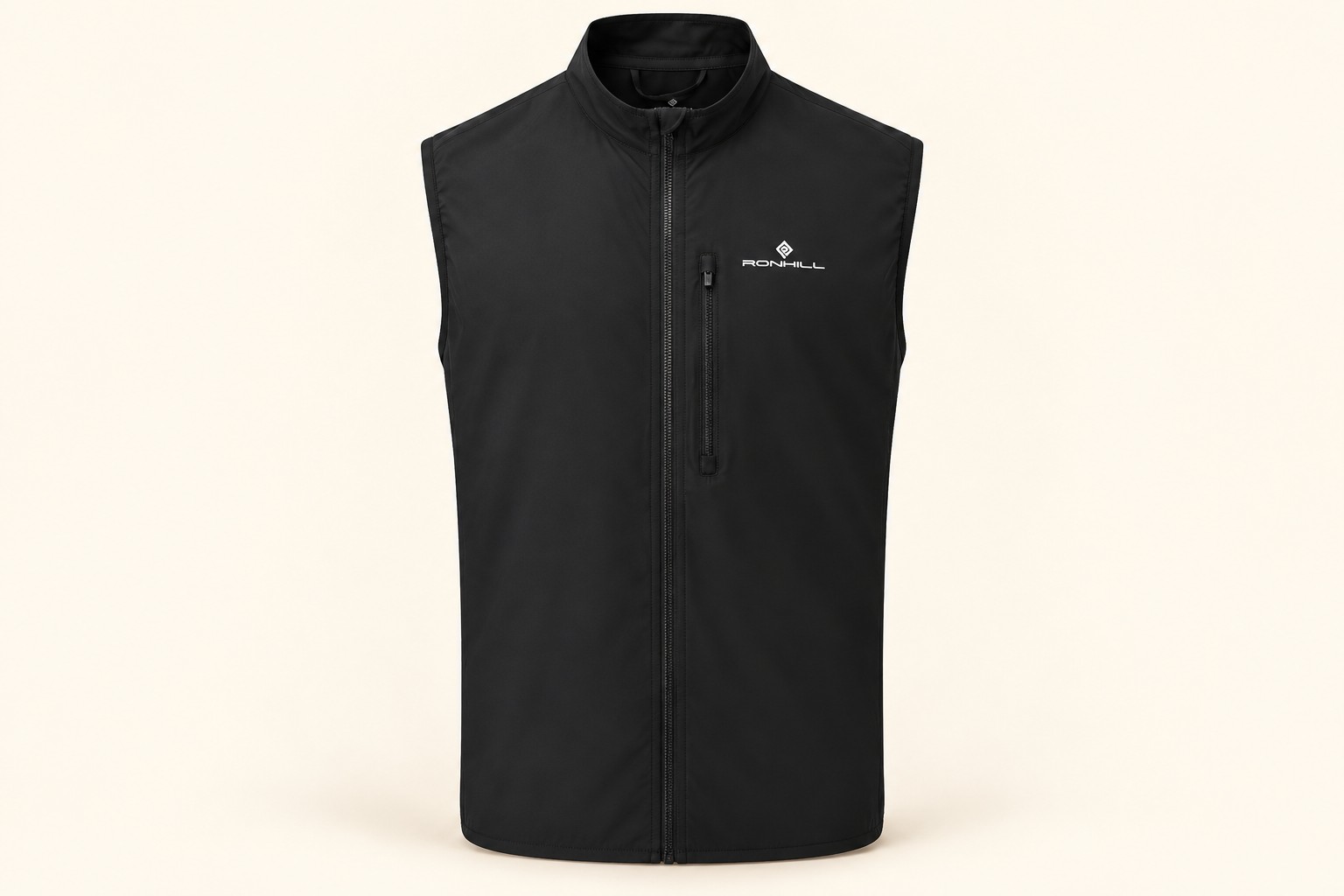
The Ronhill Core gilet makes sense when a long-sleeve running top feels comfortable on your arms but you want a little more cover across your chest. It is a simple sleeveless layer with a full zip and a raised collar, so you can open the front as the effort rises without dealing with extra sleeves.
I like it for breezy runs that dip in and out of shelter: you can cover your chest without adding sleeves you’ll soon push up. This is the men’s Core All Black version; check the model as well as the colour if you’re comparing newer Core listings.
The Ronhill Core gilet is a lightweight, relaxed-fitting wind layer for your chest and back. The All Black version has a water-resistant treatment for short showers, with your arms left free.
That combination is useful when the wind catches your front on one part of a route and the next section is sheltered. The sleeves of your running top remain exposed, which is pleasant if they already feel warm enough. Choose the top beneath it for the conditions your arms will actually meet.
The Core’s thin fabric takes the edge off a breeze, but won’t give you the warmth of a padded vest. For a long wait after a run, keep an appropriate dry or warmer layer in your return bag.
The front zip is the useful adjustment
Opening the front after a hill, then closing it when the route turns into the wind, is the part of the Core I find most useful. You can make that change without pushing sleeves up or carrying the whole garment immediately.
Try the zip over your intended base layer. The fabric should lie comfortably when it is partly open, with room to breathe and swing your arms. If you use a neck gaiter, zip the collar up with that in place and look over each shoulder.
A loose lower edge can move when the front is open, particularly with weight in a pocket. Check the fit with a few running steps and notice whether the pocket load pulls one side of the garment down.
Check the armholes and length with your pack on
Armhole fit matters more than you might expect from a sleeveless garment. Swing your arms across the front of your body and reach for a flask. The edge should sit comfortably over the top underneath, without bunching a seam close to your armpit.
Then put on the loaded vest or belt you expect to use. A sternum strap may sit across the upper zip, while a high belt can overlap the hem. Check that you can open the gilet far enough to vent it and that the lower edge does not fold into a lump beneath the load.
If you intend to wear it over a hydration vest, try that exact arrangement before choosing a size. Full bottles and a packed rear pocket need much more room than a running top. If you’ll normally wear the gilet underneath the pack, choose it for that fit.
Use the chest pocket for a sensible load
The All Black garment shown has a vertical zipped chest pocket beside the main zip. Its position keeps a small item easy to reach, provided a shoulder or sternum strap does not cover the opening. Test access with your usual bag on.
Try your actual key, card or other small item and close the zip fully. If you want to carry a phone there, use the phone with its case and check both fit and movement. A high chest load can pull differently from the same phone carried around the waist.
Keep the pocket lightly loaded when judging the garment itself. Otherwise you may blame the cut for movement caused by a heavy object swinging against the fabric. Our phone-carrying guide covers other places to put it.
When I would choose a full jacket
Choose sleeves when you also want a wind layer over your arms, or a hood when head coverage is part of the job. The lightweight running-jacket guide compares a soft stretch option with a packaway hooded windbreaker.
For sustained rain or mandatory waterproof race kit, follow the waterproof-shell checks and the organiser’s current requirements. The Core’s short-shower treatment won’t make it a hooded waterproof shell for a mandatory-kit list.
Before ordering, check whether the size chart gives body measurements or garment dimensions. Compare body measurements with your own, or garment dimensions with a layer that fits you well.