Some links in my articles are affiliate links. I may earn a commission when you buy through them.
If you want a drink on a run without wearing a vest, start with what your hands need to do. A hydration belt gives the bottle a home between sips and can carry your phone and keys too. A handheld is appealing when those essentials already fit in your clothing and you are happy carrying the drink.
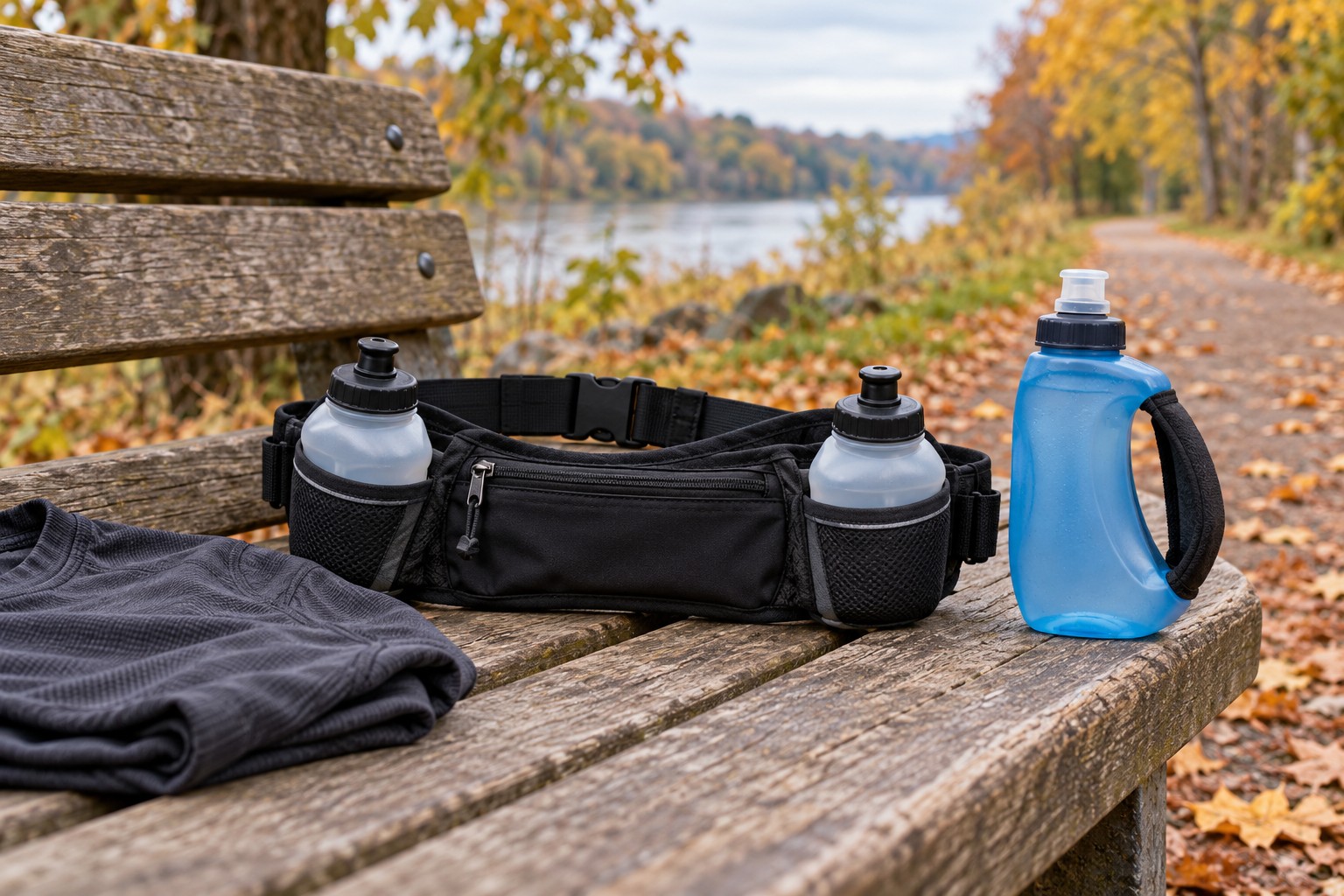
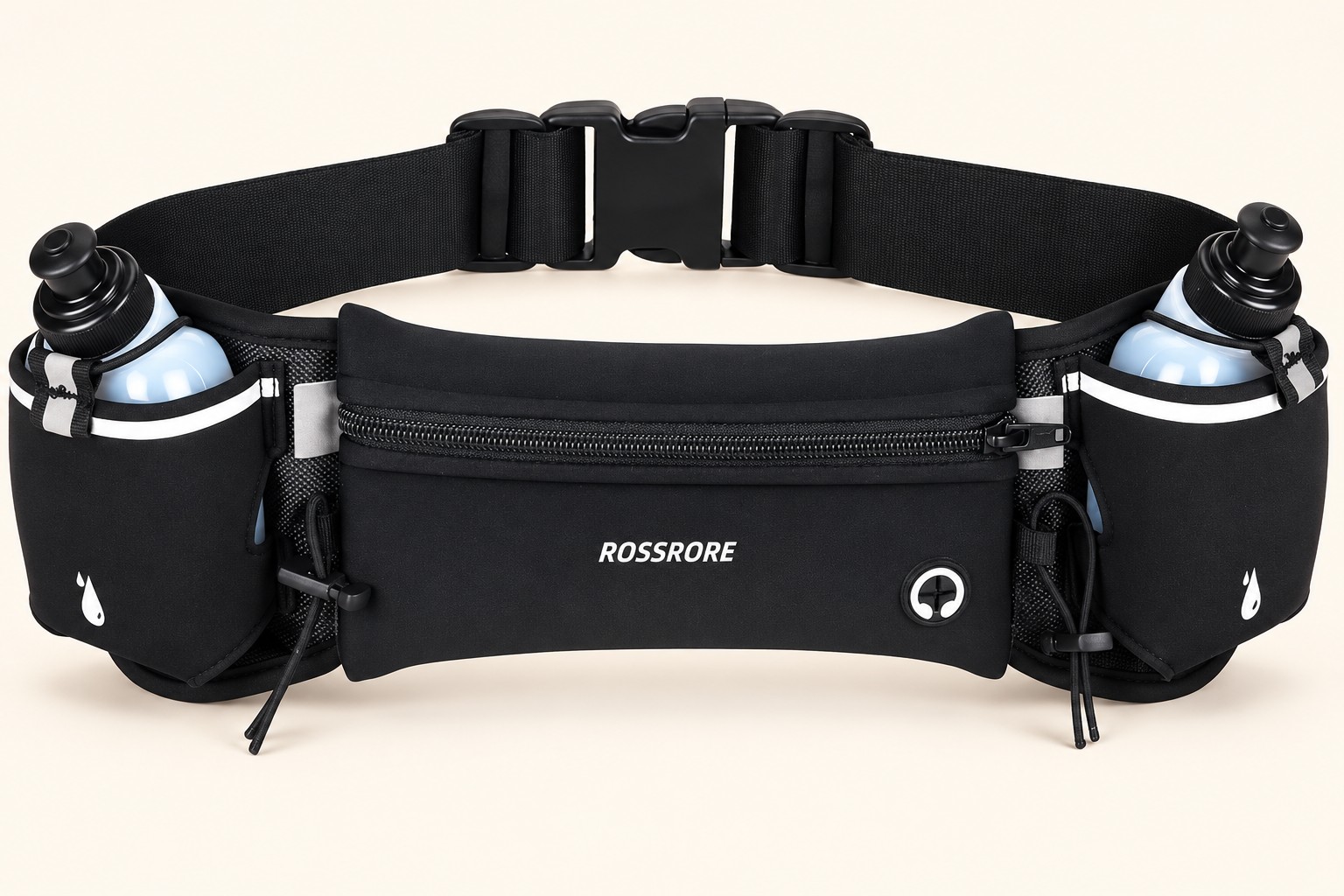
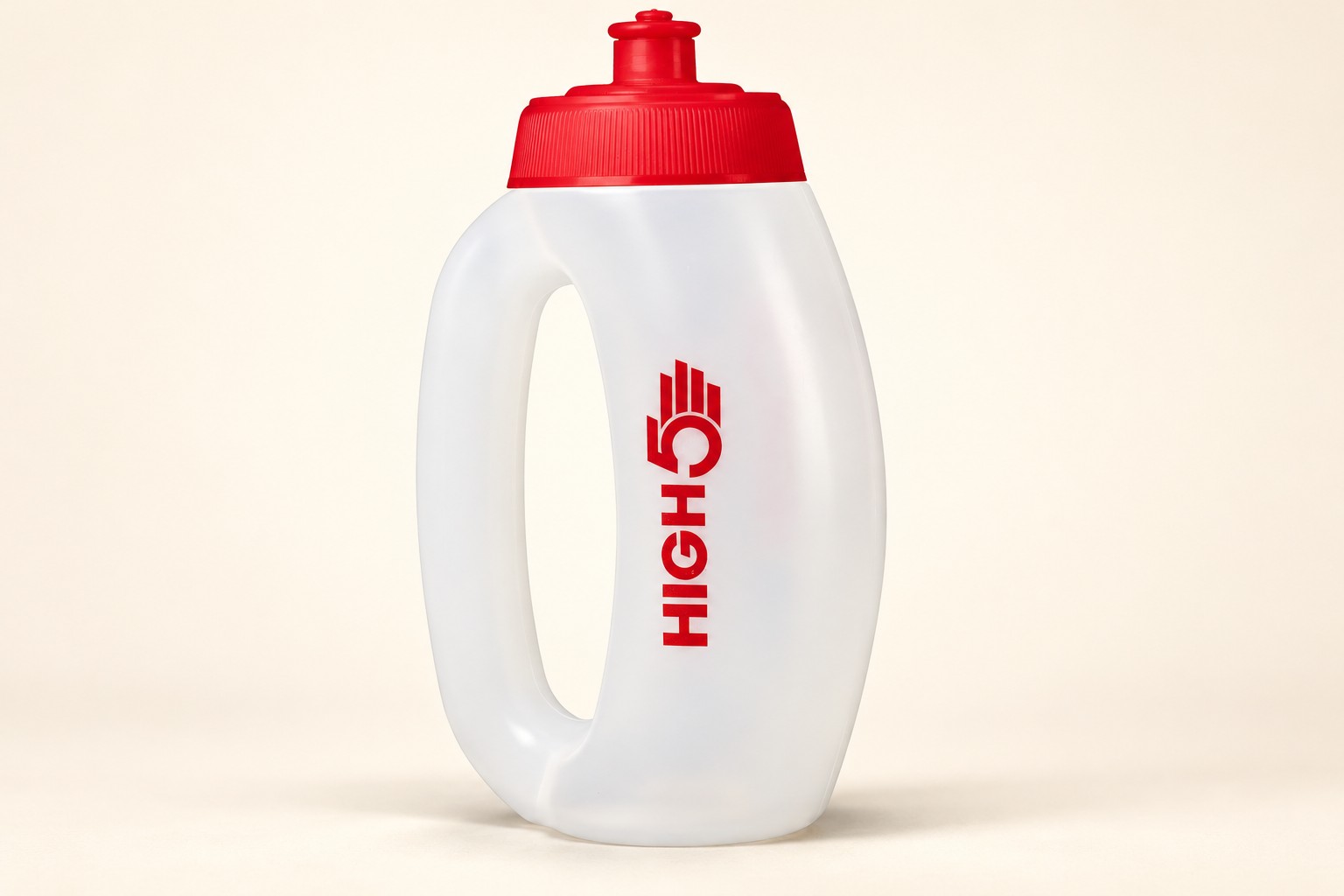
I would choose the ROSSRORE two-bottle belt to carry a little water, phone and keys at your waist, or the HIGH5 350ml bottle if all you need to carry is a drink. Both examples hold 350ml in total.
The ROSSRORE belt has two 175ml bottles, individual holders and a zipped essentials pocket. It makes sense when you want water, phone and keys together while keeping your hands available for a watch, a jacket zip or a gate.
The bottle holders are the detail I like: I can take a drink and slide the bottle back beneath its elastic loop without stopping. Practise the movement slowly first, including checking that the bottle is seated properly. If the holder sits behind your hip, try it with the hand you actually use to drink.
Fit the belt with both bottles filled and the phone in its normal case. Use the buckle to settle the silicone-lined belt snugly against your clothing, then move it until the bottles sit comfortably. Check the selected size range against where you intend to wear it.
Keep the phone and key from pressing into one another, and close the pouch without forcing the zip. Screen diagonal alone will not tell you whether a handset and bulky case fit. The hydration-belt buying guide also covers a softer belt if you’d rather tuck flasks into pockets.
When a handheld is the simpler choice
The HIGH5 350ml bottle has an opening through the body for your hand, a screw cap and a pull mouthpiece. Pick it up, take a drink and pass it to the other hand when useful. It suits a run where a bottle is the main extra item you need to carry.
Try the hand opening with your usual gloves as well as a bare hand. Your fingers should sit comfortably without being wedged in, and you should be able to move the bottle between hands easily. There’s no adjustable hand strap here, so make sure the opening itself feels comfortable.
The wide screw opening is convenient for filling, and the 350ml listing says it can go in the dishwasher. Follow the care instructions supplied with your bottle, including the cap and nozzle. Close the cap and mouthpiece and check for leaks before setting off.
Plan where your phone, keys and any food will go. If your shorts already carry them comfortably, a handheld can avoid adding another pouch. If they do not, compare the whole load before buying a bottle and a separate belt to solve two halves of the same problem. The handheld-bottle guide explains grip and filling checks in more detail.
Compare the same amount of water
With these two examples, the two-bottle belt carries 175ml on each side, while the handheld carries 350ml in one container. Both start with about 350g of water, before you count the bottles, belt or anything in the pouch. The belt spreads it around your waist; the handheld puts it in one hand.
Try your normal arm swing with the handheld full, then with less water in it. With the belt, try it loaded and partly empty, drinking from both sides so you are not leaving one full bottle beside an empty one.
Choose the amount around your own drinking routine, conditions and the gap between reliable refills. A 5K or 10K label won’t tell you whether 350ml is enough for your run. If your planned water and extra layers exceed the space, the hydration-pack guide gives you more carrying options.
Rehearse phone, watch and route access
Imagine the point where you need to open a gel, check a turn and pull up your jacket zip. With a handheld, work out how you will free a hand: pass the bottle across or stop somewhere convenient. With a belt, put the bottle back before reaching into the phone pocket. You should not have to balance an open drink on top of the phone.
For regular navigation, try taking the phone out and replacing it while wearing the full setup. An accessible pocket is more useful than a nominally large pocket hidden behind a bottle holder. Our phone-carrying guide compares the places you can put it.
Stiles, poles and awkward terrain can make frequent hand use part of the route. A waist or vest position is worth considering there. If the route is a straightforward loop, try a handheld before assuming you need a larger bag.
Plan the refill and changing kit load
A single bottle is straightforward to take to a tap or refill point. Two smaller bottles mean two caps and two holders to manage. Check that you can remove and replace each comfortably, and that you have somewhere secure to put a loose cap while filling.
For a race, check the organiser’s current water-station information and how drinks are supplied. A station serving cups does not automatically mean you can quickly fill your own bottle there. Do not plan a refill around an unconfirmed tap or a stop that may be closed when you reach it.
Use the Race Day Pack Planner to put the drink, phone and layers on the same kit list. Think about where gloves or a jacket will go after you take them off.
Before the longer outing, try a short familiar loop with the exact water and pocket load. Check the bottle retrieval, the phone and your normal hand tasks. If the belt shifts, use the belt-fit checks to adjust position and packing before replacing it.