Some links in my articles are affiliate links. I may earn a commission when you buy through them.
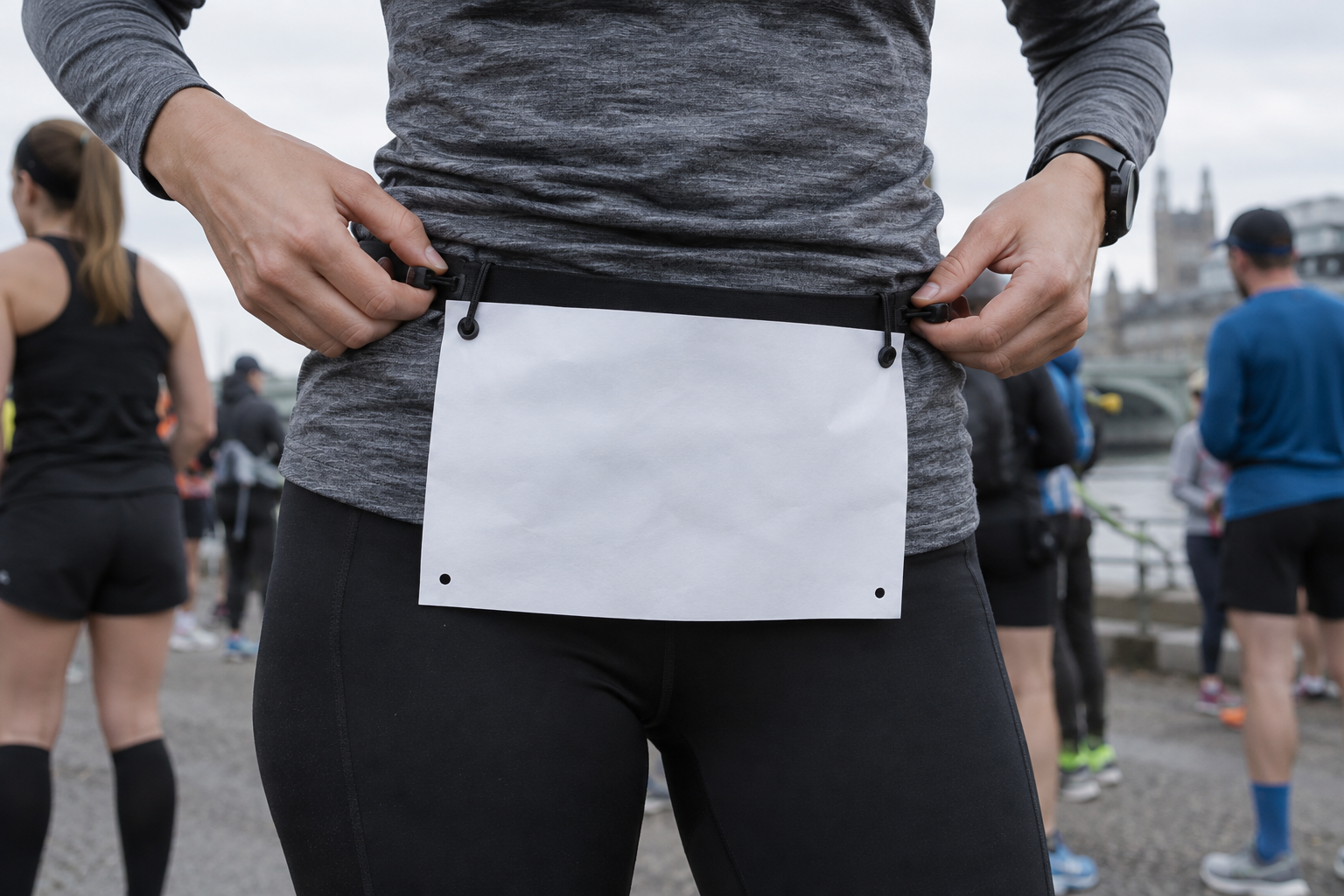
If you would rather keep pinholes out of a favourite running top, a number belt or bib magnets gives you another way to attach your race number. I would choose magnets for keeping a number on one top, and a belt when being able to reposition it is useful and the event allows it. Safety pins remain a simple choice when you are happy to attach the bib through the fabric.
Ultimate Performance race-number magnets avoid holes in a race top, while the VeloChampion number belt lets you move the number with the belt. Choose around the event’s rules and whether the number needs to change position.
Magnets: a neat way to keep the number on your top
Align the four positions on the Ultimate Performance magnets before pressing the pairs together. They hold the number firmly while allowing small adjustments to straighten it. Do this calmly before the start, rather than trying to line up a bib while wearing a loaded vest.
Lay the top flat, put the number where the organiser requires it and attach the pairs through the bib and fabric. Then put the top on and check the corners while moving your arms. Make sure a waist belt, vest strap or folded hem does not cover the number. Follow the supplied product instructions for the fabric and attachment.
A number belt: useful when the position needs to change
The VeloChampion belt uses elastic cords and toggles to hold the number, which is useful when a triathlon requires moving it from back to front. For a running event, set the number in the position the organiser specifies and check that belts are accepted.
The current belt attaches by removing the toggles, passing the cords through the number’s attachment points and replacing the toggles. Set the waist adjustment over the clothes you will wear. It should sit comfortably without the number hanging so low that it folds against your thighs as you run.
This is a number holder. Plan phone, keys and food storage separately, using your existing pockets or a running storage belt. If you wear both, try the combination at home so one buckle or band does not press into the other.
Safety pins: simple, with a little preparation
Attach the bib while the top is laid out, using the number’s intended attachment points and the organiser’s instructions. Avoid fastening through a timing component or folding the number to make it smaller. Close each pin fully and check that it is not catching a second layer of fabric.
Put the top on afterwards. A bib attached neatly to a flat shirt can pull when the fabric stretches across your body. Leave the shirt room to move, then raise your arms and take a few jogging steps. If the number is wrinkling or tugging, adjust the corners before heading to the start.
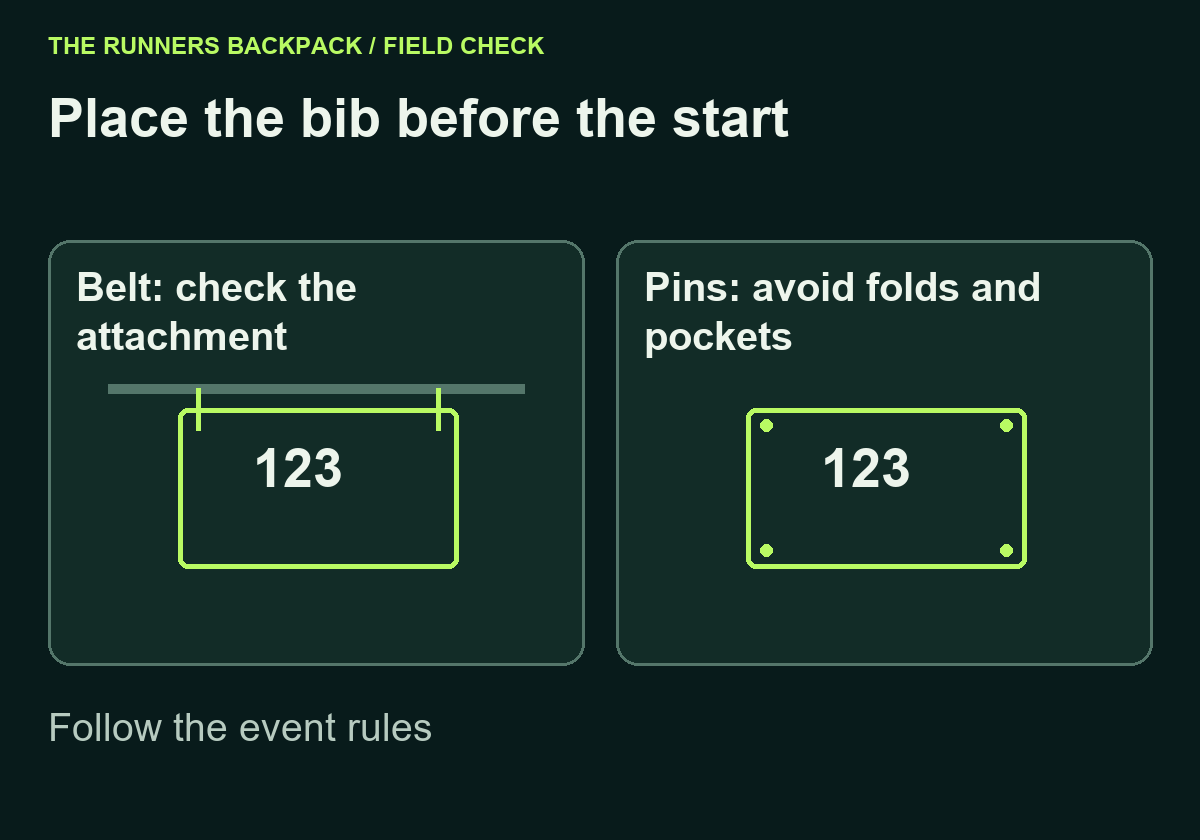
Think about the layer you will take off
Attach the number with your race outfit in mind. If you pin it to a warm-up jacket and remove that jacket before starting, the number needs to be transferred. A belt can make changing layers easier where the event permits it; magnets can be moved between suitable garments with a little time to realign them.
Check visibility again after putting on a vest or adjusting a belt. Keep the number readable and follow the event’s placement rules. It is worth doing this before the bag drop, while spare fastening pieces are still accessible.
Which would I pack?
For a number staying on one top, I like the UP magnets for avoiding pinholes and making small position adjustments. For a permitted belt setup, the VeloChampion offers a straightforward cord-and-toggle attachment. Pins are perfectly workable when you prepare the top carefully and do not mind using them through the fabric.
Whichever you choose, attach the number before the hurried part of race morning. Add it to your race-day checklist, then check the complete outfit once before leaving for the start.