Some links in my articles are affiliate links. I may earn a commission when you buy through them.
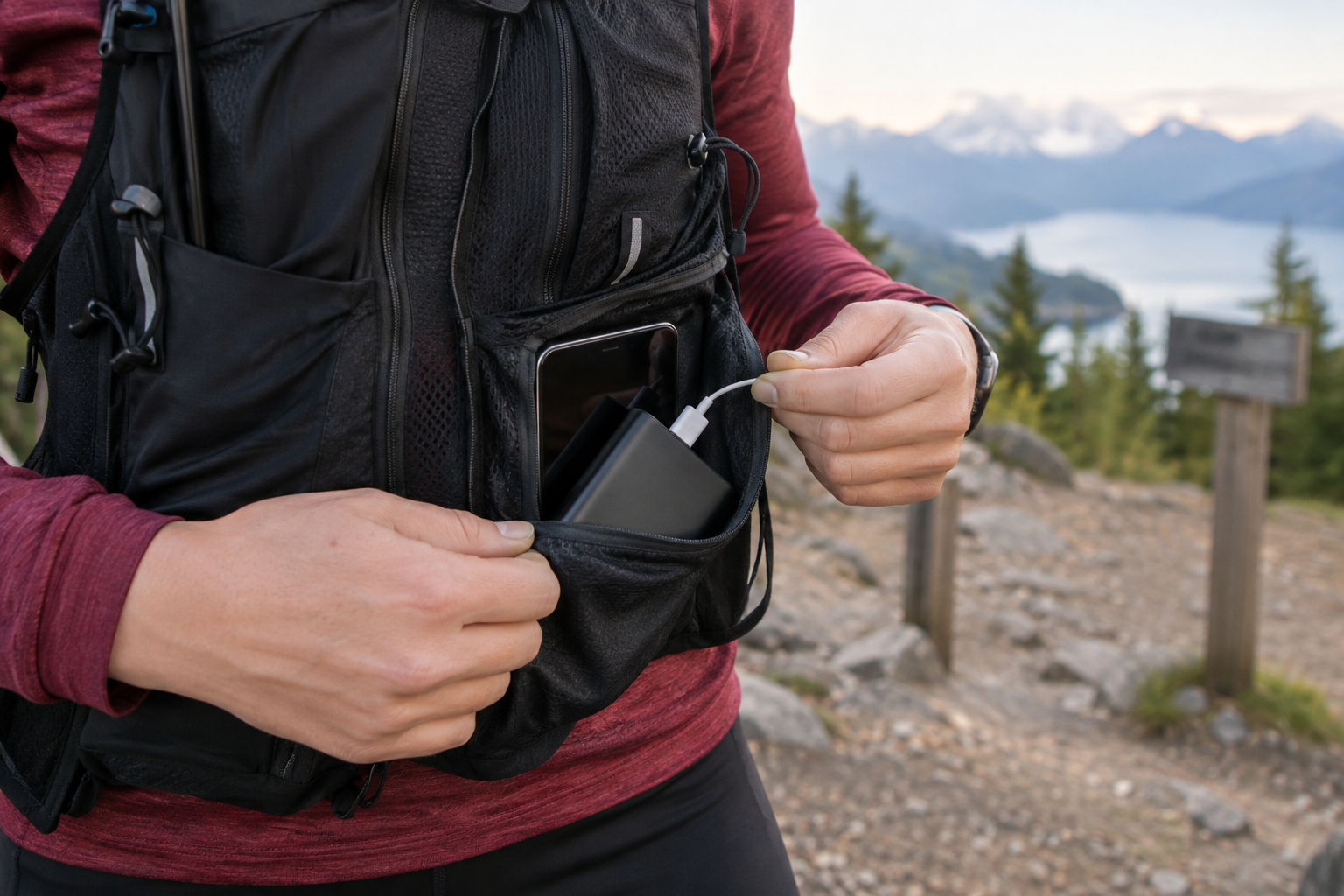
Before choosing a power bank for a long run, try your phone and charging cable in the pocket you plan to use. Leave room for the plug and the bend in the lead; a tight zip can press on the connection even when the phone and bank both fit.
For a USB-C phone, the Anker Nano with a built-in USB-C cable is worth considering. The attached lead is one less cable to remember. It has a rated capacity of 10,000mAh and supports up to 30W charging. Check the exact model: several different chargers share the Nano name.
Connect the complete setup at home
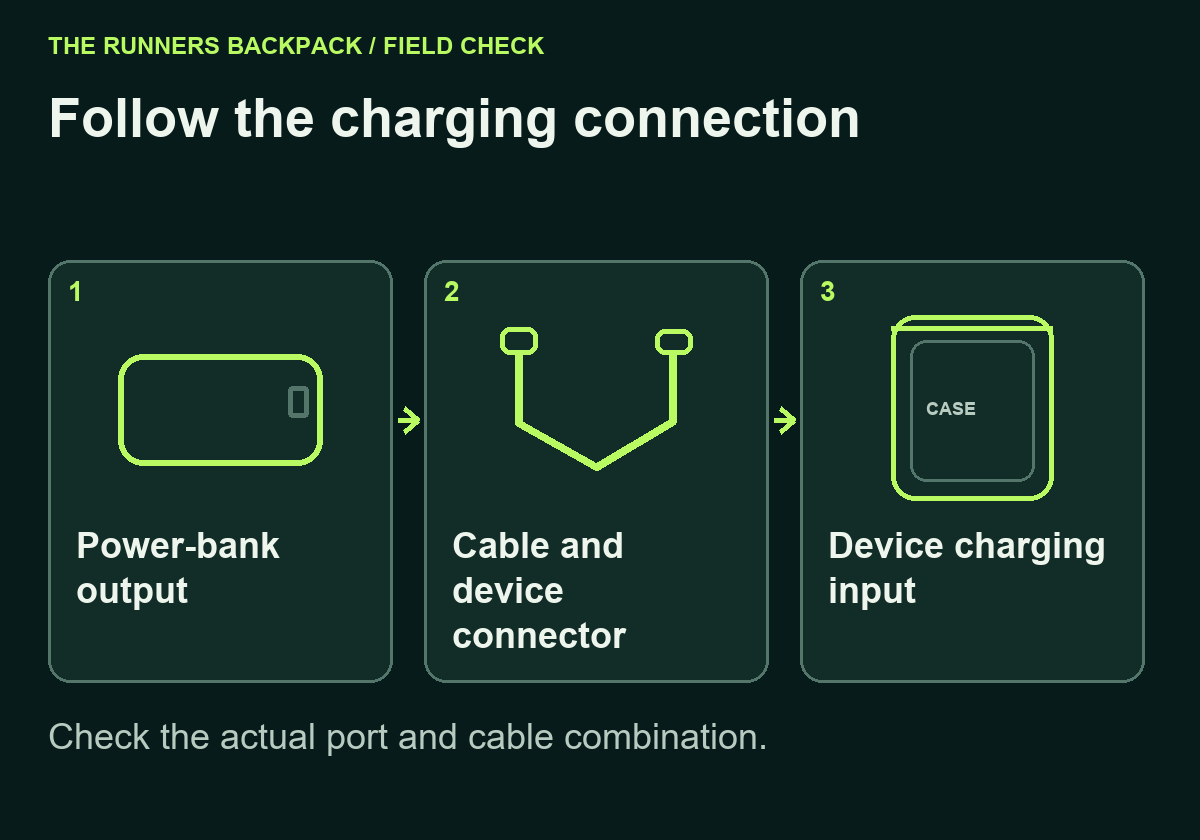
Plug the bank into your phone using the cable you will carry, with the phone in its normal case. Check that charging actually starts. If your phone uses another connector, choose the correct cable and a compatible output port rather than assuming the attached lead will work.
A watch may need its own charging lead or cradle. Check whether your particular watch can record an activity while charging and whether it needs to come off your wrist. A spare cable that works at your desk may be awkward to use while the watch is worn.
Allow room for the connector
Measure the phone and power bank together, then include the cable’s bend and the plug projecting from the phone. A pocket that just holds the phone by itself may be too tight for charging. Avoid closing the zip over a taut lead or allowing a hard bank to press directly against the screen.
The listed dimensions of this Anker Nano are about 10.4 × 5.2 × 2.6cm. Add your phone and the connected cable when checking the pocket. A rear vest pocket may suit the weight better than a small front stretch pocket.
Choose capacity around your devices
Consider what you need to top up: a phone used for navigation, a watch on a long outing, or simply enough charge for the journey home. The advertised milliamp-hour figure is the bank’s rated capacity; it does not translate directly into an exact number of phone charges.
If a rechargeable headtorch will share the bank, plan its useful runtime before allocating charge between your light and phone.
Try your normal device settings on a familiar outing and note the battery use. Then rehearse a top-up at home. You can then carry enough charge for those devices without automatically choosing the largest bank.
Keep the charging stop straightforward
A sheltered stop is often the easiest time to connect a device, check the charge indicator and arrange the cable. Keep connectors dry and follow the device and bank instructions for charging conditions. Pack the bank away from a leaking flask or damp used clothing.
For a long event, keep the bank and its required leads together in one small pouch. Label a watch cable if it is easy to confuse with another one at home. Recharge the bank after using it, then put the complete pouch back with the rest of your race kit.
The built-in-cable Nano suits a USB-C setup where reducing loose cables is useful. Choose a separate-lead arrangement if you need more flexibility between devices. Try the complete setup at home before packing for a race weekend.