Some links in my articles are affiliate links. I may earn a commission when you buy through them.
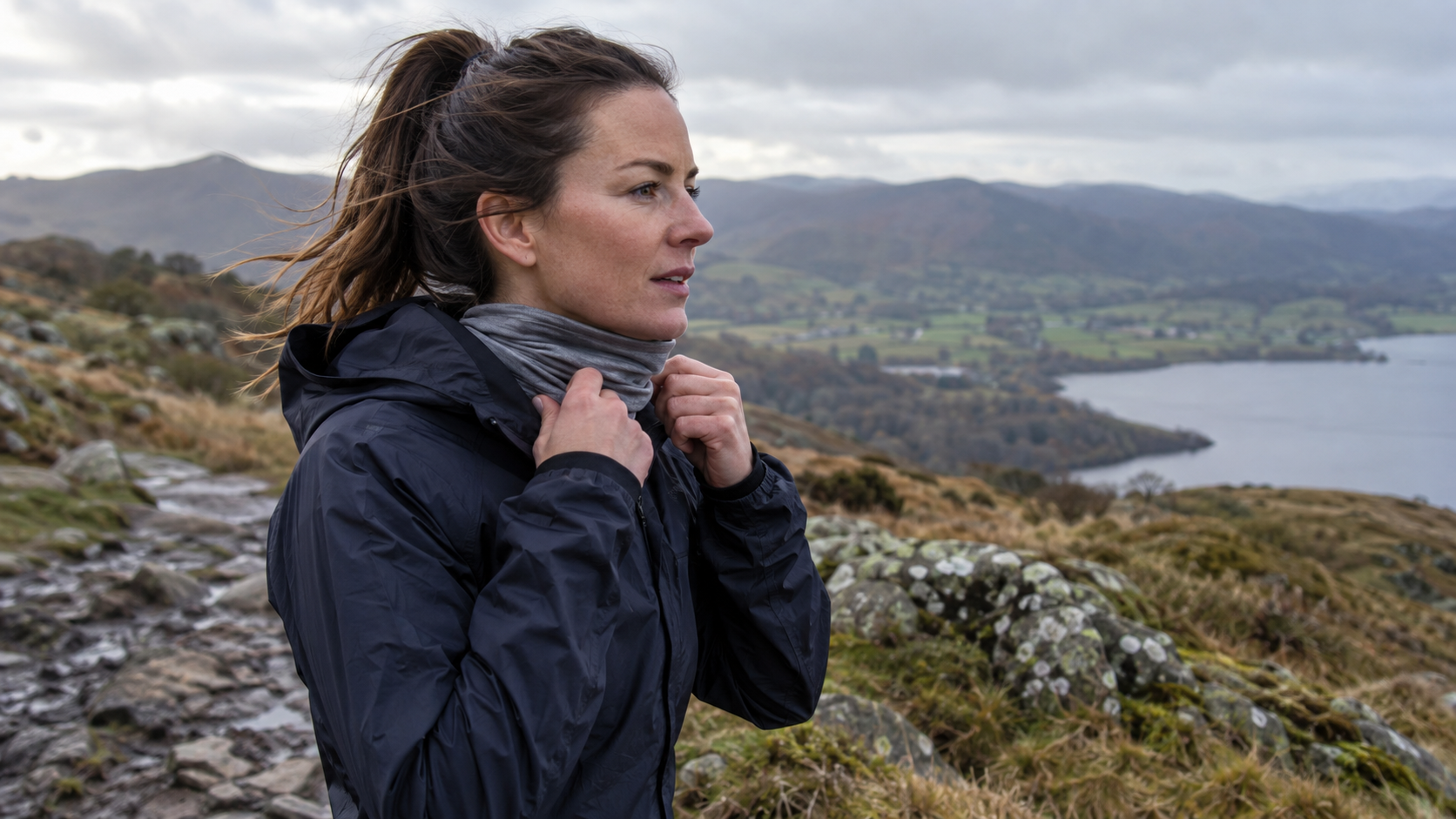
On a cool morning, a lightweight neck gaiter closes the gap above your jacket without committing you to another full layer. Pull it down as you warm up, tuck it into a pocket when the sun comes out, or use it as an ear band if that is where you feel the breeze.
For ordinary runs, I’d start with a thin, stretchy snood you can loosen or put away easily. BUFF EcoStretch is a light, seamless option with enough stretch to change the fold as you warm up.
Choose it for the part of the run that feels cold
If the first ten minutes are chilly but the rest of the route is sheltered, light fabric is easy to live with. Fold it down around your neck once you are warm. For a windy section, pull it a little higher without having to stop and rummage for a separate layer.
A thicker fleece or wool tube makes more sense when you want sustained warmth during an easy outing or a wait before the start. Think about the effort as well as the temperature: an uphill run can make a warm neck layer feel very different from a slow walk to the start line.
Check the overlap with your collar
Try the gaiter with your running jacket zipped to its normal position. Turn your head both ways, look down and raise your shoulders. You want enough coverage to close the gap without a bulky roll pressing against your throat.
The stretch in the EcoStretch tube makes it useful for changing the fold and coverage. Doubled fabric feels warmer and bulkier, so start with a loose fold and adjust it rather than pulling all the fabric up around your face.
Leave yourself room to breathe comfortably
Covering your neck and ears is often enough. If you pull fabric over your mouth, check that breathing remains comfortable as the pace rises. Lower it when it gets damp or starts clinging. With glasses, exhaled air can also find its way towards the lenses, so use our neckwear and glasses fitting checks before a dark or unfamiliar route.
Pack a dry spare for the journey home if that would make you more comfortable. A damp tube bundled into a pocket will still be damp when you put it back on; spread it out to dry after the run according to its care instructions.
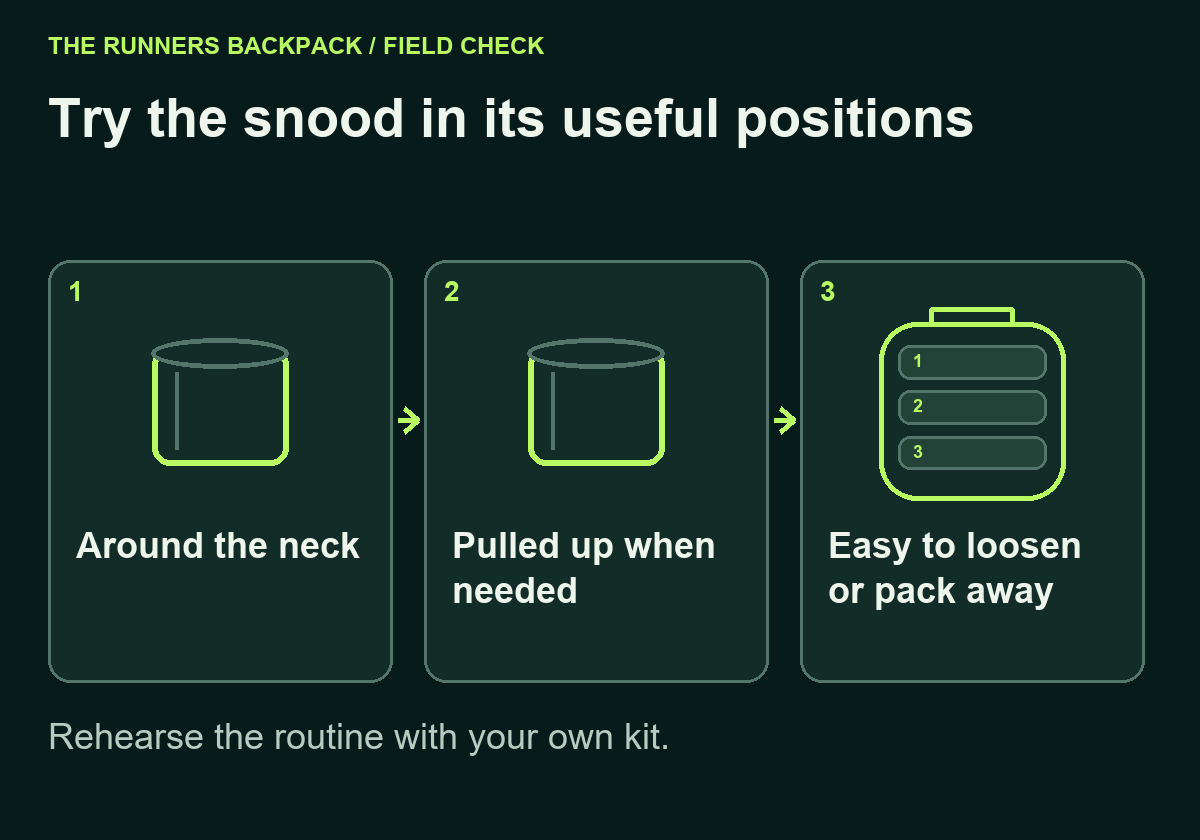
Give it a home when you take it off
A small zipped pocket or a secure section of your running belt is easier than carrying loose fabric in your hand. Try stowing it alongside your phone before leaving; a pocket that looked empty may be full once your everyday essentials are in it.
For a flexible first option, the lightweight BUFF gives you neck coverage that’s easy to loosen or put away. Choose a warmer tube only when your usual route and pace call for it. Pair it with gloves you can operate your watch in and use the winter kit checklist to plan where each removed layer will go.