Some links in my articles are affiliate links. I may earn a commission when you buy through them.
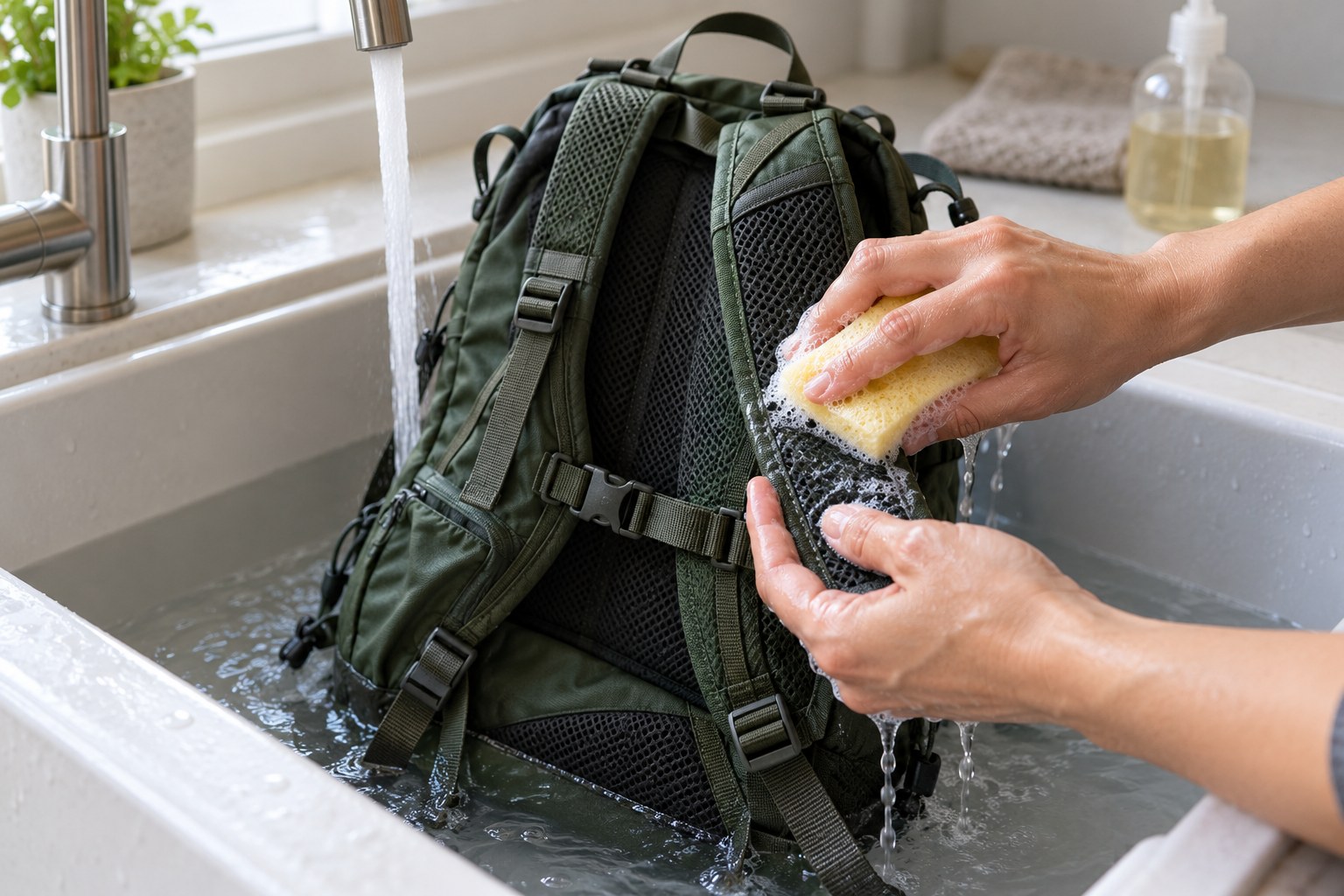
A sweaty backpack usually needs attention in the straps and back panel as much as in the main compartment. Empty it completely, check its care label and start with a gentle clean of the affected areas. For an Osprey daypack, the maker recommends hand washing with mild soapy warm water, thorough rinsing and drying in a ventilated place away from direct sun.
Leave time for the padded parts to dry before the next commute. Check the underside of the straps before putting clean clothes back in.
Check the instructions for the exact bag, including any separate rain cover, electronics or removable back panel. A soft running vest and a padded daypack may need different washing routines.
For Osprey’s ordinary pack-cleaning method, use a sink or bathtub with mild soapy warm water and a soft sponge or brush. Osprey explicitly advises against machine washing because it can harm the pack’s structure and fabric. Even inside a laundry bag, it still needs to be washed by hand.
Remove a harness or hipbelt only if the manufacturer designed it to be removed and explains how. Leave stitched straps attached. Take out the reservoir, flasks and anything else that has its own cleaning instructions before starting.
Empty the places you normally forget
Open every pocket and shake loose grit out before introducing water. Check the small zipped compartment for a key, travel card, earbud or wrapper; then look inside open stretch pockets and under loose folds. A damp wrapper can make a clean bag smell as though the washing failed.
Photograph the strap routing if you are going to loosen removable parts. Brush away dry dirt gently, especially around zip teeth, rather than grinding it into wet fabric. Look for a damaged seam or frayed attachment while the bag is empty.
Use a local wipe for a small mark when the rest of the pack is clean. If sweat has reached the harness and the maker permits hand washing, clean those padded areas as well as the obvious patch on the outside.
Work gently through straps, mesh and pockets
Use the maker-approved cleaner and dilution. For an Osprey pack, start with mild soapy warm water and a soft sponge or brush. Work over the shoulder straps and back panel, then the inside of pockets and any stained fabric. Avoid harsh chemicals or vigorous scrubbing that catches mesh.
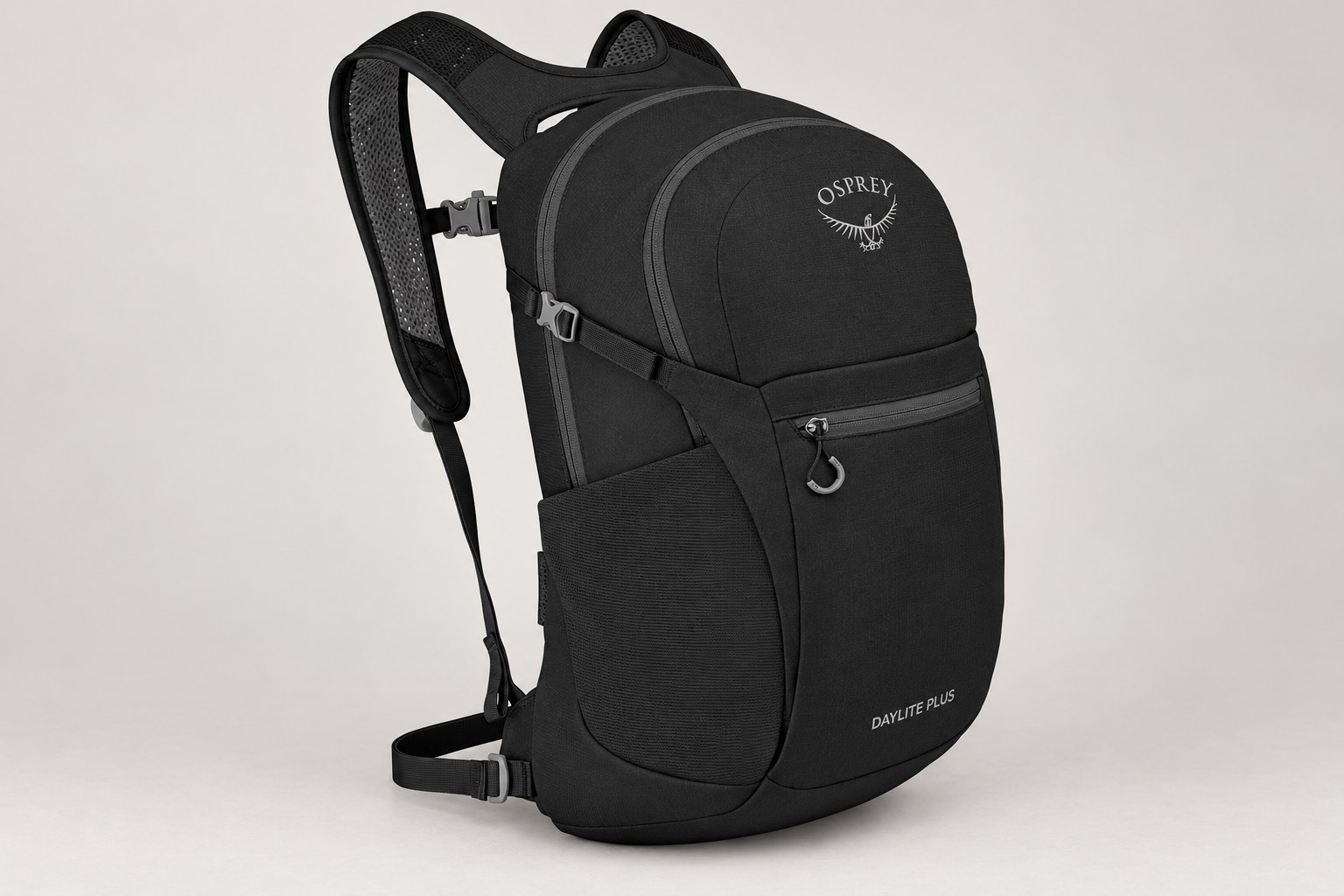
Osprey Daylite Plus: a padded daypack example. Follow the instructions for your own model.
The padded straps can take longer to dry than the thin outer fabric. Concentrate on rinsing those thicker areas thoroughly rather than repeatedly adding soap when the first rinse still feels slippery.
Osprey’s pack-cleaning instructions also discuss specific care products and proofing. Follow their labels and the pack instructions if using them. A cleaner or water-repellent treatment won’t repair torn seams or seal an open zip.
Rinse fully, then let air reach the padding
Rinse the inside and outside until soap is removed. Open the pockets and keep the harness spread out while it drains. Do not leave the shoulder straps trapped under the wet body of the bag.
Osprey recommends hanging the pack in a well-ventilated area away from direct sunlight. Choose somewhere drips will not cause a problem and allow air to reach the back panel as well as the main opening. Avoid resting it against a radiator or sealing it in a cupboard while damp.
Before packing it again, feel the underside of the shoulder straps, the base of the main compartment and padded seams. The outside can feel dry while those areas remain cool and damp. Give those areas more time if they still feel damp; a cool, poorly ventilated room will slow things down.
If the smell returns, check what is staying damp
Open the empty bag and check each pocket separately. Look for a missed food spill, a damp inner pouch or a towel that stayed packed after the last run. Clean the affected part using its own instructions, then allow everything to dry separately before reassembling the load.
A reservoir and its hose need their own cleaning and drying routine. Our flask and reservoir guide covers that part of the kit. Washing the fabric bag will not clean liquid trapped inside a drinking tube.
For regular commuting, empty the pack on arrival home and leave it open to air. Keep used clothes contained during travel, then remove them promptly. The work-clothes packing routine makes that clean-out part of the journey rather than another forgotten job.
If the coating is peeling or the fabric remains sticky after permitted cleaning and full drying, ask the manufacturer about that material before applying a stronger cleaner. Preserve the care label and model information so they can give useful advice.