Some links in my articles are affiliate links. I may earn a commission when you buy through them.
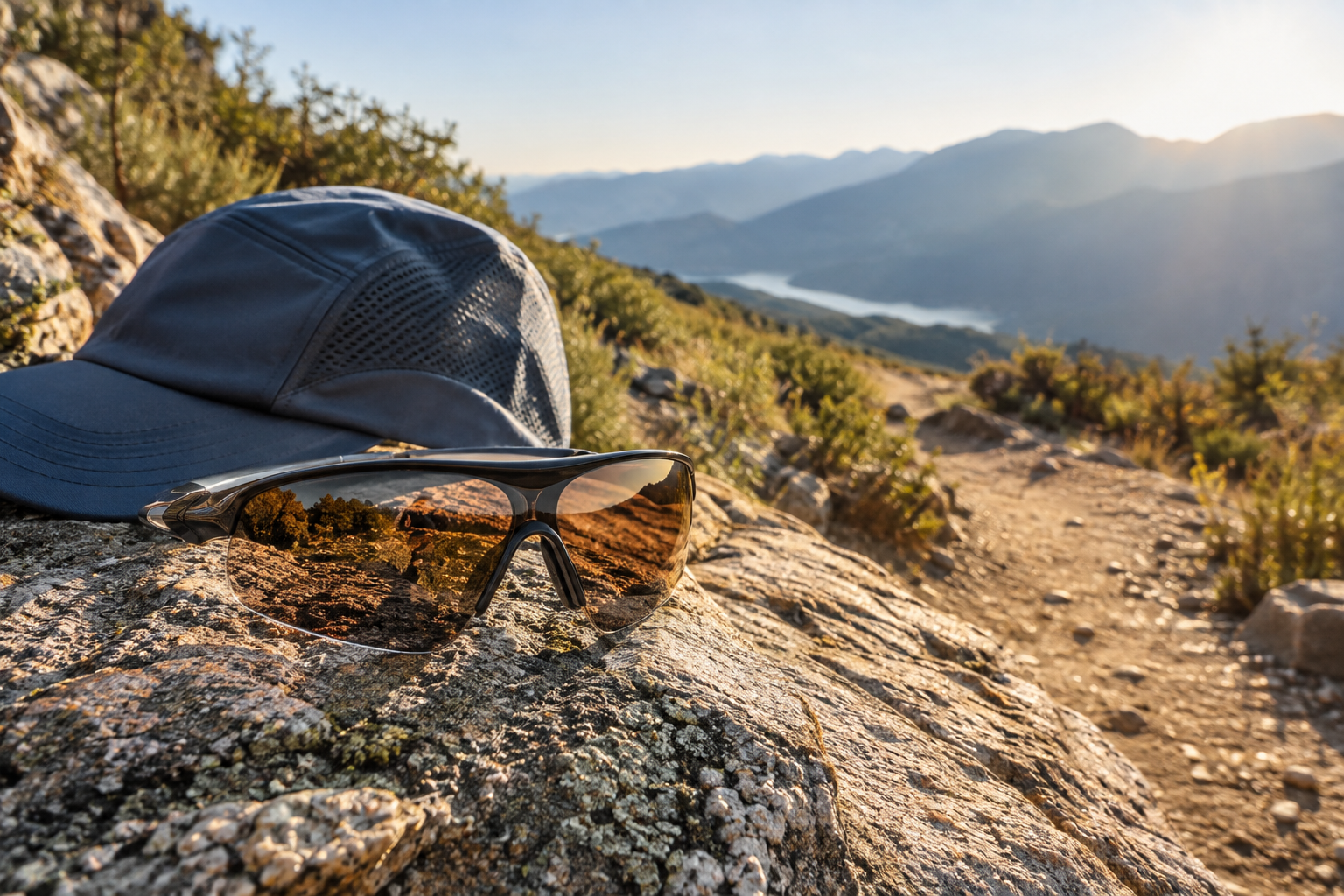
The best running sunglasses are the ones you can put on and leave alone. Start with a frame that sits comfortably on your nose, stays settled when you look down and works with your cap. Then choose the lens for the light you expect on your route.
For a closer sports fit, I would start with the BEACOOL wraparound sunglasses. I found their coverage useful on sunny runs and spent less time nudging them back into place. For easy road runs and the walk home, the LINVO retro sunglasses give a more everyday shape; they made glare from a bright, wet road more comfortable for me.
Wraparound coverage or an everyday frame?
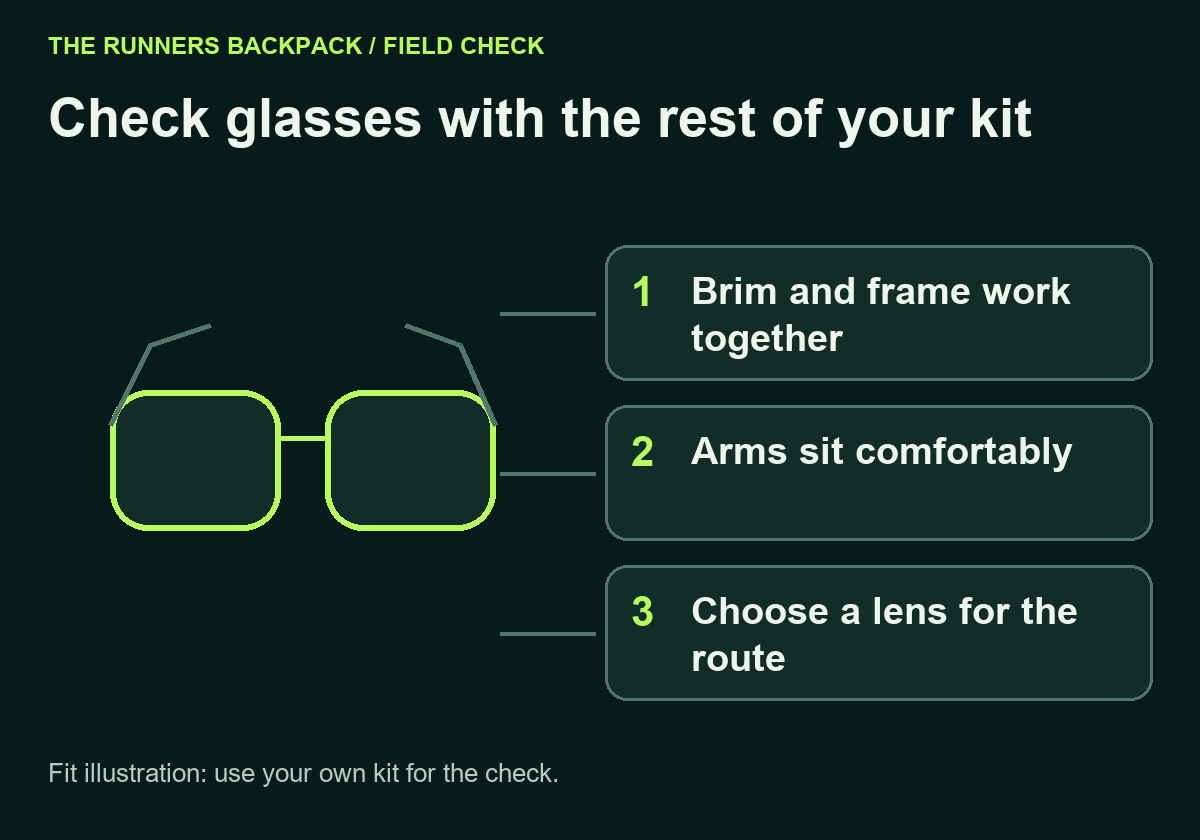
The BEACOOL frame curves around the face, with a sports shape and rubber nose pads. I checked the arms under my cap before running, which is worth doing even when a pair feels comfortable on its own. A close frame should sit steadily without the arms being squeezed into your head by the cap.
The LINVO shape is easier to wear as an ordinary pair of sunglasses after the run. I liked that for a relaxed road outing and walking back. Choose this style if it sits securely on your face and you want one pair for both parts of the day. For rougher movement or more side coverage, try the wraparound shape first.
Try them with your cap and headphones
Put on everything you normally wear around your head. Turn left and right, look down as though checking a watch, and take a few jogging steps. Check the nose bridge for movement and the arms for pressure behind the ears.
A cap can push the frame down if the brim sits too low. Headphone arms can compete for the same space above your ears. Adjust the combination before deciding the glasses are the wrong fit. If a frame only stays put when everything is squeezed tightly, try a different shape.
Match the lens to the route
Both current listings describe polarised lenses and UV400 protection. My own observations are about comfort and glare; the protection specification comes from the product listing. Check the selected lens colour and its stated category, because options within one listing can suit different light levels.
Think about the darker parts of the run as well as the sunny start. A route that moves into woodland may call for taking the glasses off, so plan where they will go. Try reading your watch and phone through the lenses at the angles you normally use; a screen can look different when viewed through polarised lenses.
Decide where they go when you take them off
A protective case is useful in a race bag or backpack where other items can press against the lenses. The current BEACOOL set includes a hard case, pouch and cleaning cloth. Check how much room the case takes in your usual bag rather than assuming it will fit a small running belt.
If you plan to stow the glasses during the run, try the intended pocket with the frame folded. Keep keys and gritty wrappers away from the lenses. Balancing a pair on top of your head may feel convenient while standing still, but check what happens when you bend down or remove your cap.
Keep the useful choice simple
Choose the BEACOOL sports frame for the closer coverage and settled feel I liked while running. Choose the LINVO retro frame if an everyday shape for easy running and casual use suits you better. Fit the frame with your cap on, check the lens option, and make sure you have somewhere sensible to put it.
Use the supplied cleaning guidance and a suitable clean cloth, rather than rubbing dusty lenses with a shirt hem. Our cap-versus-visor guide helps you complete the combination without a brim and glasses fighting for the same space.