Some links in my articles are affiliate links. I may earn a commission when you buy through them.
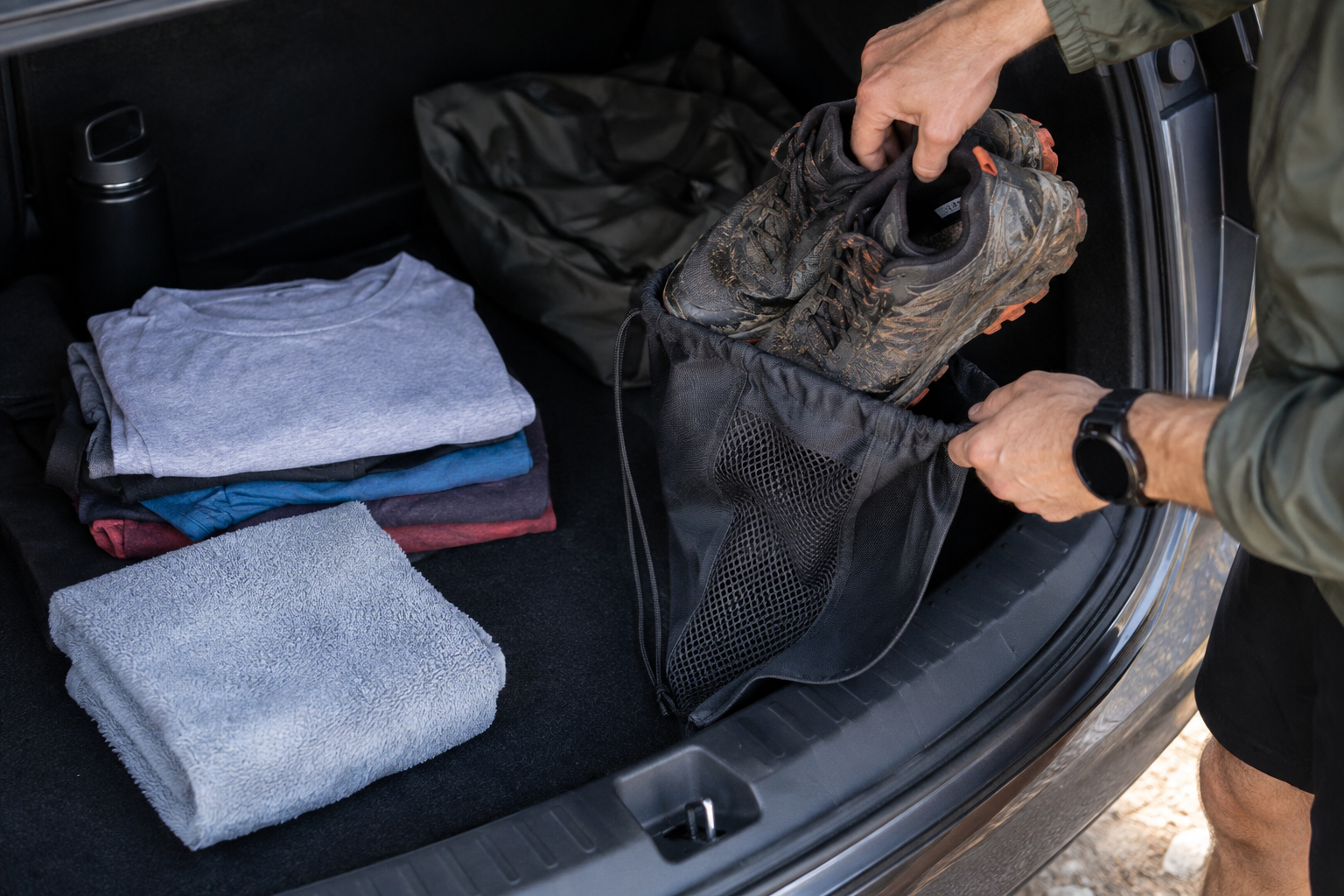
A muddy trail run should not leave you cleaning the car boot as well as your shoes. Give the shoes their own carrier, with an opening wide enough to get them inside easily, and keep the clean socks and clothes elsewhere. Once home, take everything out to clean and dry.
For ordinary shoe separation, the Puma teamGOAL shoe bag is a straightforward option with a carrying handle and ventilation holes. Water can escape through those holes. For dripping shoes or thick wet mud, I would use a washable solid-sided container instead.
Measure the shoes, including the soles
Put both shoes in the arrangement you would use for packing. Measure the length, the combined width and the highest part of the uppers. Trail outsoles can extend beyond the fabric upper, and deep lugs add height. Compare those measurements with the bag, rather than relying on a “fits size 11” label.
Look at how the carrier opens. A generous opening lets you lower the shoes in without dragging the soles across the zip or outer fabric. Leave enough room to close it without squeezing muddy uppers together. If you use gaiters, decide whether they will stay attached or travel in a separate wet-kit compartment.
Choose around the trip home
A soft shoe bag packs neatly inside a larger holdall and is easy to carry to a changing area. The teamGOAL bag suits that separation job; check its current dimensions against your shoes before buying. Its handle is handy if you prefer to carry shoes separately from the clean bag.
A rigid, washable container can be more convenient in a car when there is plenty of wet mud. Check it fits the available boot space and will sit securely. On a train or bus, a closed carrier you can manage alongside your other luggage is much easier than an open tray. Keep the dirty carrier upright and away from clothes and electronics.
Pack clean socks where you can reach them
The smaller kuou dry bags are useful for grouping small essentials separately from dry layers. Use that approach for clean socks: keep them in the clean bundle, ready for the moment the muddy shoes come off. Do not make the dry-clothes bag double as the dirty-shoe container.
Allow space for the return load before you leave. Shoes that fitted beside a neatly folded outfit at the start may come home alongside a bundled wet towel. Our post-race change-bag guide puts those items in a useful order.
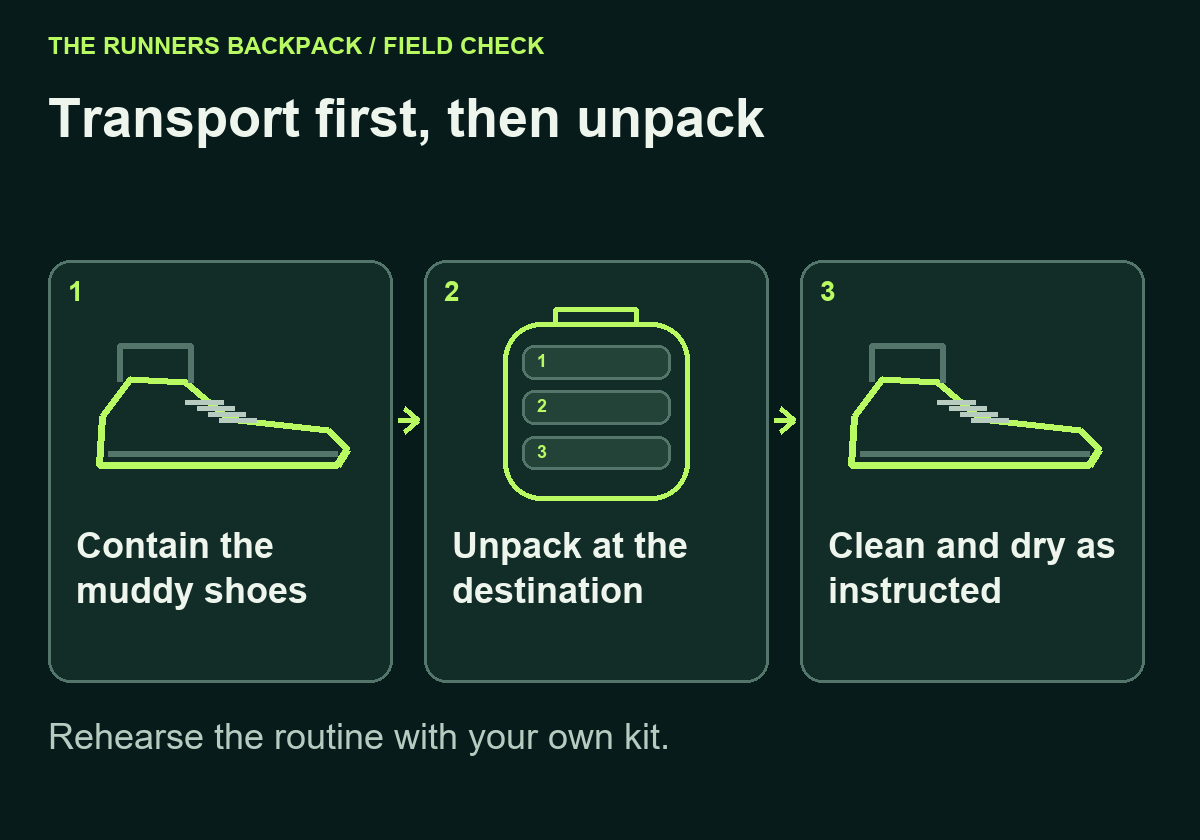
A small cleaning kit is usually easier to keep ready
Choose a soft brush and cloth that suit your footwear’s care instructions, along with any cleaner the manufacturer recommends. Keep the kit together near the place where you unpack. A brush for the outsole should not carry gritty mud straight onto a delicate upper.
Remove loose dirt where it is appropriate to do so, then follow the shoe maker’s cleaning method. Avoid guessing that machine washing, soaking or direct heat suits every model. Insoles and laces may have their own instructions, especially where parts are removable. At an event, use only the washing arrangements the organiser provides or permits.
Empty the carrier before putting the bag away
Take the shoes out as soon as practical at home. Open them up as their care guidance allows and give them the recommended drying conditions. Clean the carrier too, paying attention to corners and zip folds where grit collects, then let it dry before packing it again.
Air holes in a shoe bag do not replace this unpacking step. If your existing carrier fits both shoes and handles your normal return journey, keep using it. A different bag is worth considering only if the opening is awkward, it is hard to carry or mud keeps escaping.