Some links in my articles are affiliate links. I may earn a commission when you buy through them.
For a first Monsal Trail run, choose an easy-access station, plan to pass through tunnels during daylight and decide your turnaround before setting off. The advertised 8.5 miles is the whole trail one way; it is not the distance of every run that starts beside it.
Pick the start for the run, not just the viewpoint
The National Park’s Monsal page identifies Bakewell, Hassop and Millers Dale stations as straightforward access points. It describes the approach from Monsal Head as steep. A car park above a famous view can therefore add a climb before or after an otherwise gentle railway-trail run.
If you want the railway trail to be the main event, look at a station start first. Check which direction leads towards your intended landmark and how you will identify the point to turn back. Save the official map somewhere you can consult it without depending on a signal.
The official leaflet distinguishes the main trail from surrounding footpaths and bridleways. Stay on the railway alignment for the outing you have planned; a line heading down into the dale is a different route, even if it appears to offer a quick loop.
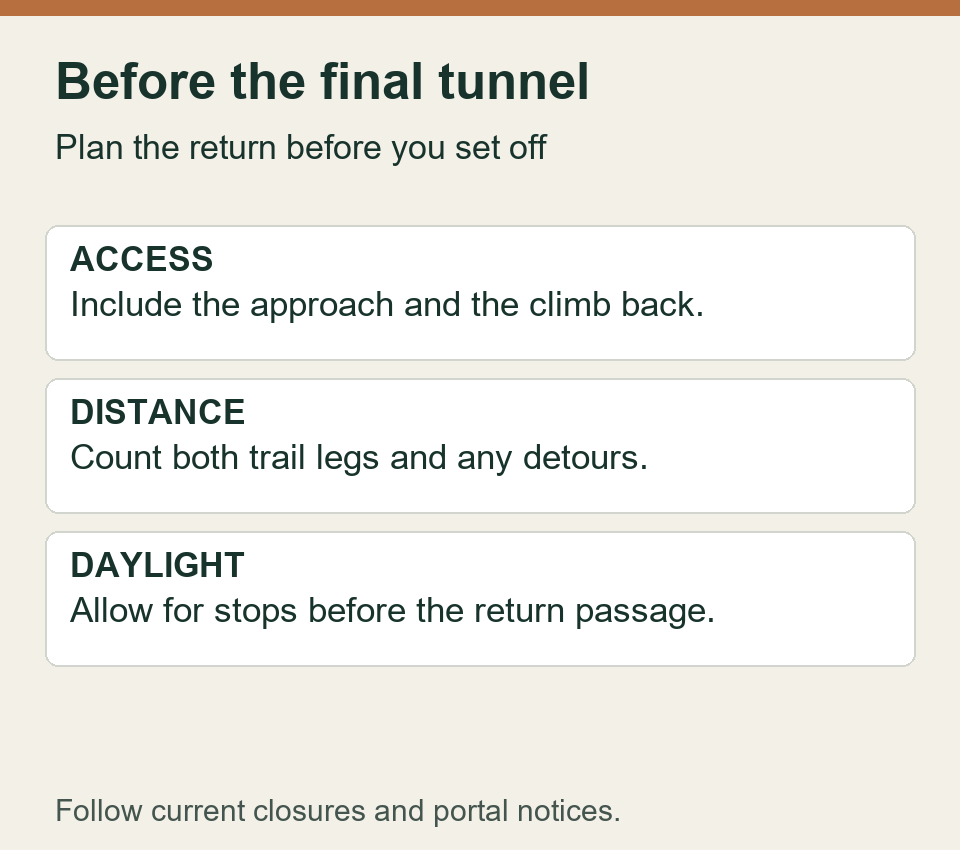
Choose the exact entrance as well as the general place name. Include the distance from your parking or public-transport stop, and any climb back to it, in the total outing.
Treat tunnel lighting as a route constraint
The detailed Monsal Trail information names six tunnels. Four longer passages—Headstone, Cressbrook, Litton and Chee Tor—are lit during daylight hours; Chee Tor No.2 and Rusher Cutting are the shorter ones. Plan around daylight rather than a fixed evening switch-off time.
A run that starts in daylight can still bring you back to a tunnel too late. Work backwards from your return passage, including time spent stopping, turning or slowing for other users. If that timing is tight, shorten the route before you start.
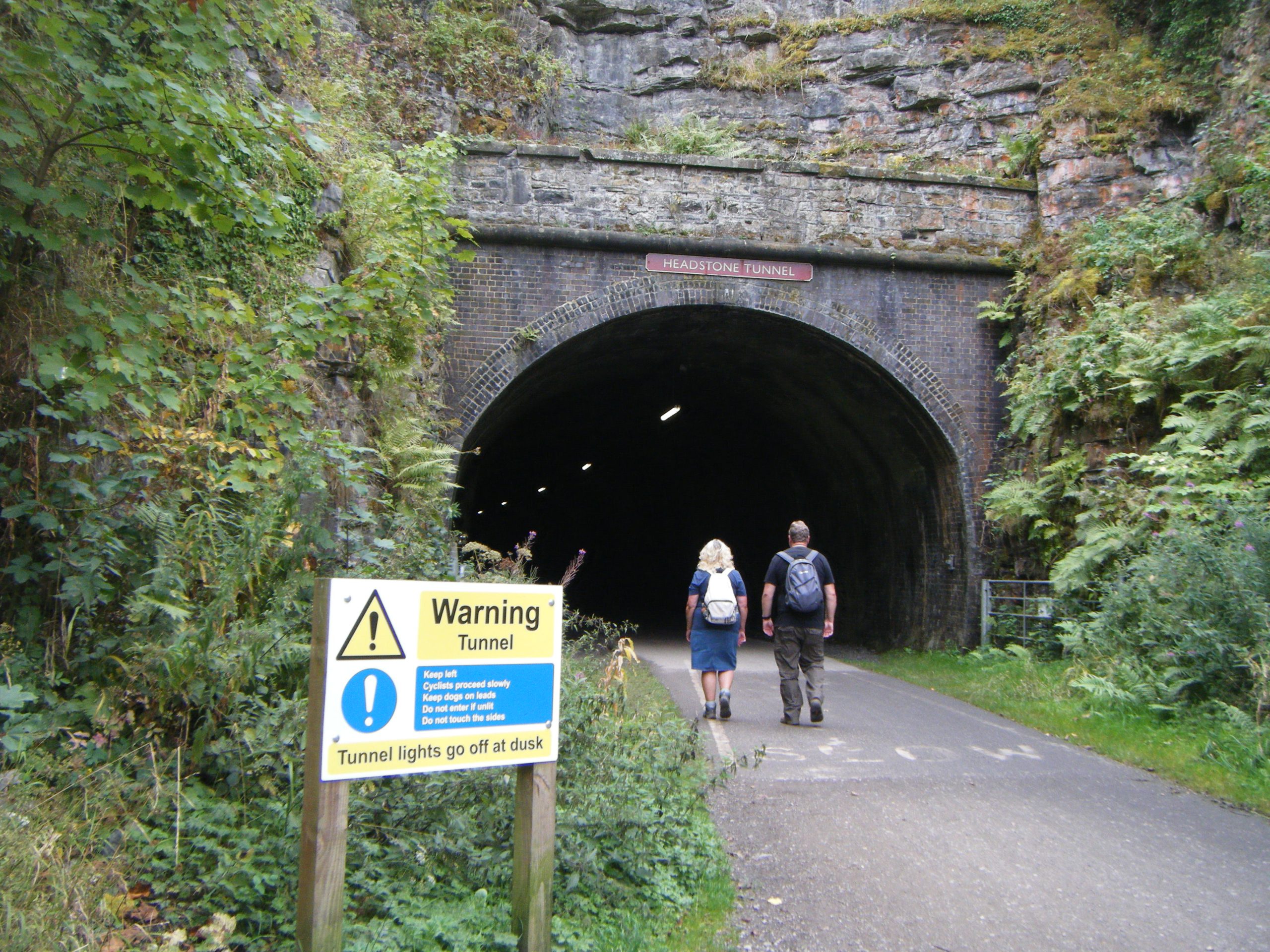
Read the notices at the portal. The 2024 featured photograph shows a warning against entering when the tunnel is unlit. A light you carry does not override a closure or an instruction not to enter. If access or lighting is unsuitable, turn back or choose another verified route.
Check any backup light before leaving home, including how it switches on. Keep it accessible. Do not plan to finish a tunnel-dependent route on the assumption that installed lighting will always be available.
Choose a turnaround with the return already counted
Use the official map for navigation. These are planning checks, not a route diagram.
Published section
Calculated out-and-back on the trail
What to add or check
Millers Dale towards Chee Dale: 2.7km
About 5.4km
Access distance, current signs and the exact endpoint on the official route.
Hassop towards Monsal Head: approximately 2.3 miles
About 4.6 miles, or 7.4km
Use the viaduct/trail location; climbing to the viewpoint above is additional.
Hassop to Chee Dale: 11.5km
About 23km
A long outing, not an 11.5km return run.
The 2.7km and 11.5km figures come from the National Park’s Miles Without Stiles route; the approximate 2.3-mile section is from its Monsal leaflet. Return figures simply double those inputs; 4.6 miles × 1.609344 is about 7.4km. These are planning estimates, not new GPS surveys.
A landmark is useful only if you can reach it within your distance and daylight budget. Turn earlier if the pace, conditions or access differ from your plan. You can enjoy a short section without collecting every tunnel in one visit.
Run predictably through the shared sections
Follow the local Share with Care guidance: keep left, avoid filling the width in a group and be aware that loud noises can unsettle horses in tunnels. Keep a dog on a short lead in the tunnels and follow the wider trail’s lead requirements.
Before overtaking, make sure there is room to pass without pushing someone towards the edge. Give a calm warning, slow down and wait when necessary. If a cyclist approaches from behind, hold a predictable line rather than making a sudden sideways move.
At a narrow or busy passage, let the conditions set your pace. Stop clear of the travelling line for a photograph or a map check. An ordinary scenic run works better here than a session that depends on uninterrupted splits.
Check what may have changed
Open the National Park’s current closure notices and trail information before travelling, then read the signs when you arrive. A page showing no specific tunnel notice is not confirmation that every passage will be open when you reach it.
Confirm any café, toilets or transport you intend to rely on. Keep the return practical if a facility is shut: have your drink, return details and an extra layer where you can reach them.
If tunnels or the access arrangements do not appeal, compare the Monsal, Tissington and High Peak Trails before choosing another start. The alternatives have their own surfaces and inclines to consider.